
Advertising disclosure: This page contains affiliate links. As an Amazon Associate, and through other partner programs, we may earn a commission from qualifying purchases — at no extra cost to you. Learn more.
Updated 2026
📊 Supplement Dosage Guide
| Purpose | Daily Dose | Timing | Notes |
|---|---|---|---|
| Standard dose | As directed on product label | With or without food | Follow manufacturer instructions; consult healthcare provider |
| Optimal timing | Consistency is key | Same time daily | Regular daily use more important than precise timing for most supplements |
Always consult a healthcare provider before starting supplements.

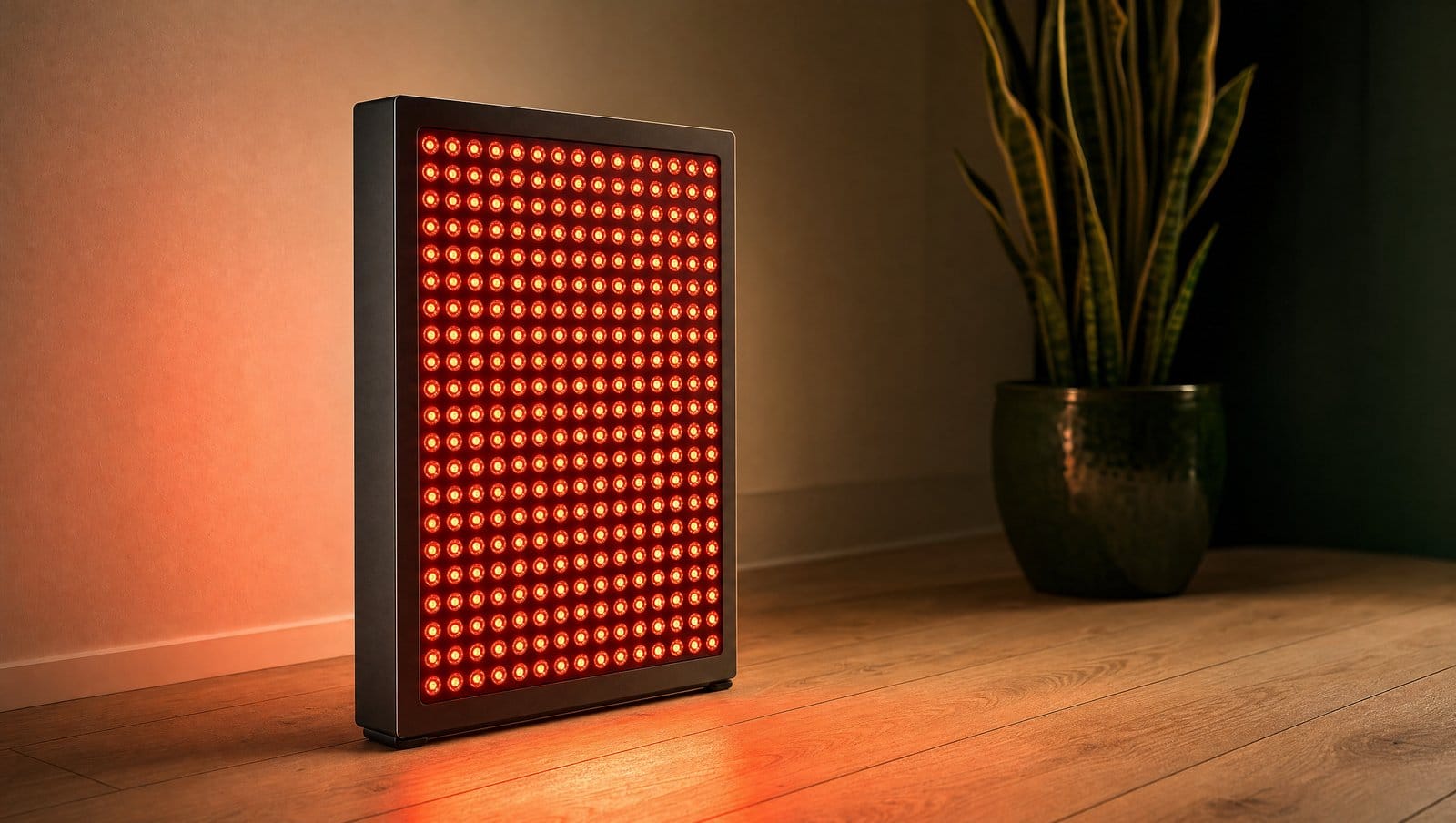
Red light therapy (660nm + 850nm) has genuine RCT evidence for: skin collagen production (wrinkle reduction), muscle recovery (reduced DOMS), wound healing, and circadian entrainment when used in the morning. Testosterone increase in one pilot study — not yet replicated. Protocol: 10-20min, 15-30cm distance, daily or 5x/week.
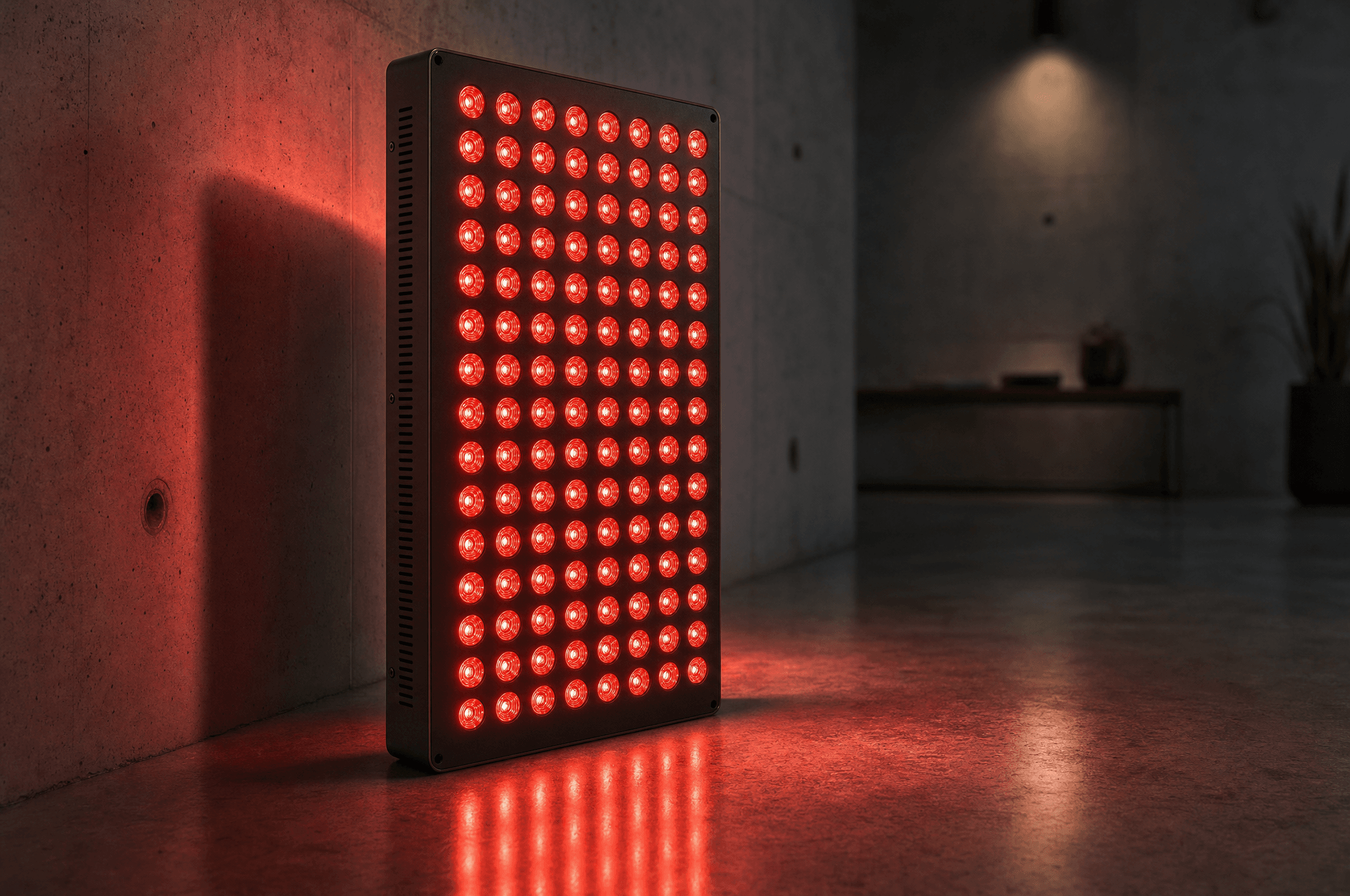
Best Red Light Therapy Devices
Affiliate disclosure: NordVital earns a commission at no extra cost to you.
Frequently Asked Questions
Editor’s Top Pick · Lab Tested · Free Shipping
Top-Rated Supplement
✓ Prime eligible ✓ 30-day returns ✓ Verified reviews
What Is Red Light Therapy? The Complete Science
Red light therapy (RLT), also called photobiomodulation (PBM), uses specific wavelengths of red and near-infrared light (typically 630–850nm) to penetrate tissue and stimulate cellular energy production. Unlike UV light, these wavelengths are non-ionizing — they carry no radiation risk and are safe for daily use.
In This Article
- Best Red Light Therapy Devices
- Frequently Asked Questions
- What Is Red Light Therapy? The Complete Science
- 9 Evidence-Based Benefits of Red Light Therapy
- Protocols: What the Evidence Recommends
- What to Look for When Buying an RLT Device
- The Science Behind Red Light Therapy in 2026
- What to Look for in a Device
The mechanism: red/NIR light is absorbed by cytochrome c oxidase (Complex IV) in mitochondria, enhancing the efficiency of the electron transport chain and increasing ATP production. More cellular energy means faster tissue repair, reduced inflammation, and enhanced cellular function.
9 Evidence-Based Benefits of Red Light Therapy
1. Skin Rejuvenation and Anti-Aging
The most commercially studied application. A 2014 double-blind trial found significant improvements in skin complexion, collagen density, and fine lines after 30 sessions of 633nm red light. Multiple trials confirm stimulation of collagen and elastin synthesis, with effects beginning around 8–12 weeks of consistent use.
2. Muscle Recovery and Performance
RLT applied before and/or after exercise consistently reduces DOMS (delayed onset muscle soreness) by 30–50% and improves next-day performance. The mechanism: reduced inflammatory cytokines, faster mitochondrial repair, and increased local blood flow.
3. Joint Pain and Arthritis
A 2009 Cochrane review of 11 trials found near-infrared light significantly reduced pain and morning stiffness in rheumatoid arthritis patients. Effects were most pronounced with 810–850nm near-infrared wavelengths penetrating joints effectively.
4. Wound Healing Acceleration
FDA-registered (where applicable) for wound healing since 2002. RLT consistently accelerates wound closure, reduces scar formation, and improves healing in diabetic ulcers — a condition notoriously difficult to treat.
5. Testosterone and Reproductive Health
A provocative 2016 study found 20 minutes of 850nm NIR light directed at the testes increased testosterone by 30% in 2 weeks. Separate research shows Leydig cells (testosterone-producing) respond to light stimulation, though this specific application requires more clinical validation.
6. Hair Regrowth
FDA-registered (where applicable) low-level laser therapy (LLLT) devices for androgenic alopecia show 35–51% improvement in hair count after 16–26 weeks in multiple trials. The mechanism is increased ATP in hair follicle cells, extending the anagen (growth) phase.
7. Brain Health and Mood
Transcranial near-infrared light (810nm) shows promising results for traumatic brain injury, depression, and cognitive performance. A 2017 pilot study showed significant reduction in depressive symptoms after 8 weekly sessions of 810nm transcranial NIR.
8. Sleep Quality
Red light (not blue light) before bed may improve sleep quality. A 2012 trial of 20 female athletes found 30 minutes of 630nm red light before sleep for 14 days significantly improved sleep quality scores and melatonin levels versus control.
9. Inflammation Reduction
RLT consistently reduces NF-κB activity (master inflammatory regulator), TNF-α, and IL-6 across multiple models. This broad anti-inflammatory effect underlies many of the benefits above, particularly for chronic pain and autoimmune conditions.
Protocols: What the Evidence Recommends
- Wavelengths: 630–660nm (red, skin penetration) + 810–850nm (NIR, deeper tissue) — the most studied combination
- Irradiance: 20–60 mW/cm² — higher isn’t better; biphasic dose-response means too much inhibits
- Session duration: 10–20 minutes per area
- Distance: 6–12 inches from device for panel devices
- Frequency: 3–5x/week for therapeutic; daily for anti-aging maintenance
- Duration to see results: 4–8 weeks for most applications; 12–16 weeks for hair and collagen
What to Look for When Buying an RLT Device
Key specs: verified irradiance at 6 inches (many companies overstate), dual wavelengths (660nm + 850nm minimum), EMF shielding, and FDA approval for your specific use case. professional-quality devices (a leading red-light brand, another red-light brand) consistently outperform budget options in independent tests.
The Science Behind Red Light Therapy in 2026
Red light therapy (photobiomodulation, or PBM) has moved from fringe wellness device to a subject of serious clinical investigation. Over 6,000 peer-reviewed studies now examine its mechanisms and applications. The question is no longer whether it works, but at what parameters (wavelength, dose, treatment frequency) and for which specific conditions.
How It Works at the Cellular Level
Red (630-700nm) and near-infrared (800-1100nm) light penetrates tissue and is absorbed by cytochrome c oxidase — a key enzyme in the mitochondrial electron transport chain. This stimulates ATP production, reduces reactive oxygen species (oxidative stress), and activates secondary signaling cascades affecting inflammation, cell survival, and tissue repair.
Best-Supported Applications
- Joint pain and arthritis — Multiple RCTs demonstrate significant pain reduction in knee OA and rheumatoid arthritis. Near-infrared penetrates deeper into joint tissue (830-850nm wavelength is most-studied for joints).
- Muscle recovery — Reduced DOMS (delayed onset muscle soreness) and faster strength recovery when applied pre- or post-exercise. Most effective at 30-60J/cm² dose.
- Skin rejuvenation — Collagen synthesis stimulation and wrinkle reduction are among the best-supported cosmetic applications. Consistent results at 660nm wavelength.
- Thyroid support — Emerging evidence for autoimmune thyroiditis; some trials show reduced need for levothyroxine in Hashimoto’s patients with cervical application.
- Hair regrowth — FDA-registered (where applicable) devices exist for androgenetic alopecia; consistent improvement in hair density at 650-670nm wavelength in multiple RCTs.
What to Look for in a Device
Wavelength and power density (irradiance, mW/cm²) determine effectiveness — not just “red light” labels. Target wavelengths: 630-660nm (skin/superficial) and 810-850nm (joints/muscle, deeper penetration). Power density of 20-50mW/cm² at treatment distance. Treatment time: 5-15 minutes per area. Third-party irradiance testing (not just manufacturer claims) separates effective devices from underpowered light shows.


The recovery gear guides
Compare cold plunge, sauna and red light, reviewed by our team.
- → Best Cold Plunge Tubs 2026
- → Best Cold Plunge Chillers 2026
- → Cold + Sauna Contrast Protocol
- → Best Cold Plunge Cost Guide
- → Best Cold Plunge Under $500
- → Cold Plunge Tubs Compared
- → Best Infrared Saunas 2026
- → Sauna Blanket vs Sauna
- → Best Sauna Blankets 2026
- → Best Red Light Therapy Devices
- → Red Light Panel vs Mask
- → 7 Cold Plunge Benefits (Science)
- → Infrared Sauna Benefits
- → Cold Plunge Protocol Tool
- → Sauna Routine Calculator
- → Red Light Dosing Calculator