Affiliate links: as an Amazon Associate and through other programs, we earn from qualifying purchases, at no extra cost to you. Learn more.
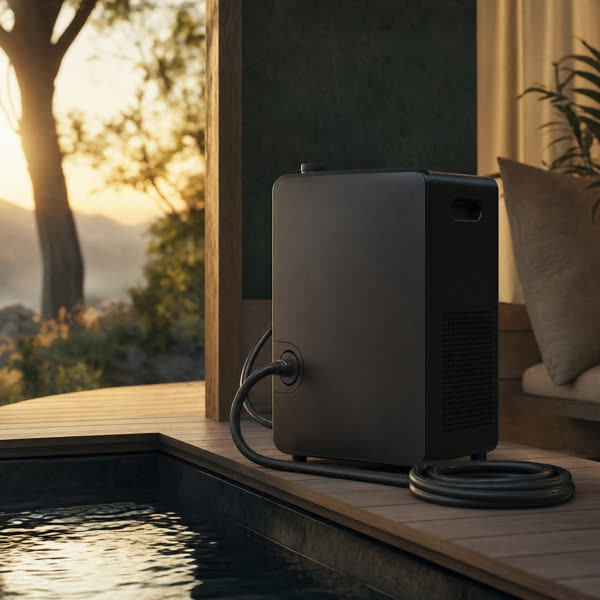
Quick answer: Cold water after exercise is the better-studied timing: in small trials it eased muscle soreness for up to 4 days (Bleakley et al., 2012). If you lift to build muscle, regular plunges right after strength sessions reduced strength gains (Malta et al., 2021), so plunge on rest days or after cardio instead. Right before a workout, a plunge is a poor fit for power work: jump performance was lower right after cold water and back to normal by the next day (Zhu et al., 2026).
In This Article
Cold plunging means sitting in cold water, usually around 10 to 15°C (50 to 59°F). It is not the same as whole-body cryotherapy, which exposes you to extremely cold air in a chamber: a Cochrane review found only 4 small trials of it for muscle soreness, all with very low quality evidence (Costello et al., 2015). This page covers what the cold-water trials found for plunging after and before a workout.
After a Workout: Less Soreness, Smaller Strength Gains
A Cochrane review of 17 small trials (366 people) found less muscle soreness 24, 48, 72 and 96 hours after exercise with cold-water immersion than with rest, but the trials were of low quality (Bleakley et al., 2012). After high-intensity exercise, a 2022 review of 52 studies also found better muscle power and a better sense of recovery the next day, but no faster recovery of strength (Moore et al., 2022). Cold water is not the only option: in a review of 99 studies, massage was the most effective way to ease soreness and fatigue (Dupuy et al., 2018).
Get our free supplement cheat sheet.
One page: typical doses, timing and upper limits for ten well-studied supplements. No upsell.
🔒 No spam. Unsubscribe anytime. We send 1-2 emails/month max.
The trade-off is muscle growth. In a 12-week trial, 21 active men lifted twice a week and then spent 10 minutes either in cold water or doing light active recovery: strength and muscle mass rose more with active recovery, and fast-twitch muscle fibers grew 17% only in that group (Roberts et al., 2015). A meta-analysis of 8 studies found that regular cold water after resistance training reduced strength gains, but did not affect endurance training (Malta et al., 2021).
Not every study agrees. In a 2023 meta-analysis of 10 studies, cooling only the trained limbs reduced strength gains, but whole-body immersion made no significant difference (Grgic, 2023), and in 18 rugby players, 4 weeks of cold water after weight training did not change lean mass (Horgan et al., 2023). If muscle growth is your main goal, plunge on rest days or after cardio. We found no trial that tested waiting a few hours after lifting (PubMed search, October 24, 2026).
Before a Workout
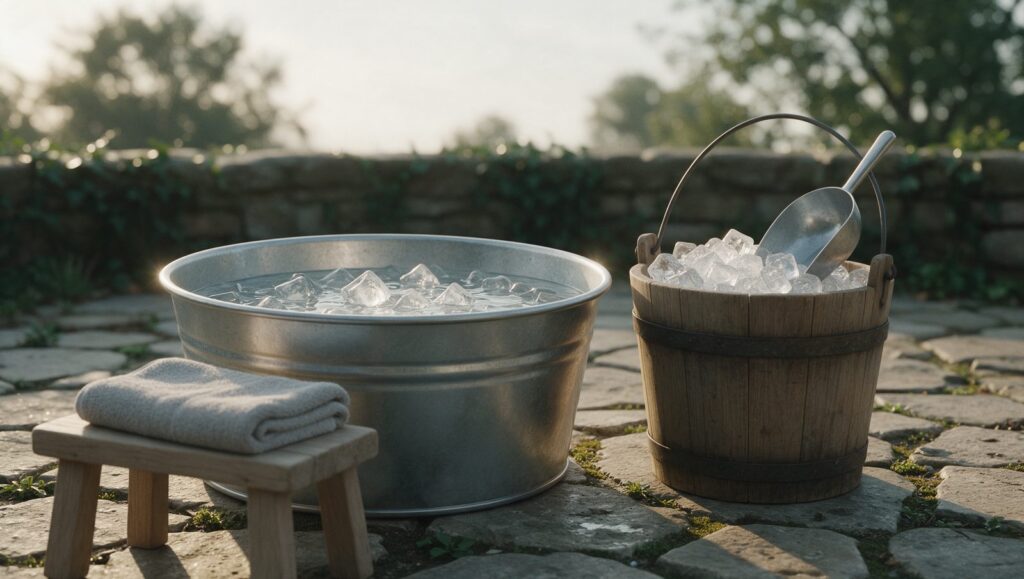
Cold water right before training has less research. In a 2026 meta-analysis of 22 trials, jump performance was lower right after cold-water immersion and back to normal 24 to 48 hours later, while maximal isometric strength did not change (Zhu et al., 2026). So a plunge just before sprinting, jumping or heavy lifting is a poor fit.
Cooling before endurance exercise in the heat is a different case. In a 2012 meta-analysis of 27 trials, cooling down before exercise improved performance by about 6.6% in hot conditions but only 1.4% in moderate temperatures; it helped endurance tests, not short sprints, and cooling with water had one of the smallest effects (Wegmann et al., 2012). A 2024 meta-analysis of 59 studies in men exercising above 30°C also found that cooling reduced the drop in performance caused by heat (van de Kerkhof et al., 2024); two of its authors advise a company that makes cooling products.
When to Plunge, by Goal
| Goal | When to plunge | What the trials found |
|---|---|---|
| Less soreness after hard exercise | After the session | Less soreness for up to 4 days than with rest, in small, low-quality trials (Bleakley et al., 2012) |
| Muscle and strength | Rest days, or after cardio | Regular cold water after lifting reduced strength gains (Malta et al., 2021) |
| Jumping or sprinting soon after | Not right before | Jump performance was lower right after cold water (Zhu et al., 2026) |
| Endurance in hot weather | Cooling before can help | Pre-cooling helped endurance in the heat; water had a small effect (Wegmann et al., 2012) |
How Cold and How Long
Recovery trials defined cold-water immersion as water below 15°C (59°F) (Bleakley et al., 2012). A 2023 meta-analysis of 44 studies found that the exact water temperature did not change the effect on soreness, and that short and medium sessions helped while longer ones did not (Batista et al., 2023). Reviews that ranked protocols put about 10 to 15 minutes at 10 to 15°C first, with low certainty (Wang et al., 2025; Berjisian et al., 2026).
If you are new to cold water, start warmer and shorter: our cold plunge protocol tool suggests a starting point by goal, and our cold plunge recovery guide covers the recovery research in more detail. If you are choosing a tub, our cold plunge tub guide compares the main types.
Safety
Cold water raises heart rate and blood pressure: in one study, an hour at 14°C raised noradrenaline by 530% (Srámek et al., 2000). A 2017 review lists drowning, cardiac arrest and hypothermia among the risks of cold-water immersion (Tipton et al., 2017). If you have heart disease, high blood pressure or Raynaud’s, or are pregnant, ask your doctor first, never plunge alone when you are starting, and get out if you feel numb or dizzy or shiver hard.
Frequently Asked Questions
Is it better to cold plunge before or after a workout?
After is the better-studied timing for soreness (Bleakley et al., 2012), but not straight after lifting if you want the most muscle gain (Malta et al., 2021). Right before power work is a poor fit, because jump performance was lower right after cold water (Zhu et al., 2026).
How long should I wait after lifting before a cold plunge?
No trial has compared waiting times (PubMed search, October 24, 2026). The trials that found smaller gains used cold water straight after every strength session (Roberts et al., 2015), so rest days are the safest choice if muscle growth is your goal.
Does a cold plunge after cardio hurt endurance gains?
Not in the trials so far: a meta-analysis of 8 studies found no effect of regular cold water on endurance training results (Malta et al., 2021).
Is a cold plunge the same as cryotherapy?
No. Whole-body cryotherapy uses extremely cold air in a chamber, and a Cochrane review found only 4 small trials with very low quality evidence for soreness (Costello et al., 2015); cold plunging is cold-water immersion, which has many more trials (Bleakley et al., 2012).
How cold should the water be after a workout?
Recovery trials used water below 15°C (59°F) (Bleakley et al., 2012), and in a 44-study meta-analysis the exact temperature did not change the effect on soreness (Batista et al., 2023).
Scientific References
- Bleakley et al., 2012. Cold-water immersion (cryotherapy) for preventing and treating muscle soreness after exercise. Cochrane Database Syst Rev.
- Malta et al., 2021. The Effects of Regular Cold-Water Immersion Use on Training-Induced Changes in Strength and Endurance Performance: A Systematic Review with Meta-Analysis. Sports Med.
- Zhu et al., 2026. Temporal dynamics of muscle strength recovery following acute cold-water immersion: a systematic review and meta-analysis. PeerJ.
- Costello et al., 2015. Whole-body cryotherapy (extreme cold air exposure) for preventing and treating muscle soreness after exercise in adults. Cochrane Database Syst Rev.
- Moore et al., 2022. Impact of Cold-Water Immersion Compared with Passive Recovery Following a Single Bout of Strenuous Exercise on Athletic Performance in Physically Active Participants: A Systematic Review with Meta-analysis and Meta-regression. Sports Med.
- Dupuy et al., 2018. An Evidence-Based Approach for Choosing Post-exercise Recovery Techniques to Reduce Markers of Muscle Damage, Soreness, Fatigue, and Inflammation: A Systematic Review With Meta-Analysis. Front Physiol.
- Roberts et al., 2015. Post-exercise cold water immersion attenuates acute anabolic signalling and long-term adaptations in muscle to strength training. J Physiol.
- Grgic, 2023. Effects of post-exercise cold-water immersion on resistance training-induced gains in muscular strength: a meta-analysis. Eur J Sport Sci.
- Horgan et al., 2023. No effect of repeated post-resistance exercise cold or hot water immersion on in-season body composition and performance responses in academy rugby players: a randomised controlled cross-over design. Eur J Appl Physiol.
- Wegmann et al., 2012. Pre-cooling and sports performance: a meta-analytical review. Sports Med.
- van de Kerkhof et al., 2024. Performance Benefits of Pre- and Per-cooling on Self-paced Versus Constant Workload Exercise: A Systematic Review and Meta-analysis. Sports Med.
- Batista et al., 2023. What Parameters Influence the Effect of Cold-Water Immersion on Muscle Soreness? An Updated Systematic Review and Meta-Analysis. Clin J Sport Med.
- Wang et al., 2025. Impact of different doses of cold water immersion (duration and temperature variations) on recovery from acute exercise-induced muscle damage: a network meta-analysis. Front Physiol.
- Berjisian et al., 2026. Strategic Application of Post-exercise Cold-Water Immersion to Enhance Performance Recovery and Adaptation: An Umbrella Review of 15 Published Systematic Reviews with Meta-analysis. Sports Med Open.
- Srámek et al., 2000. Human physiological responses to immersion into water of different temperatures. Eur J Appl Physiol.
- Tipton et al., 2017. Cold water immersion: kill or cure? Exp Physiol.
The recovery gear guides
Compare cold plunge, sauna and light therapy gear, reviewed by our team.
- → Best Cold Plunge Tubs 2026
- → Best Cold Plunge Chillers 2026
- → Cold + Sauna Contrast Protocol
- → Best Cold Plunge Cost Guide
- → Best Infrared Saunas 2026
- → Sauna Blanket vs Sauna
- → Best Sauna Blankets 2026
- → Best Red Light Therapy Devices
- → Red Light Panel vs Mask
- → 7 Cold Plunge Benefits (Science)
- → Sauna Benefits for Longevity
- → Red Light Therapy Benefits
- → Cold Plunge Protocol Tool
- → Sauna Routine Calculator
- → Red Light Dosing Calculator
- → Best LED Face Masks 2026
- → Best Light Therapy Lamps 2026