Affiliate links: as an Amazon Associate and through other programs, we earn from qualifying purchases, at no extra cost to you. Learn more.
Updated 2026
Quick answer: Women respond to cold water much like men: the studies we found show small differences in how fast women cool, and the stress-hormone rise was not larger in women (Solianik et al., 2014; Tikuisis et al., 2000). We found no study on cold plunging in pregnancy, so skip it then. The 11 minutes a week often quoted online is a benchmark from one study of 7 Danish winter-swimming men, not a dose any trial tested (Søberg et al., 2021).
In This Article
- How Women Respond to Cold Water
- What Cold Water Can and Cannot Do
- Cold Plunging During Your Period
- Cold Plunge Tub Options
- Cold Plunging and Female Hormones
- A Cautious Starting Protocol
- Cold Plunging While Pregnant or Trying to Conceive
- What Women Report, and What Trials Show
- Frequently Asked Questions
- Scientific References
Most cold-water studies are small and many include only men or only women, so the evidence for women specifically is thin (Esperland et al., 2022). Here is what the studies that included women found.
How Women Respond to Cold Water
The basic response to cold water is the same in both sexes: heart rate, blood pressure and stress hormones rise, and the body works harder to make heat (measured in young men: Srámek et al., 2000). The differences found so far are small, and the studies disagree:
Get our free supplement cheat sheet.
One page: typical doses, timing and upper limits for ten well-studied supplements. No upsell.
🔒 No spam. Unsubscribe anytime. We send 1-2 emails/month max.
- Body fat and size: an older review found that women at rest cooled faster than men in cold water (Graham, 1988), while a later study in 18°C (64°F) water found that women’s core temperature fell about half as fast, a gap that disappeared when men and women with similar body fat and size were compared (Tikuisis et al., 2000).
- Insulation vs shivering: in 14°C (57°F) water, 14 women and 18 men cooled at the same rate; women relied more on insulation and men shivered more (Solianik et al., 2014).
- Stress hormones: in the same study, adrenaline rose more in men than in women (Solianik et al., 2014). We found no study showing a larger noradrenaline rise in women.
- Menstrual cycle: the heat-production response to 20°C (68°F) water was the same in the follicular and luteal phases and similar to men’s (Glickman-Weiss et al., 2000). We found no study that measured estrogen or progesterone after short cold plunges.
- Brown fat: in 95 adults cooled with a water vest, brown fat was found in about 45% of premenopausal women and 36% of men, a difference that was not significant, and women burned more extra energy in the cold (Herz et al., 2021).
What Cold Water Can and Cannot Do
1. Mood and Stress
An hour in 14°C (57°F) water raised noradrenaline by about 530% and dopamine by about 250% in young men (Srámek et al., 2000), but a home plunge is much shorter. In a 2025 meta-analysis of small trials, stress was lower 12 hours after cold-water immersion and mood did not change (Cain et al., 2025). A 2026 review of 13 studies (4,105 people) found results that leaned positive for stress and low mood but were uncertain, with little sign of benefit for anxiety (Ngandeu Schepanski et al., 2026).
In an online survey of 1,114 women who swim in cold water, about 47% said it eased anxiety linked to their period or perimenopause, but these were their own reports (Pound et al., 2024). Cold water is not a substitute for treatment for depression or anxiety.
2. Alertness
People felt more alert and less nervous right after a 5-minute cold-water immersion in a brain-imaging study (Yankouskaya et al., 2023). The effect fades with habit: in winter swimmers, the noradrenaline rise after a short dip was smaller after 3 months (Huttunen et al., 2001).
3. Skin and Inflammation
We found no trial of cold plunging for skin. Inflammation markers actually rose right after cold-water immersion and 1 hour later in the 2025 meta-analysis (Cain et al., 2025).
4. Muscle Soreness
Cold water after exercise reduced muscle soreness 1 to 4 days later compared with rest in a Cochrane review of 17 small trials, with low-quality evidence (Bleakley et al., 2012). If you lift weights for muscle, keep plunges away from strength sessions: regular use after resistance training reduced strength gains (Malta et al., 2021). Our page on cold plunge benefits goes through each study.
5. Thyroid Conditions
We found no study of cold plunging in people with thyroid conditions. If you take thyroid medication, ask your doctor before you start.
Cold Plunging During Your Period
We found no trial of cold plunging for period cramps. In the online survey, women who swim in cold water said it eased period symptoms such as anxiety, mood swings and irritability, but these were their own reports (Pound et al., 2024). If you feel light-headed or depleted, skip the session or use warmer water.
Cold Plunge Tub Options
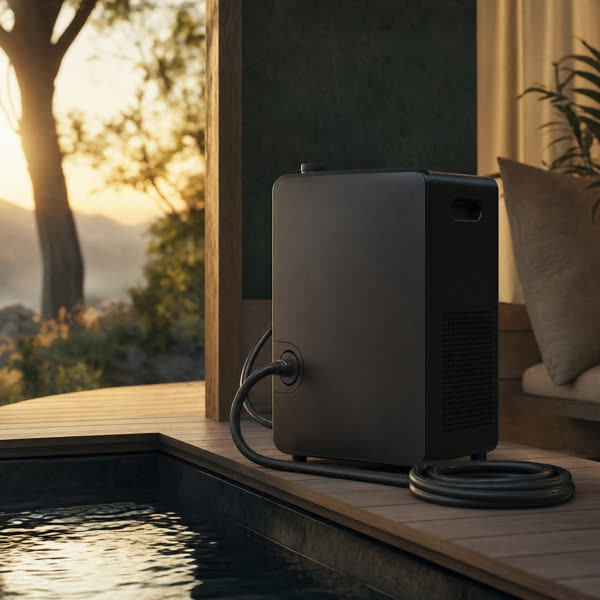
No tub is made for women specifically. Look for a height you can step into and out of safely, a lid, and a way to keep the water cold (ice or a chiller). Our cold plunge tub guide compares the options.
TUB OPTIONS
Affiliate disclosure: We earn a commission on qualifying purchases at no extra cost to you.
Cold Plunging and Female Hormones
Menstrual cycle. The two small studies we found point in different directions. One found the same heat-production response to cold water in both cycle phases (Glickman-Weiss et al., 2000); another found that women burned less extra energy in the cold in the luteal phase, the two weeks after ovulation (Herz et al., 2021). We found no study that tested whether timing plunges to your cycle changes anything, so let comfort guide you.
Perimenopause hot flashes. In a 2024 online survey of 1,114 women who swim in cold water, about 30% of perimenopausal women said it improved their hot flushes (Pound et al., 2024). This was self-reported, not a controlled trial, and one author gives paid talks on menopause.
If you are also looking at supplements for this stage of life, our guides to collagen peptides and magnesium summarize what the trials found.
A Cautious Starting Protocol
- Start short and mild: water around 15°C (59°F) for a minute or two. The gasp and racing heart of cold shock get smaller over the first few immersions (Barwood et al., 2024).
- Upper range: recovery studies found the best results with 10 to 15 minutes at 11 to 15°C (52 to 59°F), and longer immersions did not help more (Machado et al., 2016; Batista et al., 2023). Longer or colder sessions raise the risk of cold shock and hypothermia (Tipton et al., 2017).
- How often: the 11 minutes a week you see online is a benchmark, not a tested dose: experienced winter swimmers in one study averaged about 1.4 minutes per dip and about 11 minutes of cold water a week (Søberg et al., 2021). Women in the UK survey mostly swam 5 to 15 minutes in winter (Pound et al., 2024).
- Cycle phase: let comfort guide you, and shorten or skip sessions when you feel the cold more.
- Safety: never plunge alone; in the survey, only 15.5% of the women swam alone (Pound et al., 2024). Our free cold plunge calculator gives a starting plan.
Cold Plunging While Pregnant or Trying to Conceive
Pregnancy: not recommended. We found no study on the safety of cold plunging in pregnancy. Cold water raises heart rate and blood pressure (Srámek et al., 2000) and triggers a cold shock response that raises the risk of heart rhythm problems (Barwood et al., 2024), so skip it unless your doctor says otherwise.
Trying to conceive: ask your doctor. There is little research on cold plunging while trying to conceive, and you could be pregnant before you know it; since cold plunging is not recommended in pregnancy, check with your doctor or fertility specialist first.
Postpartum: wait until your doctor or midwife clears you, and start again with short, mild sessions.
What Women Report, and What Trials Show
- Calmer mood and less stress. Commonly reported (Pound et al., 2024); in trials, stress was lower 12 hours after cold water but mood did not change (Cain et al., 2025).
- Sleep. Better self-rated sleep in a few small trials (Cain et al., 2025).
- Less muscle soreness after exercise. A small benefit compared with rest (Bleakley et al., 2012).
- Hot flash relief. Reported by about 30% of perimenopausal women in the survey (Pound et al., 2024); not tested in a controlled trial.
Frequently Asked Questions
Is cold plunging safe during my period?
There are no trials on this, so let comfort guide you. Skip it if you have heavy bleeding or feel light-headed.
Will cold plunging affect my menstrual cycle?
We found no study of cold plunging and cycle length or hormone levels. In the lab, women’s heat-production response to cold water was the same in both cycle phases (Glickman-Weiss et al., 2000).
Does cold plunging help with menopause symptoms?
About 30% of perimenopausal women in an online survey said cold water swimming improved their hot flushes, but no controlled trial has tested it (Pound et al., 2024). Talk to your doctor first if you have a heart condition.
Can cold plunging help me lose weight?
We found no trial showing weight loss from cold plunging. Brown fat capacity rose after 4 weeks of daily cooling in a small study of men, but total heat production did not change (Blondin et al., 2017).
Should I cold plunge if I have a thyroid condition, PCOS or an autoimmune disease?
We found no study of cold plunging in these conditions. Ask your doctor first, especially if you take medication.
Scientific References
- Solianik et al., 2014. Gender-specific cold responses induce a similar body-cooling rate but different neuroendocrine and immune responses. Cryobiology.
- Tikuisis et al., 2000. Comparison of thermoregulatory responses between men and women immersed in cold water. J Appl Physiol (1985).
- Graham, 1988. Thermal, metabolic, and cardiovascular changes in men and women during cold stress. Med Sci Sports Exerc.
- Glickman-Weiss et al., 2000. The influence of gender and menstrual phase on thermosensitivity during cold water immersion. Aviat Space Environ Med.
- Herz et al., 2021. Sex differences in brown adipose tissue activity and cold-induced thermogenesis. Mol Cell Endocrinol.
- Srámek et al., 2000. Human physiological responses to immersion into water of different temperatures. Eur J Appl Physiol.
- Cain et al., 2025. Effects of cold-water immersion on health and wellbeing: A systematic review and meta-analysis. PLoS One.
- Ngandeu Schepanski et al., 2026. Cold-water exposure and psychological outcomes in adults: a systematic review and meta-analysis. Front Physiol.
- Pound et al., 2024. How do women feel cold water swimming affects their menstrual and perimenopausal symptoms? Post Reprod Health.
- Pound et al., 2024. The swimming habits of women who cold water swim. Womens Health (Lond).
- Yankouskaya et al., 2023. Short-Term Head-Out Whole-Body Cold-Water Immersion Facilitates Positive Affect and Increases Interaction between Large-Scale Brain Networks. Biology (Basel).
- Huttunen et al., 2001. Effect of regular winter swimming on the activity of the sympathoadrenal system before and after a single cold water immersion. Int J Circumpolar Health.
- Bleakley et al., 2012. Cold-water immersion (cryotherapy) for preventing and treating muscle soreness after exercise. Cochrane Database Syst Rev.
- Malta et al., 2021. The Effects of Regular Cold-Water Immersion Use on Training-Induced Changes in Strength and Endurance Performance: A Systematic Review with Meta-Analysis. Sports Med.
- Søberg et al., 2021. Altered brown fat thermoregulation and enhanced cold-induced thermogenesis in young, healthy, winter-swimming men. Cell Rep Med.
- Machado et al., 2016. Can Water Temperature and Immersion Time Influence the Effect of Cold Water Immersion on Muscle Soreness? A Systematic Review and Meta-Analysis. Sports Med.
- Batista et al., 2023. What Parameters Influence the Effect of Cold-Water Immersion on Muscle Soreness? An Updated Systematic Review and Meta-Analysis. Clin J Sport Med.
- Tipton et al., 2017. Cold water immersion: kill or cure? Exp Physiol.
- Barwood et al., 2024. Habituation of the cold shock response: A systematic review and meta-analysis. J Therm Biol.
- Blondin et al., 2017. Four-week cold acclimation in adult humans shifts uncoupling thermogenesis from skeletal muscles to brown adipose tissue. J Physiol.
- Esperland et al., 2022. Health effects of voluntary exposure to cold water: a continuing subject of debate. Int J Circumpolar Health.
The recovery gear guides
Compare cold plunge, sauna and light therapy gear, reviewed by our team.
- → Best Cold Plunge Tubs 2026
- → Best Cold Plunge Chillers 2026
- → Cold + Sauna Contrast Protocol
- → Best Cold Plunge Cost Guide
- → Best Infrared Saunas 2026
- → Sauna Blanket vs Sauna
- → Best Sauna Blankets 2026
- → Best Red Light Therapy Devices
- → Red Light Panel vs Mask
- → 7 Cold Plunge Benefits (Science)
- → Sauna Benefits for Longevity
- → Red Light Therapy Benefits
- → Cold Plunge Protocol Tool
- → Sauna Routine Calculator
- → Red Light Dosing Calculator
- → Best LED Face Masks 2026
- → Best Light Therapy Lamps 2026