Affiliate links: as an Amazon Associate and through other programs, we earn from qualifying purchases, at no extra cost to you. Learn more.
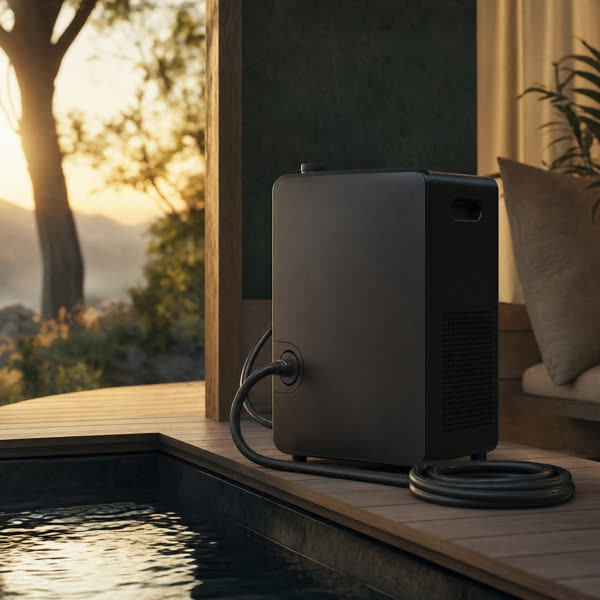
Quick answer: Cold-water immersion after hard exercise eased muscle soreness over the next 1 to 4 days compared with resting, although the trials were small and of low quality (Bleakley et al., 2012). If you lift to build muscle, regular cold water after strength sessions reduced strength gains in a meta-analysis of 8 studies (Malta et al., 2021). Pooled trials point to about 10 to 15 minutes at 10 to 15°C (50 to 59°F), but the certainty is low (Berjisian et al., 2026).
In This Article
What Cold Water Does After Exercise
A Cochrane review of 17 small trials (366 people) found less muscle soreness 24, 48, 72 and 96 hours after exercise with cold-water immersion than with rest, but the trials were of low quality and few watched for side effects (Bleakley et al., 2012). A 2022 review of 52 studies found that, after high-intensity exercise, cold water also helped muscle power and people’s sense of recovery the next day, but it did not help strength recover (Moore et al., 2022).
Cold water is not the only option. A 2018 review of 99 studies found that massage was the most effective way to ease soreness and fatigue, with immersion among the techniques that also helped (Dupuy et al., 2018). A 2026 overview of the reviews concluded that soreness is the most consistent benefit, that results for performance and inflammation are mixed, and that most of the reviews were of low or critically low quality (Liang et al., 2026). For other effects of cold water, such as alertness, see our cold plunge benefits page.
Get our free supplement cheat sheet.
One page: typical doses, timing and upper limits for ten well-studied supplements. No upsell.
🔒 No spam. Unsubscribe anytime. We send 1-2 emails/month max.
Cold Plunges and Muscle Growth
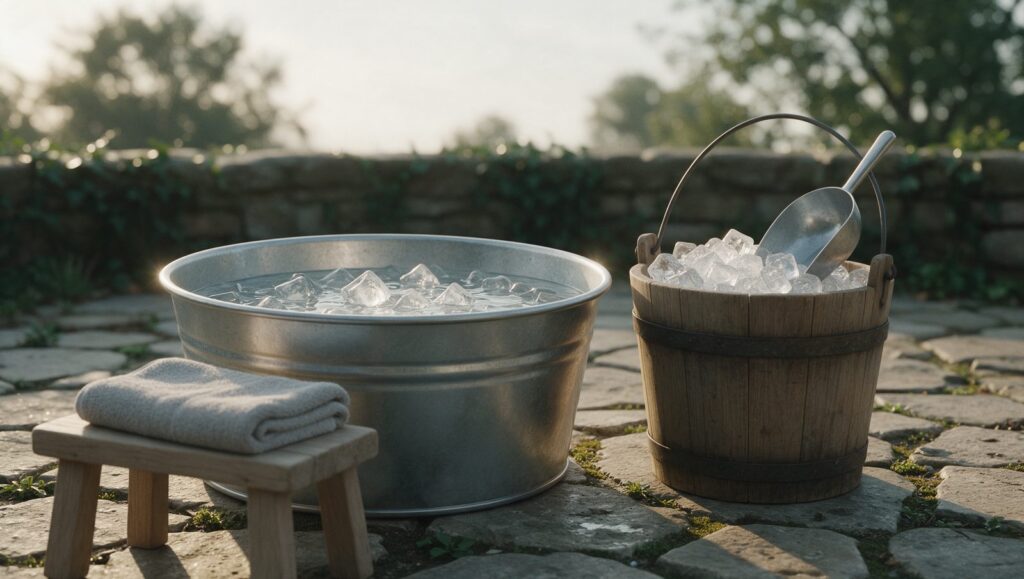
In a 12-week trial, 21 active men lifted twice a week and then spent 10 minutes either in cold water or doing light active recovery. Strength and muscle mass rose more with active recovery, and the size of fast-twitch muscle fibers grew 17% only in that group (Roberts et al., 2015). A meta-analysis of 8 studies found that regular cold water after resistance training reduced strength gains, but did not affect endurance training (Malta et al., 2021).
The effect is not the same in every study. In a 2023 meta-analysis of 10 studies, cold water reduced strength gains when only the trained limbs were cooled, but whole-body immersion made no significant difference (Grgic, 2023), and in 18 rugby players, 4 weeks of cold water after weight training did not change lean mass (Horgan et al., 2023).
If muscle growth is your main goal, plunge on rest days or several hours away from your strength sessions. The trials that found smaller gains used cold water after each strength session, and we found no trial that tested waiting a few hours (PubMed search, October 24, 2026).
Temperature, Time and Timing
The Cochrane review defined cold-water immersion as water below 15°C (59°F) (Bleakley et al., 2012). A 2023 meta-analysis of 44 studies found that the exact water temperature did not change the effect on soreness, and that short and medium sessions helped while longer ones did not (Batista et al., 2023). Two reviews that compared protocols found the best results with about 10 to 15 minutes at roughly 10 to 15°C, but with low certainty (Wang et al., 2025; Berjisian et al., 2026).
You do not need to start there: our cold plunge protocol tool suggests a warmer, shorter start and builds up by goal. Leave a gap before power work, too: in a 2026 meta-analysis of 22 trials, jump performance was lower right after cold-water immersion and back to normal by the next day (Zhu et al., 2026).
Cold and Heat Together
Alternating hot and cold water gave similar soreness results to cold water alone in the Cochrane review (Bleakley et al., 2012), and a 2023 meta-analysis found cold water more effective than contrast water therapy for most recovery outcomes (Moore et al., 2023). If you enjoy both, our cold plunge and sauna contrast protocol explains how people combine them.
Safety
Cold water can be dangerous as well as useful: a 2017 review lists drowning, cardiac arrest and hypothermia among the risks of cold-water immersion (Tipton et al., 2017). Cold water also raises heart rate and blood pressure, and in one study an hour at 14°C raised noradrenaline by 530% (Srámek et al., 2000). If you have heart disease, high blood pressure or Raynaud’s, or are pregnant, ask your doctor first, never plunge alone when you are starting, and get out if you feel numb or dizzy or shiver hard.
Best Cold Plunge Equipment for Recovery
For recovery, compare three things: whether the tub has a chiller that holds a set temperature, whether it is big enough for the immersion you plan, and how easy it is to keep clean. Our cold plunge tub guide compares the main types, our picks under $2,000 cover lower budgets, and our cost guide compares upfront and running costs.
BEST FOR DAILY RECOVERY USE
Affiliate links: we may earn a commission on qualifying purchases at no extra cost to you.
Frequently Asked Questions
How cold should a cold plunge be for recovery?
Trials defined cold water as below 15°C (59°F) (Bleakley et al., 2012). Reviews that compared protocols found the best soreness results at about 10 to 15°C, but the exact temperature did not change the effect in a 44-study meta-analysis (Wang et al., 2025; Batista et al., 2023).
How long should I stay in a cold plunge?
Short and medium sessions eased soreness and longer ones did not (Batista et al., 2023), and ranked protocols put about 10 to 15 minutes first (Wang et al., 2025). If you are new, start shorter and build up.
Does cold plunging after lifting reduce muscle gains?
It can. Regular cold water after strength sessions reduced strength gains in a meta-analysis of 8 studies (Malta et al., 2021), although whole-body immersion made no significant difference in another analysis (Grgic, 2023).
Is it OK to cold plunge every day?
Frequent plunges change your response: in winter swimmers, the noradrenaline rise after a short cold dip was smaller after 3 months of regular swimming (Huttunen et al., 2001). If you lift for muscle growth, keep plunges away from your strength sessions (Malta et al., 2021).
Should I cold plunge before or after a workout?
After, or on a separate day. Jump performance was lower right after cold-water immersion in a 2026 meta-analysis of 22 trials (Zhu et al., 2026), so a plunge right before power or sprint work is a poor fit.
Scientific References
- Bleakley et al., 2012. Cold-water immersion (cryotherapy) for preventing and treating muscle soreness after exercise. Cochrane Database Syst Rev.
- Malta et al., 2021. The Effects of Regular Cold-Water Immersion Use on Training-Induced Changes in Strength and Endurance Performance: A Systematic Review with Meta-Analysis. Sports Med.
- Berjisian et al., 2026. Strategic Application of Post-exercise Cold-Water Immersion to Enhance Performance Recovery and Adaptation: An Umbrella Review of 15 Published Systematic Reviews with Meta-analysis. Sports Med Open.
- Moore et al., 2022. Impact of Cold-Water Immersion Compared with Passive Recovery Following a Single Bout of Strenuous Exercise on Athletic Performance in Physically Active Participants: A Systematic Review with Meta-analysis and Meta-regression. Sports Med.
- Dupuy et al., 2018. An Evidence-Based Approach for Choosing Post-exercise Recovery Techniques to Reduce Markers of Muscle Damage, Soreness, Fatigue, and Inflammation: A Systematic Review With Meta-Analysis. Front Physiol.
- Liang et al., 2026. Cold-Water Immersion for Post-exercise Recovery: An Overlap-Aware Umbrella Review. Sports Med Open.
- Roberts et al., 2015. Post-exercise cold water immersion attenuates acute anabolic signalling and long-term adaptations in muscle to strength training. J Physiol.
- Grgic, 2023. Effects of post-exercise cold-water immersion on resistance training-induced gains in muscular strength: a meta-analysis. Eur J Sport Sci.
- Horgan et al., 2023. No effect of repeated post-resistance exercise cold or hot water immersion on in-season body composition and performance responses in academy rugby players: a randomised controlled cross-over design. Eur J Appl Physiol.
- Batista et al., 2023. What Parameters Influence the Effect of Cold-Water Immersion on Muscle Soreness? An Updated Systematic Review and Meta-Analysis. Clin J Sport Med.
- Wang et al., 2025. Impact of different doses of cold water immersion (duration and temperature variations) on recovery from acute exercise-induced muscle damage: a network meta-analysis. Front Physiol.
- Zhu et al., 2026. Temporal dynamics of muscle strength recovery following acute cold-water immersion: a systematic review and meta-analysis. PeerJ.
- Moore et al., 2023. Effects of Cold-Water Immersion Compared with Other Recovery Modalities on Athletic Performance Following Acute Strenuous Exercise in Physically Active Participants: A Systematic Review, Meta-Analysis, and Meta-Regression. Sports Med.
- Tipton et al., 2017. Cold water immersion: kill or cure? Exp Physiol.
- Srámek et al., 2000. Human physiological responses to immersion into water of different temperatures. Eur J Appl Physiol.
- Huttunen et al., 2001. Effect of regular winter swimming on the activity of the sympathoadrenal system before and after a single cold water immersion. Int J Circumpolar Health.
The recovery gear guides
Compare cold plunge, sauna and light therapy gear, reviewed by our team.
- → Best Cold Plunge Tubs 2026
- → Best Cold Plunge Chillers 2026
- → Cold + Sauna Contrast Protocol
- → Best Cold Plunge Cost Guide
- → Best Infrared Saunas 2026
- → Sauna Blanket vs Sauna
- → Best Sauna Blankets 2026
- → Best Red Light Therapy Devices
- → Red Light Panel vs Mask
- → 7 Cold Plunge Benefits (Science)
- → Sauna Benefits for Longevity
- → Red Light Therapy Benefits
- → Cold Plunge Protocol Tool
- → Sauna Routine Calculator
- → Red Light Dosing Calculator
- → Best LED Face Masks 2026
- → Best Light Therapy Lamps 2026