Affiliate links: as an Amazon Associate and through other programs, we earn from qualifying purchases, at no extra cost to you. Learn more.
Updated 2026
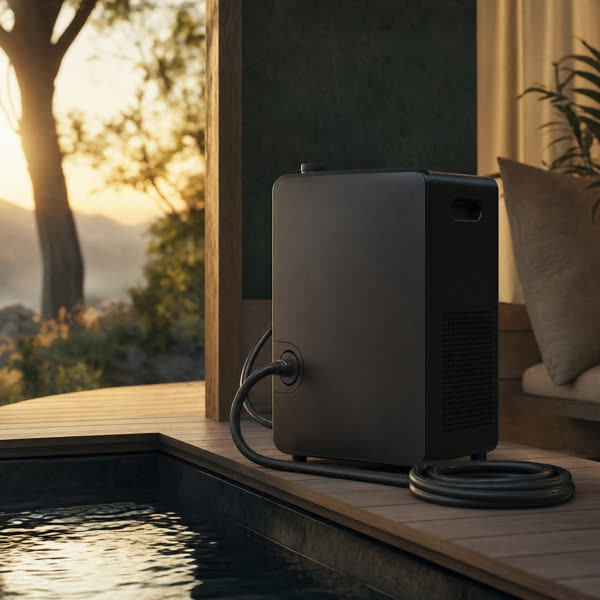
The cheapest apartment cold plunge is the bathtub you already have plus bagged ice: cooling a 40-gallon fill from 60 to 50°F takes about 21 lb of ice, roughly $5 at 25 cents a pound, by the math in our cold plunge cost guide. For a dedicated tub, a foldable inflatable or a compact upright barrel fits small spaces best, but check floor weight, drainage and noise first.
In This Article
- What to Check Before You Buy
- How we evaluate cold plunge tubs
- Option 1: Your Bathtub
- Option 2: A Foldable Inflatable Tub
- Option 3: A Compact Upright Barrel
- Floor Weight: Ask Before You Fill
- Safety First
- Bottom Line for Apartments
- Optional Add-Ons If You Also Train
- Apartment Cold Plunge: Common Questions
- Scientific References
Most cold plunge tubs are sold for houses with a garage or a patio. In an apartment, the limits are floor weight, drainage, noise and storage space. This page explains what to check, then compares the three setups that fit small spaces.
What to Check Before You Buy
| Check | Why it matters | What to do |
|---|---|---|
| Floor weight | Water weighs about 8.34 lb per gallon, so a 100-gallon tub holds over 800 lb of water before you step in | Ask your landlord or building manager before you fill a rigid tub |
| Drainage | You have to empty tens of gallons at every water change | Check that a hose can reach your bathtub or a floor drain |
| Noise | Chillers run a compressor and a fan | Check the decibel rating on the listing if you have neighbors below |
| Power | A chiller needs a grounded outlet, ideally GFCI-protected | Ask an electrician if you are unsure |
| Storage | Inflatables fold away; rigid tubs do not | Measure the space, including doorways |
💡 Prices are approximate and were last reviewed in October 2026. Retailer prices change often: tap a button for the current price on Amazon.
Get our free supplement cheat sheet.
One page: typical doses, timing and upper limits for ten well-studied supplements. No upsell.
🔒 No spam. Unsubscribe anytime. We send 1-2 emails/month max.
Option 1: Your Bathtub
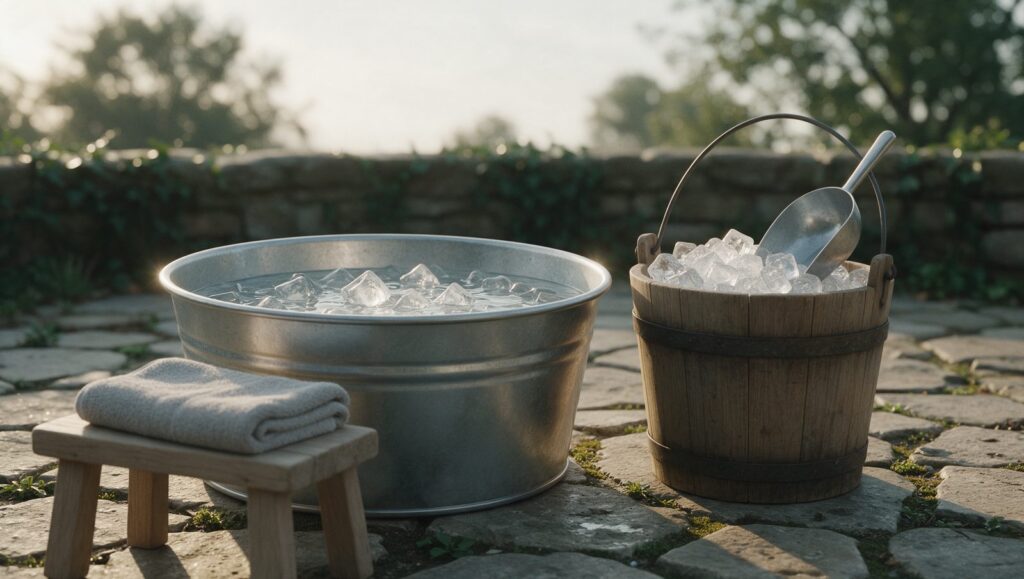
Fill the tub with cold tap water and add bagged ice. By our cost guide’s formula, cooling a 40-gallon fill to 50°F takes about 21 lb of ice from 60°F and about 31 lb from 65°F, roughly $5 to $8 per session at 25 cents a pound; real sessions take somewhat more ice, because the tub, the air and your body add heat. If you plunge several times a week, the ice adds up, and that is when a chiller starts to make sense.
Option 2: A Foldable Inflatable Tub
Inflatable and folding tubs cost about $40 to $500 as a type, and premium models more. They store in a closet when you are not using them. Use one with ice, or add a chiller later if the model is chiller-ready. You still need a way to drain it, usually a hose to the bathtub.
Option 3: A Compact Upright Barrel
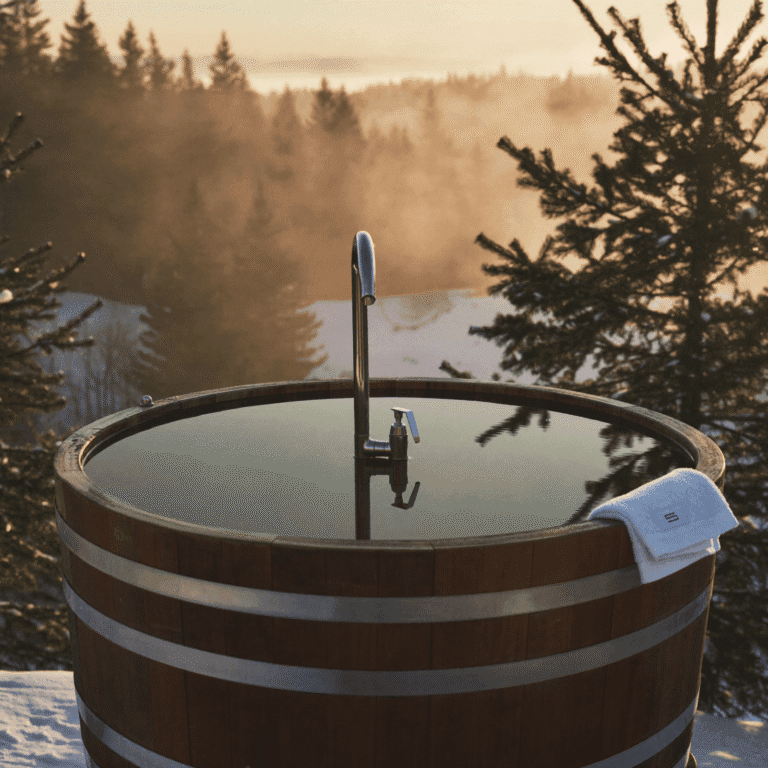
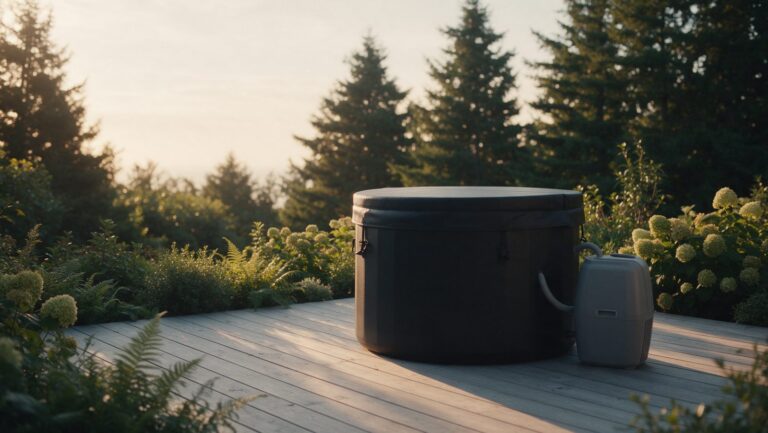
An upright barrel uses less floor area than a tub you lie down in, because you sit in it. Rigid barrels cost about $1,150 to $3,200 as a type without a chiller, and they are heavy when full. Sizes, weight, warranty and where they are made differ from one model to the next, so check them on the listing.
Upright cold plunge barrels and tubs
Before you buy, check each listing for the footprint, the filled weight, how it drains, the warranty and where it is made.
Affiliate link: we may earn a commission at no extra cost to you. To compare more models, see our budget cold plunge picks.
Floor Weight: Ask Before You Fill
A filled tub concentrates several hundred pounds on a small patch of floor, plus your own weight. Before you buy a rigid tub, ask your landlord or building manager about the floor’s load limit and where a tub may go. An inflatable you fill only for a session and then drain is the easier case.
Safety First
A review of cold water immersion lists drowning, cardiac arrest and hypothermia among its risks and notes that the evidence for its claimed benefits varies (Tipton et al., 2017). Never plunge alone or after drinking alcohol, keep early sessions short, and ask your doctor first if you have a heart condition or high blood pressure. Our cold plunge protocol calculator suggests a starting time and temperature for your experience level.
Bottom Line for Apartments
Start with your bathtub and ice to find out whether you like it. If you plunge often, a foldable inflatable that stores in a closet is the most flexible dedicated option, while a rigid upright barrel takes less floor space but needs a floor that can carry it.
Optional Add-Ons If You Also Train
A cold plunge does not need any supplement. If you also train hard, these are the basics readers ask about, and each guide covers doses and limits.
- Electrolytes: mainly relevant if you sweat a lot in training or in a sauna; our electrolyte calculator estimates how much sodium. Check electrolytes on Amazon →
- Magnesium glycinate: only if your diet is low in magnesium; the NIH upper limit for magnesium from supplements is 350 mg a day for adults, and higher doses can cause diarrhea, nausea and cramping (NIH). See our magnesium guide or check on Amazon →
- Omega-3 (fish oil): we found no trial of fish oil for cold plunge recovery, and above 1 g a day of EPA and DHA the risk of atrial fibrillation rose in a meta-analysis (Gencer et al., 2021). Check omega-3 on Amazon →
- Creatine monohydrate: it helps strength training, not the plunge itself; the ISSN says it raises muscle creatine stores and supports high-intensity exercise (Kreider et al., 2017). Check creatine on Amazon →
Affiliate links: we may earn a commission at no extra cost to you.
Apartment Cold Plunge: Common Questions
Can I keep a cold plunge in my apartment all year?
Yes, if your floor, drainage, power and lease allow it. Ask your landlord or building manager before you install a rigid tub or a chiller.
How much does it cost to run a cold plunge in an apartment?
With ice, a 40-gallon bathtub fill costs about $5 to $8 per session at 25 cents a pound. With a chiller, electricity usually runs about $8 to $53 a month, depending on insulation and climate.
What is the smallest option?
Your bathtub takes no extra space, and a foldable inflatable stores away between sessions. An upright barrel uses less floor area than a tub you lie down in; check the measurements on the listing.
Will my downstairs neighbor hear a chiller?
Possibly, because chillers run a compressor and a fan. Check the decibel rating on the listing before you buy.
Is cold plunging safe?
It carries real risks, including drowning, cardiac arrest and hypothermia (Tipton et al., 2017). Never plunge alone, and ask your doctor first if you have a heart condition.
For more choices, see our best cold plunge tubs guide.
Scientific References
- Cold water immersion: kill or cure? Exp Physiol. Tipton et al., 2017
- Effect of Long-Term Marine ɷ-3 Fatty Acids Supplementation on the Risk of Atrial Fibrillation in Randomized Controlled Trials of Cardiovascular Outcomes: A Systematic Review and Meta-Analysis. Circulation. Gencer et al., 2021
- International Society of Sports Nutrition position stand: safety and efficacy of creatine supplementation in exercise, sport, and medicine. J Int Soc Sports Nutr. Kreider et al., 2017
- NIH Office of Dietary Supplements: Magnesium, Fact Sheet for Health Professionals (updated January 6, 2026).
The recovery gear guides
Compare cold plunge, sauna and light therapy gear, reviewed by our team.
- → Best Cold Plunge Tubs 2026
- → Best Cold Plunge Chillers 2026
- → Cold + Sauna Contrast Protocol
- → Best Cold Plunge Cost Guide
- → Best Infrared Saunas 2026
- → Sauna Blanket vs Sauna
- → Best Sauna Blankets 2026
- → Best Red Light Therapy Devices
- → Red Light Panel vs Mask
- → 7 Cold Plunge Benefits (Science)
- → Sauna Benefits for Longevity
- → Red Light Therapy Benefits
- → Cold Plunge Protocol Tool
- → Sauna Routine Calculator
- → Red Light Dosing Calculator
- → Best LED Face Masks 2026
- → Best Light Therapy Lamps 2026