
Advertising disclosure: This page contains affiliate links. As an Amazon Associate, and through other partner programs, we may earn a commission from qualifying purchases — at no extra cost to you. Learn more.
Updated 2026
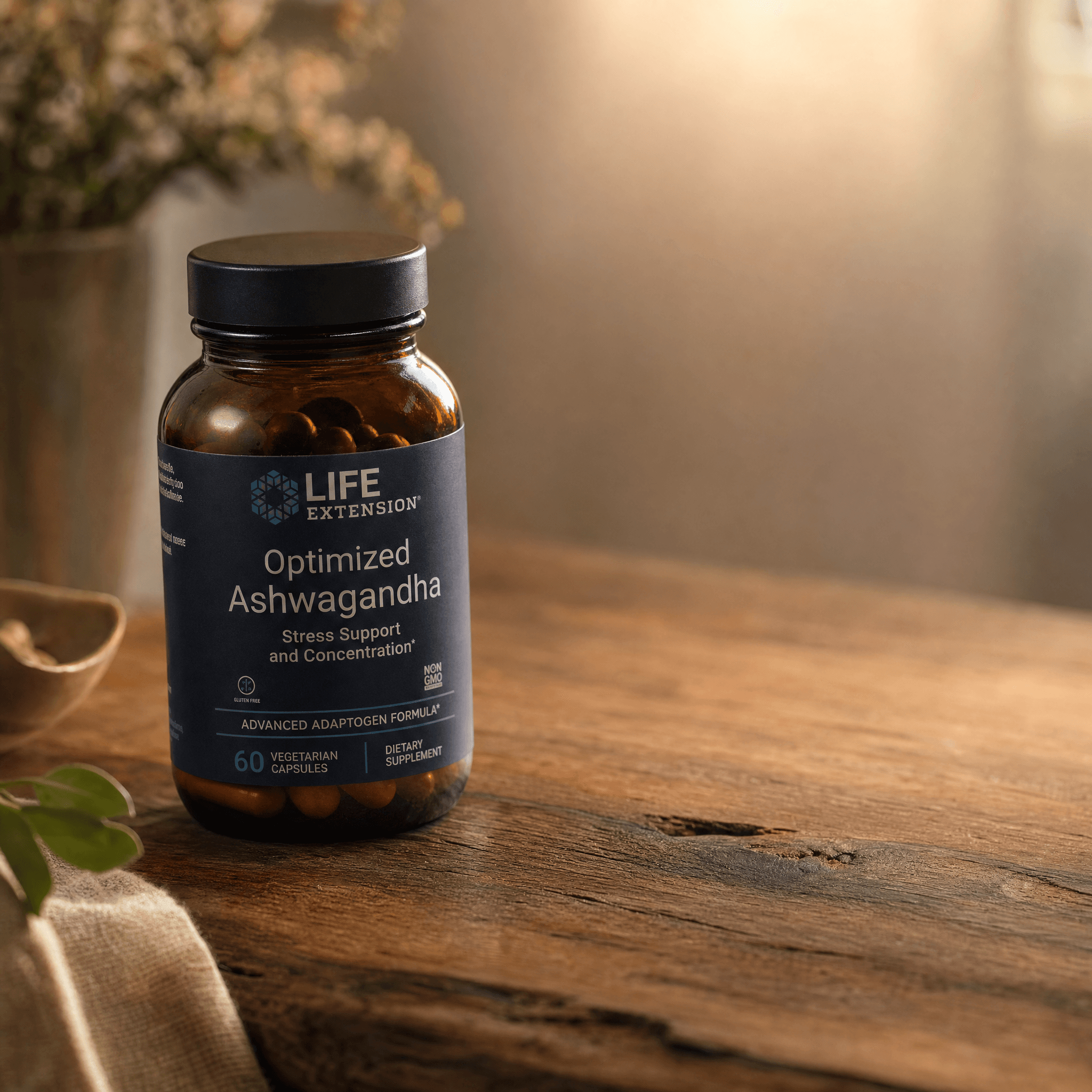
Ashwagandha doesn’t work like a stimulant — you won’t feel it within an hour. It’s an adaptogen that works by gradually regulating the HPA (hypothalamic-pituitary-adrenal) axis and reducing cortisol over time. Understanding this timeline prevents the common mistake of stopping too soon. Related: our evidence-based cortisol reduction guide.
In This Article
Get our Supplement Dosing Guide — free.
The exact dosages from 200+ peer-reviewed studies, compiled into one reference PDF. No fluff, no upsell.
🔒 No spam. Unsubscribe anytime. We send 1-2 emails/month max.
- Ashwagandha Results Timeline: Week by Week
- How Long Before You Feel Nothing? (Signs It’s Working)
- Factors That Affect How Quickly Ashwagandha Works
- When to Give Up (It’s Not Working)
- The Bottom Line
- Individual Variation: Why Effects Vary
- What Happens When You Stop Taking Ashwagandha
- Combining With Other Adaptogens
- Why Ashwagandha Takes Time (And What’s Happening in Your Body)
Ashwagandha Results Timeline: Week by Week

Week 1–2: Sleep and Stress (First Noticeable Changes)
The earliest benefits most people notice are improved sleep quality and reduced anxiety. A 2019 KSM-66 trial measuring sleep onset found significant improvements within the first 2 weeks. The mechanism: ashwagandha’s withanolides modulate GABA receptors and reduce cortisol, lowering baseline nervous system activation.
Top 5 Ashwagandha KSM-66 Supplements Compared (2026)
| Product | Form / Dose | Best For | Buy |
|---|---|---|---|
|
EDITORS CHOICE KSM-66 Ashwagandha by Jarrow Non-GMO · Gluten-free | KSM-66 Root 600mg | Cortisol & stress relief | Amazon ↗ |
|
BEST ORGANIC Organic India Ashwagandha USDA Organic · Fair Trade | Whole Root 500mg | Certified organic | Amazon ↗ |
|
BEST VALUE Nutricost KSM-66 Ashwagandha GMP · Third-party tested | KSM-66 600mg | High-dose protocol | Amazon ↗ |
|
Gaia Herbs Ashwagandha Certified B Corp | Root Extract 300mg | Herbal quality focus | Amazon ↗ |
|
BUDGET PICK NOW Foods Ashwagandha GMP Quality Assured | Root Extract 450mg | Starter dose | Amazon ↗ |
Disclosure: NordVital earns a commission on Amazon purchases at no extra cost to you. Picks are based on published research, label doses and third-party certifications; we do not lab-test products.
What to expect: falling asleep more easily, less 3AM waking, slightly calmer mornings. Don’t expect dramatic changes yet — this is the foundation being laid.
Week 2–4: Mood and Anxiety Reduction
Cortisol reduction begins measurably at 2 weeks and is most pronounced at 4–8 weeks. Most clinical trials measuring anxiety scores (HAM-A scale) show statistically significant improvements by week 4. The 56% reduction in anxiety scores seen in the landmark Chandrasekhar (2012) trial developed over an 8-week intervention.
Week 4–8: Energy, Focus, and Recovery
As HPA axis dysregulation corrects, energy becomes more consistent throughout the day — less afternoon energy crashes, improved cognitive focus. Athletes supplementing ashwagandha for exercise recovery typically see faster muscle recovery and reduced post-workout fatigue by week 4–6.
Week 8–12: Testosterone and Muscle
The testosterone benefits require the longest timeline. Most RCTs showing testosterone increases (14–17%) used 8–12 week supplementation protocols. The mechanism is indirect: lower cortisol reduces cortisol’s inhibition of the HPG (hypothalamic-pituitary-gonadal) axis, allowing testosterone production to normalize upward.
Muscle strength and body composition changes also take this long — the 2015 trial showing improved muscle strength and recovery used a 12-week protocol.
After 12 Weeks: Full Adaptogenic Benefits
By 12 weeks of consistent use, most people experience: optimized stress response, better sleep architecture, stable energy, and the full testosterone/hormonal benefits. The cognitive benefits (improved memory, processing speed) also reach maximum effect around 8–12 weeks.
How Long Before You Feel Nothing? (Signs It’s Working)
Paradoxically, effective adaptogens often feel like “nothing” when working well — because you feel normal rather than stressed. Many people notice ashwagandha working when they stop taking it: stress levels increase, sleep worsens, energy drops. This is the clearest confirmation it was working.
Factors That Affect How Quickly Ashwagandha Works
- Baseline stress level — people under high chronic stress tend to notice effects faster
- Dose — 600mg KSM-66/day shows faster and stronger results than 300mg
- Form — KSM-66 and Sensoril extracts (standardized) work faster than plain root powder
- Consistency — daily use is essential; skipping doses resets progress
- Deficiency status — those with severe HPA dysregulation (burnout, chronic stress) may see faster initial response
When to Give Up (It’s Not Working)
If you’ve taken 600mg KSM-66 daily for 12 consecutive weeks with no noticeable improvement in sleep, stress, or energy, ashwagandha may not be the right fit for you. Some people are poor responders to ashwagandha specifically; rhodiola rosea may work better for stress management in those individuals.
The Bottom Line
Give ashwagandha at least 8 weeks before judging effectiveness. Use 300–600mg of a standardized extract (KSM-66 or Sensoril), take it daily (with food), and track your stress, sleep, and energy levels with a simple 1–10 daily log. Most people who follow this approach report clear benefit by the 4–6 week mark.
Individual Variation: Why Effects Vary
Not everyone responds to ashwagandha equally. Factors that influence response:
- Baseline cortisol level — people with measurably elevated cortisol (high stress, poor sleep, overtraining) show the most dramatic responses. People with already-normalized cortisol see smaller changes.
- Form and standardization — KSM-66 (5% withanolides, full-spectrum root) and Sensoril (8-10% withanolides, root+leaf) are the most bioavailable. Non-standardized root powder has highly variable withanolide content.
- Genetics — differences in CYP3A4 enzyme activity affect withanolide metabolism. Fast metabolizers may need higher doses or twice-daily dosing.
- Compliance — ashwagandha requires consistent daily use. Occasional use does not produce the cumulative cortisol-modulating effects that drive most benefits.
What Happens When You Stop Taking Ashwagandha
Unlike pharmaceutical interventions, ashwagandha does not cause rebound worsening when discontinued. Cortisol gradually returns toward its pre-supplementation baseline over 2-4 weeks after stopping. The adrenal and HPA axis adaptations are not permanent — they require continued supplementation to maintain. This is not dependence — it is simply that the supplement produces an active biological effect while present, and the effect fades when it is no longer being administered.
Combining With Other Adaptogens
Ashwagandha + rhodiola is a commonly used adaptogen stack:
- Ashwagandha: lowers baseline cortisol, improves sleep, builds stress resilience over weeks
- Rhodiola: acutely reduces stress reactivity, fights mental fatigue, best for immediate high-stress periods
They have different mechanisms (HPA axis modulation vs direct neuroprotection and serotonin/dopamine protection) and are complementary. Take ashwagandha at a fixed time daily; use rhodiola strategically before known stressful periods rather than daily if stacking both.
Why Ashwagandha Takes Time (And What’s Happening in Your Body)
Ashwagandha KSM-66 is one of the best-studied adaptogens available. The evidence for cortisol reduction, stress relief, and testosterone support in men is genuinely strong across multiple RCTs. The key is choosing a quality KSM-66 extract and committing to 8-12 weeks. Most people feel meaningful improvement in stress response within 3-4 weeks.
Unlike acute stimulants that work within an hour, ashwagandha’s effects build through gradual biochemical adaptation. Understanding the timeline by mechanism helps set realistic expectations:
Week 1-2: Cortisol Begins Normalizing
Withanolides bind to stress response receptors and begin modulating HPA axis signaling. Cortisol levels start trending down but the full effect requires cortisol receptor density to adapt — this takes 3-4 weeks.
Week 2-4: Sleep Quality Changes
Most users notice improved sleep depth and reduced nighttime waking in this window. Triethylene glycol (TEG) in ashwagandha directly promotes sleep by affecting GABA-A receptors — this is a faster mechanism than the cortisol pathway.
Week 4-8: Stress Resilience and Physical Changes
Energy stability, reduced stress reactivity, and improved cognitive focus become noticeable. Athletes notice improved recovery and reduced training-induced cortisol spikes. Testosterone changes (if applicable) typically appear in this window in men with suboptimal baseline levels.
Week 8-12: Full Adaptogenic Effect
The complete picture emerges: consistent cortisol reduction, improved body composition (if training), and potentially measurable testosterone changes. Studies measuring testosterone use 8-12 week endpoints for this reason.
If you notice no benefit at all after 8 weeks of consistent dosing with a standardized extract (KSM-66 or Sensoril), you may be a non-responder — a minority of people show limited response, possibly related to CYP enzyme variations affecting withanolide metabolism.




Level up your recovery
Supplements work best alongside the right recovery tools. Explore our gear guides:
- 1Chandrasekhar K, et al. (2012). A prospective, randomized double-blind, placebo-controlled study of safety and efficacy of a high-concentration full-spectrum extract of ashwagandha root in reducing stress and anxiety. Indian J Psychol Med. PMID 23439798
- 2Wankhede S, et al. (2015). Examining the effect of Withania somnifera supplementation on muscle strength and recovery. J Int Soc Sports Nutr. PMID 26609282
- 3Lopresti AL, et al. (2019). An investigation into the stress-relieving and pharmacological actions of an ashwagandha (Withania somnifera) extract. Medicine. PMID 31517876
- 4Ambiye VR, et al. (2013). Clinical evaluation of the spermatogenic activity of the root extract of ashwagandha in oligospermic males. Evid Based Complement Alternat Med. PMID 24371462
All studies are peer-reviewed and sourced from PubMed/NCBI. This article is for informational purposes only and does not constitute medical advice. Consult a qualified healthcare provider before starting any supplement regimen.