Affiliate links: as an Amazon Associate and through other programs, we earn from qualifying purchases, at no extra cost to you. Learn more.
Updated 2026
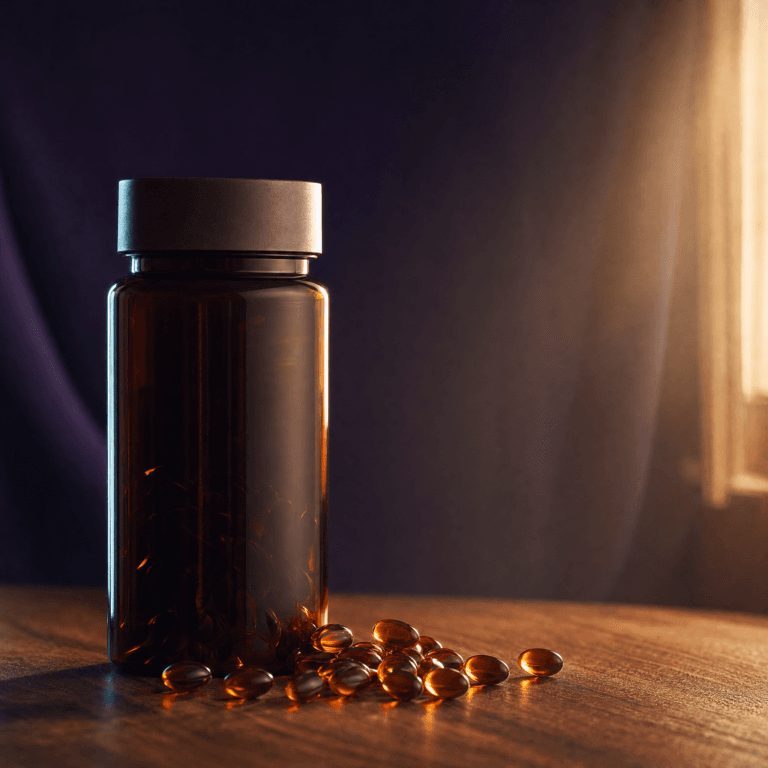
Ubiquinol and ubiquinone are two forms of CoQ10, and the body converts one into the other. Small absorption studies disagree: ubiquinol raised blood levels more in some, while in others the difference was not significant and the product’s oil base mattered as much as the form. No trial has compared the two forms on health outcomes, so paying more for ubiquinol is optional.
In This Article
CoQ10 supplements compared: ubiquinone vs ubiquinol (2026)
| Product | On the label | Good to know | Buy |
|---|---|---|---|
| Qunol Ultra CoQ10 100 mg | 100 mg CoQ10 (ubiquinone) per softgel, with vitamin E | Ubiquinone, the most common form. | See it on Amazon ↗ |
| Doctor's Best High Absorption CoQ10 | 100 mg CoQ10 per capsule, with BioPerine | Includes black pepper extract (BioPerine). | See it on Amazon ↗ |
| Nature Made CoQ10 200 mg | 200 mg CoQ10 per softgel | A higher dose per softgel. | See it on Amazon ↗ |
| Jarrow QH-absorb Ubiquinol | 100 mg ubiquinol per softgel | Ubiquinol, the reduced form of CoQ10. | See it on Amazon ↗ |
CoQ10 may make warfarin work less well: ask your doctor first (NCCIH).
Label figures: NIH Dietary Supplement Label Database and the brand listing, checked October 2026. Formulas change, so check the label before you buy. We earn a commission on Amazon purchases at no extra cost to you, and we do not lab-test products.
Ubiquinol vs Ubiquinone: The Basics

CoQ10 is a substance the body makes itself, with the highest levels in the heart, liver, kidneys and pancreas (NCCIH). It exists in two forms that switch back and forth: ubiquinone, the oxidized form found in most supplements, and ubiquinol, the reduced form (Zhang et al., 2018). Whichever form you swallow, CoQ10 travels in the blood mostly as ubiquinol (Pravst et al., 2020).
Get our free supplement cheat sheet.
One page: typical doses, timing and upper limits for ten well-studied supplements. No upsell.
🔒 No spam. Unsubscribe anytime. We send 1-2 emails/month max.
Absorption Studies Compared
| Study | Who and what | Result |
|---|---|---|
| Pravst et al., 2020 | 21 adults aged 65 to 74, single 100 mg dose | Ubiquinol raised blood CoQ10 about 1.7 times more than ubiquinone, but the difference was not statistically significant |
| Zhang et al., 2018 | 10 older men, 200 mg a day for 2 weeks | Ubiquinol raised total blood CoQ10 significantly and ubiquinone did not; oxidative stress markers did not change |
| López-Lluch et al., 2019 | 14 young adults, 7 products with 100 mg each | The two best absorbed were softgels, one with ubiquinone and one with ubiquinol; the oil base and individual differences mattered |
| Mei et al., 2026 | 12 healthy adults, single dose on an empty stomach | A new ubiquinol formulation gave about twice the blood exposure of ubiquinone; the study was co-authored by the company that makes it |
All of these studies were small and short, and they measured blood levels, not health results. In young adults, one ubiquinone product was even better absorbed than ubiquinol (López-Lluch et al., 2019). The way a product is made, especially the oil it is dissolved in, seems to matter at least as much as the form.
What the Health Trials Show
- Heart failure: in 420 people with moderate to severe heart failure, CoQ10 at 100 mg three times a day for 2 years, on top of usual medicines, cut major heart events from 26% to 15% (Mortensen et al., 2014). The NIH still calls the heart-failure evidence inconclusive (NCCIH). Use it only with your cardiologist, never instead of your medicines.
- Migraine: in 42 people, 100 mg three times a day cut attack frequency by half or more in 47.6% of the CoQ10 group versus 14.4% on placebo by the third month (Sándor et al., 2005).
- Statin muscle aches: one meta-analysis of 6 trials found no effect on muscle pain (Banach et al., 2015), while a later one of 12 trials found less pain and weakness (Qu et al., 2018). The NIH says the evidence does not support CoQ10 for statin muscle pain (NCCIH).
- None of these trials compared ubiquinol with ubiquinone. For the full evidence on CoQ10, see our CoQ10 evidence review.
How to Choose and Take It
- Form: either form is reasonable. A softgel with the CoQ10 dissolved in oil was among the best absorbed products, whether it held ubiquinone or ubiquinol (López-Lluch et al., 2019).
- Dose: the trials above used 100 to 300 mg a day, often split into three doses.
- With food: CoQ10 is fat-soluble, so most labels advise taking it with a meal.
- Response varies: in the absorption studies some people raised their blood levels much more than others on the same product (Zhang et al., 2018).
Safety
- No serious side effects of CoQ10 have been reported; mild insomnia or digestive upset can occur (NCCIH).
- CoQ10 may interact with the blood thinner warfarin and with insulin, and it may not be compatible with some cancer treatments (NCCIH). Ask your doctor first if any of these apply to you, or if you are pregnant or breastfeeding.
Frequently Asked Questions
Is ubiquinol better than ubiquinone?
Not clearly. Small studies disagree on which form is better absorbed, the product’s oil base matters, and no trial has compared the two forms on health outcomes.
Should older adults take ubiquinol?
Results in older adults are mixed: ubiquinol raised blood levels more in one study of 10 older men, but the difference was not significant in another study of 21 older adults. If a ubiquinone softgel suits you, there is no proven reason to switch.
How much CoQ10 should I take?
The main trials used 100 to 300 mg a day, often as 100 mg three times a day with meals. Higher doses have not been shown to work better.
Should I take CoQ10 with a statin?
The evidence is mixed and the NIH says it does not support CoQ10 for statin muscle pain. It is generally well tolerated, but talk to your doctor before stopping or changing a statin.
Scientific References
- National Center for Complementary and Integrative Health. Coenzyme Q10. Last updated January 2019.
- Pravst I, et al. Comparative bioavailability of different coenzyme Q10 formulations in healthy elderly individuals. Nutrients. 2020. PMID 32188111
- Zhang Y, et al. Ubiquinol is superior to ubiquinone to enhance coenzyme Q10 status in older men. Food Funct. 2018. PMID 30302465
- López-Lluch G, et al. Bioavailability of coenzyme Q10 supplements depends on carrier lipids and solubilization. Nutrition. 2019. PMID 30153575
- Mei X, et al. Systemic bioavailability of a novel cocrystal ubiquinol formulation compared with a ubiquinone formulation in healthy adults. Clin Pharmacol Drug Dev. 2026. PMID 41789786
- Mortensen SA, et al. The effect of coenzyme Q10 on morbidity and mortality in chronic heart failure: results from Q-SYMBIO. JACC Heart Fail. 2014. PMID 25282031
- Sándor PS, et al. Efficacy of coenzyme Q10 in migraine prophylaxis: a randomized controlled trial. Neurology. 2005. PMID 15728298
- Banach M, et al. Effects of coenzyme Q10 on statin-induced myopathy: a meta-analysis of randomized controlled trials. Mayo Clin Proc. 2015. PMID 25440725
- Qu H, et al. Effects of coenzyme Q10 on statin-induced myopathy: an updated meta-analysis of randomized controlled trials. J Am Heart Assoc. 2018. PMID 30371340