Affiliate links: as an Amazon Associate and through other programs, we earn from qualifying purchases, at no extra cost to you. Learn more.
Updated 2026
Free Tool
How much does a cold plunge cost?
Pick your setup for a realistic 2026 estimate: upfront price, running cost and what it is best for.
Estimates are typical 2026 ranges to plan with, not quotes. Actual prices vary by brand, size and your local electricity and ice costs.
Quick answer: a home cold plunge costs anywhere from $0 (an ice bath in the tub you already own) to $15,000 or more for a premium all-in-one unit. The middle ground for regular use, an inflatable tub with a standalone chiller, costs about $400–1,500 upfront plus roughly $8–53 a month in electricity, depending on insulation and climate. Using bagged ice instead costs about $5–26 per session. Below: prices by type (October 2026), the running-cost math and when a chiller pays for itself.
In This Article
Cold plunge cost by type (October 2026 prices)
Affiliate links: we may earn a commission, at no extra cost to you.
| Type | Typical price (October 2026) | What you get | Running cost |
|---|---|---|---|
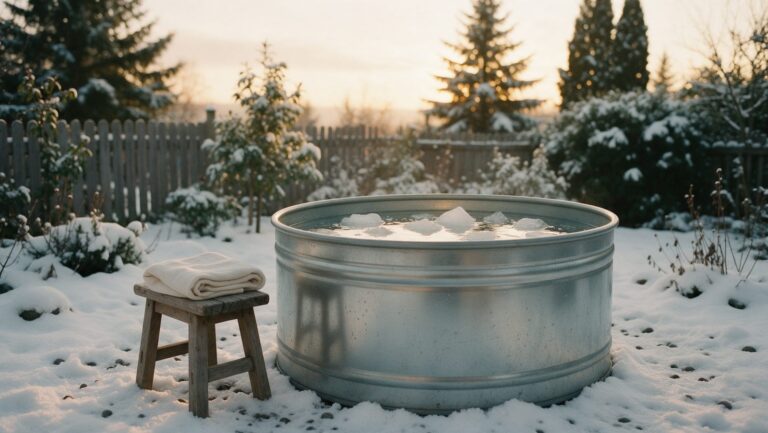
| DIY ice bath | $0–70 | Your own bathtub, or a basic folding tub, filled with tap water and bagged ice | About $5–17 of ice per session (40–65 gallons) |
| Inflatable or folding tub | $40–500 (premium inflatables about $800–1,200) | Insulated PVC walls and a lid; use it with ice, and many models are chiller-ready | Ice per session, or chiller electricity once you add one |
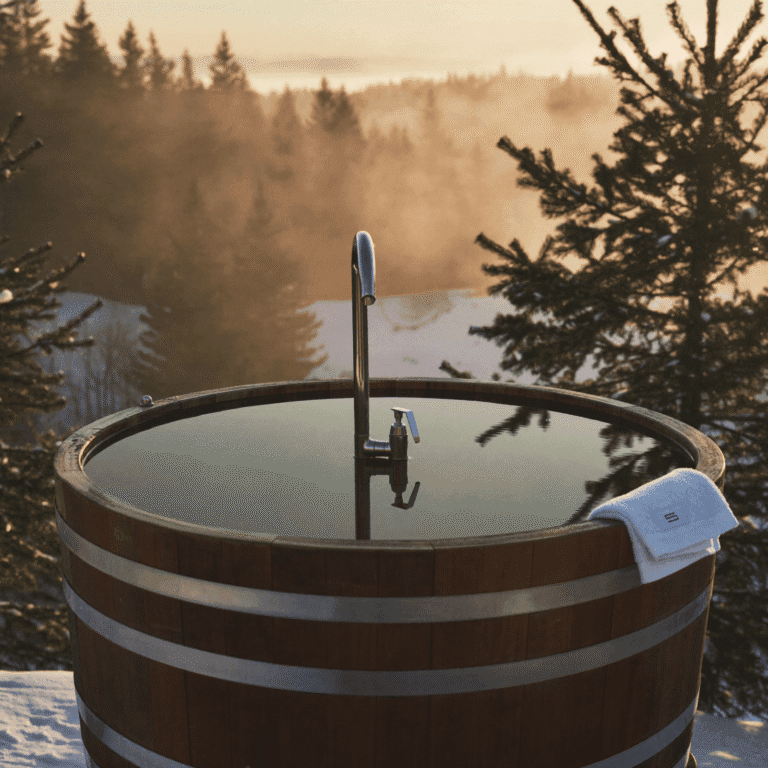
| Barrel tub (rigid, insulated) | $1,150–3,200 without a chiller | Rigid plastic barrels (about $1,150–1,750) or wood and steel barrels (about $3,000–3,200); use with ice or an add-on chiller | Same as an inflatable tub |
| Tub + standalone chiller | $400–1,500 with an inflatable tub; about $2,000 for sturdier kits; $3,600–7,500 premium bundles | A separate chiller with pump and filter, connected to the tub by two hoses | About $8–53 electricity plus $9–24 upkeep per month |
| All-in-one electric plunge | $7,000–15,000 for most home units; up to about $30,000 for luxury models | Tub, chiller, pump and filtration in one unit, often with built-in sanitation | Electricity similar to a tub + chiller |
How we built these ranges: list prices on brand websites and Amazon listings checked on October 4, 2026, before shipping, tax and any electrical work. Sale prices move often, so treat them as planning numbers, not quotes.
The upfront costs explained

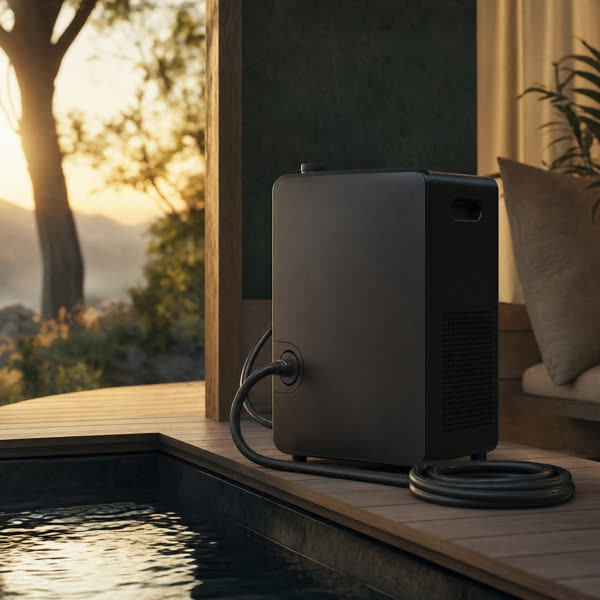
The two big-ticket items are the tub and the chiller. Inflatable and folding tubs cost about $40–500 and rigid barrels $1,150–3,200. A standalone chiller usually costs $350–4,500: budget models about $350–1,100, mid-range units $1,000–2,600 and premium chillers $3,700–4,500, with a few above that. An all-in-one bundles tub, chiller, pump and filtration into one unit, which is why it costs the most. If you go DIY with ice, you skip the chiller entirely but pay for ice every session. A chiller also needs a grounded outlet, ideally GFCI-protected (Plunge Chill’s chiller guide calls GFCI protection very important), so add an electrician’s visit if you do not have one near the tub.
Get our free supplement cheat sheet.
One page: typical doses, timing and upper limits for ten well-studied supplements. No upsell.
🔒 No spam. Unsubscribe anytime. We send 1-2 emails/month max.
See our guides to the best cold plunge tubs and the best cold plunge chillers to choose each part.
Monthly running costs, with the math
Three things set your monthly bill: electricity for a chiller (or ice if you do not have one), upkeep (filters, sanitizer and water) and how often you plunge. Here is the math for each, so you can plug in your own numbers.
Chiller electricity
Formula: watts × hours the chiller runs per day × 30 ÷ 1,000 = kWh per month, then multiply by your electricity rate. We use 18.31¢ per kWh, the US average residential price for July 2026, the latest month in the EIA’s Electric Power Monthly (released September 24, 2026; the 12-month average was 17.99¢). According to manufacturer spec sheets, small chillers (1/4–1/2 HP) draw roughly 330–600 W while running and 1 HP units about 850–1,100 W.
| Setup (example) | Chiller draw | Hours running per day | kWh per month | Cost per month at 18.31¢ |
|---|---|---|---|---|
| Insulated tub with a lid, indoors or in a garage | 500 W | 3 | 45 | $8.24 |
| Outdoor tub in the shade, mild weather | 600 W | 8 | 144 | $26.37 |
| Hot climate or a sunny spot | 600 W | 16 | 288 | $52.73 |
| Large tub (100+ gallons), 1 HP chiller, warm climate | 1,000 W | 8 | 240 | $43.94 |
The hours are our assumptions, but they sit inside what manufacturers publish: one rates its 1/2 HP (500 W) chiller at about 1.4–1.8 kWh a day at typical settings, and Plunge Chill puts its 600 W chiller at about $0.80–1.50 a day; at the roughly 14¢ per kWh it uses elsewhere on the same page, that is about 5.7–10.7 kWh a day, or $31–59 a month at 18.31¢. Where you live matters just as much: in July 2026, residential power averaged 12.72¢ per kWh in Louisiana, 33.61¢ in California and 48.00¢ in Hawaii, so the shaded outdoor example would cost about $18.32, $48.40 or $69.12 a month.
Ice instead of a chiller
Formula: pounds of ice = gallons × 8.34 × (starting °F − target °F) ÷ (144 + target °F − 32). A gallon of water weighs about 8.34 lb, removing 1 BTU cools 1 lb of water by 1°F, and each pound of ice absorbs about 144 BTU as it melts, plus a little more as its meltwater warms to your target. The table assumes a 50°F target and bagged ice at 25¢ a pound (a 20 lb bag for about $5).
| Water in the tub | Starting at 60°F | Starting at 65°F | Starting at 70°F |
|---|---|---|---|
| 40 gallons (bathtub-size fill) | 20.6 lb, $5.15 | 30.9 lb, $7.73 | 41.2 lb, $10.30 |
| 65 gallons (common one-person tub) | 33.5 lb, $8.38 | 50.2 lb, $12.55 | 66.9 lb, $16.73 |
| 100 gallons (large tub) | 51.5 lb, $12.88 | 77.2 lb, $19.30 | 103.0 lb, $25.75 |
These are minimums: the tub, the air and your body add heat, so real sessions take somewhat more ice. Prices vary too: smaller bags often cost 30¢ a pound or more, while bulk delivery can be closer to 15¢.
Upkeep: filters, sanitizer and water
- Filter cartridges: many chillers use a small 20-micron cartridge, typically about $4–11 each in multi-packs, so $4–11 a month if you replace one monthly.
- Sanitizer: spa chlorine granules or ready-made cold plunge treatments cost about $10–60 per container. Budget roughly $2–10 a month; this is our estimate, because it depends on the product, the dose and the size of your tub.
- Test strips: a pack of 100–200 costs about $7–12, so about $1 a month if you test every two or three days.
- Water changes: about $1 per 100 gallons (roughly 1¢ a gallon, based on EPA figures), plus about 4–5 kWh, or $0.78–0.92, to chill a fresh fill from 90°F to about 40°F, by Plunge Chill’s figures.
With one water change a month, that is roughly $9–24 a month in upkeep for a chiller setup (filters $4–11, sanitizer $2–10, test strips $1, water and re-chilling about $2). If you use ice and drain after each session, you skip the filter but pay for the water every time: about 40¢ for 40 gallons or 65¢ for 65 gallons.
Monthly total by scenario
| Scenario | How it adds up | Per month |
|---|---|---|
| Chiller, insulated tub with a lid, indoors | $8.24 electricity + $9–24 upkeep | $17.24–32.24 |
| Chiller, outdoor tub in the shade | $26.37 electricity + $9–24 upkeep | $35.37–50.37 |
| Chiller, hot climate or a sunny spot | $52.73 electricity + $9–24 upkeep | $61.73–76.73 |
| 1 HP chiller, large tub, warm climate | $43.94 electricity + $9–24 upkeep | $52.94–67.94 |
| Ice, 40-gallon bathtub from 60°F, twice a week | 8.66 sessions × ($5.15 ice + $0.40 water) | $48.06 |
| Ice, 65-gallon tub from 65°F, twice a week | 8.66 sessions × ($12.55 ice + $0.65 water) | $114.31 |
| Ice, 65-gallon tub from 65°F, four times a week | 17.32 sessions × ($12.55 ice + $0.65 water) | $228.62 |
Sessions per month use 4.33 weeks per month (52 weeks ÷ 12).
Ice bath vs chiller: which is cheaper?
Ice is cheaper to start, but a chiller is cheaper to run. In our example, a 65-gallon tub cooled from 65°F to 50°F takes about 50 lb of ice, or $13.20 a session with the water, while a chiller in a shaded outdoor spot costs about $42.87 a month to run. Plunge twice a week and a $500 chiller pays for itself in about 7 months; at four times a week, in under 3 months. At once a week it takes about 3 years, so occasional plungers may be better off with ice.
The break-even math
Formula: months to break even = chiller price ÷ (monthly ice cost − monthly chiller running cost). Ice: $13.20 per session (50.2 lb at 25¢ plus 65¢ of water). Chiller: $26.37 of electricity (600 W for 8 hours a day) plus $16.50 of upkeep (the middle of our range) = $42.87 a month.
| Plunges per week | Ice per month | Monthly saving with a chiller | A $500 chiller pays back in | A $1,100 chiller pays back in |
|---|---|---|---|---|
| 1 | $57.16 | $14.29 | 35.0 months | 77.0 months |
| 2 | $114.31 | $71.44 | 7.0 months | 15.4 months |
| 3 | $171.47 | $128.60 | 3.9 months | 8.6 months |
| 4 | $228.62 | $185.75 | 2.7 months | 5.9 months |
$500 and $1,100 are roughly the current prices of Plunge Chill’s 1/3 HP and 1 HP chillers. If you also need a chiller-ready tub, add its price to the chiller’s; if your setup runs hotter or cooler than our example, swap in your own electricity figure from the table above.
Plunge Chill: a lower-cost chiller option
If the math points to a chiller, Plunge Chill’s units are among the lower-priced standalone chillers we found, and it is the chiller brand we partner with (we earn a commission through Awin if you buy). Prices on plungechill.com, checked October 5, 2026:
- Cold Plunge Chiller (1/3 HP, 600 W): $499. Built-in pump and mesh filter. The brand rates it for tubs up to about 120 gallons and says it cools about 66 gallons from 75°F to 50°F in 8–10 hours.
- 1HP Cold Plunge Chiller: $1,099. Goes down to 36°F; the brand says it chills up to 110 gallons from 80°F to 40°F in about 8 hours and recommends 1 HP for tubs of 90–150 gallons.
- Chiller and inflatable tub bundles: $569–999 with the 1/3 HP chiller and $1,399–1,499 with the 1 HP chiller.
- Tubs on their own: $79–499. Filter kit with a 20-micron cartridge: $49.
The store shows these as sale prices next to higher “compare at” prices, and they change often, so check before you buy. Shipping is free in the mainland US and returns are accepted within 30 days, minus a small return shipping fee, according to the store’s policies.
Check today’s Plunge Chill prices →
Affiliate link: we may earn a commission at no extra cost to you.
How to cut your cold plunge costs
- Insulate, cover and shade the tub. Heat that leaks in is what your chiller pays to remove, which is why manufacturers’ own figures work out to anywhere from about 1.4 to 10.7 kWh a day (roughly $8 to $59 a month at 18.31¢). A fitted insulated lid, an insulated tub and a spot out of the sun push you toward the low end (insulated tub covers on Amazon).
- Do not set it colder than you need. Heat gain is roughly proportional to the gap between air and water. With 75°F air, holding 55°F instead of 39°F shrinks the gap from 36°F to 20°F, about 44% less heat to remove.
- Buy ice in big bags. A 20 lb bag for about $5 works out to 25¢ a pound; smaller bags often cost 30¢ a pound or more, and bulk delivery can be closer to 15¢.
- Freeze your own. Turning 1 lb of 60°F water into 0°F ice takes about 188 BTU (0.055 kWh), so jugs frozen in a home freezer cost roughly 0.5–1¢ a pound in electricity at 18.31¢ per kWh, assuming the freezer moves one to two units of heat per unit of electricity, versus about 25¢ a pound for bagged ice. You need the freezer space, though.
- Use cold tap water when you have it. From 55°F, cooling 65 gallons to 50°F takes about 16.7 lb of ice, versus 50.2 lb from 65°F.
- Keep the water clean. A filter and sanitizer let you refill less often, and every refill costs about $1 of water per 100 gallons plus $0.78–0.92 of electricity to chill it back down.
- Start cheap. If you are not sure you will stick with it, start with ice in a tub you already have and add a chiller once you plunge at least twice a week, which is when the break-even math turns in the chiller’s favor (see the budget pick in our cold plunge tub guide).
Is a cold plunge worth the cost?
That depends on how often you will use it. A premium setup that sits unused is expensive; a budget tub-and-chiller you use four times a week is good value. For example, a $569 bundle works out to about $5.21 a session in its first year, counting $42.87 a month to run it, versus about $13.20 a session for ice in a 65-gallon tub. Not sure yet? Start cheap with ice, build the habit, then add a chiller.
Frequently asked questions
How much does a cold plunge cost per month to run?
With a chiller, about $8–53 a month in electricity at the July 2026 US average of 18.31¢ per kWh, plus roughly $9–24 for filters, sanitizer and water. With bagged ice instead, about $5–26 per session, or about $114 a month if you plunge twice a week in a 65-gallon tub.
What is the cheapest way to cold plunge?
An ice bath in the bathtub you already own: no equipment cost and about $5–10 of ice per session for 40 gallons of water starting at 60–70°F. A basic folding tub adds about $40–70. It is the cheapest way to start, but ice adds up quickly if you plunge more than once or twice a week.
Do I need a chiller?
No, you can use ice. A chiller holds a steady temperature on demand and, in our example, pays for itself in about 3–7 months if you plunge two to four times a week. See our cold plunge chiller sizing guide to pick the right size.
How much ice do I need for a cold plunge?
About 50 lb to cool 65 gallons of water from 65°F to 50°F, and anywhere from about 21 to 103 lb for 40–100 gallons starting at 60–70°F. The formula: gallons × 8.34 × (starting °F − target °F) ÷ (144 + target °F − 32). Plan on a bit more in practice, because the tub, the air and your body add heat.
How much electricity does a cold plunge chiller use?
Small (1/4–1/2 HP) chillers draw about 330–600 W while running and 1 HP units about 850–1,100 W. How long they run depends on insulation, climate and your set temperature: in our examples that is 45–288 kWh a month, or about $8–53 at the July 2026 US average of 18.31¢ per kWh.
Sources
- U.S. Energy Information Administration, Electric Power Monthly, Table 5.6.A (July 2026 data, released September 24, 2026) and Table 5.3 (12-month average).
- U.S. EIA, British thermal units (Btu): 1 Btu changes the temperature of 1 lb of water by 1°F.
- USGS Water Science School, Water density: about 62.4 lb per cubic foot, or 8.34 lb per gallon.
- Engineering ToolBox, latent heat of melting (334 kJ/kg, about 144 Btu/lb) and ice thermal properties.
- U.S. EPA WaterSense, Statistics and facts: saving 13,000 gallons saves about $130, or about 1¢ per gallon.
- Plunge Chill product pages and chiller guide: specifications and prices, checked October 5, 2026.
- Bagged ice prices: store price roundups from Hip2Save (May 30, 2025) and ThePricer (updated October 3, 2026).
- Price ranges by type: brand websites and Amazon listings checked October 4, 2026; chiller power draw from manufacturer spec sheets.
Ready to set yours up? Use our free cold plunge protocol calculator for your ideal temperature and session time by goal.


The recovery gear guides
Compare cold plunge, sauna and light therapy gear, reviewed by our team.
- → Best Cold Plunge Tubs 2026
- → Best Cold Plunge Chillers 2026
- → Cold + Sauna Contrast Protocol
- → Best Infrared Saunas 2026
- → Sauna Blanket vs Sauna
- → Best Sauna Blankets 2026
- → Best Red Light Therapy Devices
- → Red Light Panel vs Mask
- → 7 Cold Plunge Benefits (Science)
- → Sauna Benefits for Longevity
- → Red Light Therapy Benefits
- → Cold Plunge Protocol Tool
- → Sauna Routine Calculator
- → Red Light Dosing Calculator
- → Best LED Face Masks 2026
- → Best Light Therapy Lamps 2026