
Advertising disclosure: This page contains affiliate links. As an Amazon Associate, and through other partner programs, we may earn a commission from qualifying purchases — at no extra cost to you. Learn more.
Same Supplement Aisle, Completely Different Jobs
When people ask about lion’s mane vs ashwagandha, they’re often hoping one is clearly “better” — but that’s the wrong framework entirely. These two supplements don’t compete; they address fundamentally different aspects of health, operate through distinct biological mechanisms, and are best used at different times of day. Understanding that distinction is the key to actually getting results from either one.
In This Article
What Is Lion’s Mane Mushroom?
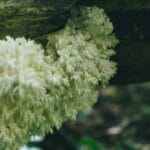
Lion’s mane (Hericium erinaceus) is a medicinal mushroom whose modern scientific interest centers on two unique bioactive compounds: hericenones (from the fruiting body) and erinacines (from the mycelium). These compounds are among a very small number of natural substances known to stimulate the production of Nerve Growth Factor (NGF) — a protein essential for the growth, maintenance, and survival of neurons.
Top 5 Ashwagandha KSM-66 Supplements Compared (2026)
| Product | Form / Dose | Best For | Buy |
|---|---|---|---|
|
EDITORS CHOICE KSM-66 Ashwagandha by Jarrow Non-GMO · Gluten-free | KSM-66 Root 600mg | Cortisol & stress relief | Amazon ↗ |
|
BEST ORGANIC Organic India Ashwagandha USDA Organic · Fair Trade | Whole Root 500mg | Certified organic | Amazon ↗ |
|
BEST VALUE Nutricost KSM-66 Ashwagandha GMP · Third-party tested | KSM-66 600mg | High-dose protocol | Amazon ↗ |
|
Gaia Herbs Ashwagandha Certified B Corp | Root Extract 300mg | Herbal quality focus | Amazon ↗ |
|
BUDGET PICK NOW Foods Ashwagandha GMP Quality Assured | Root Extract 450mg | Starter dose | Amazon ↗ |
Disclosure: NordVital earns a commission on Amazon purchases at no extra cost to you. Picks are based on published research, label doses and third-party certifications; we do not lab-test products.
A landmark 2009 double-blind, placebo-controlled trial published in Phytotherapy Research by Mori et al. found that older adults with mild cognitive impairment who took lion’s mane (750 mg/day) showed significant improvements in cognitive function scores at 8, 12, and 16 weeks — with scores declining after discontinuation.
A 2023 study from the University of Queensland (Journal of Neurochemistry) identified specific compounds in lion’s mane that promote neurite outgrowth and synaptic plasticity. For a comprehensive look at the best products, see our lion’s mane mushroom supplement guide.
What Is Ashwagandha?
Ashwagandha (Withania somnifera) is an adaptogenic herb whose active compounds — primarily withanolides — modulate the hypothalamic-pituitary-adrenal (HPA) axis, which is the hormonal system governing your stress response. In simple terms: ashwagandha helps your body regulate cortisol and become more resilient to both physical and psychological stress.
A 2019 double-blind RCT in Medicine (using KSM-66 extract, 240 mg/day) found a 23% reduction in cortisol levels and significant improvements in stress and anxiety scores over 60 days. Ashwagandha also has a meaningful body of evidence for physical performance. For more, see our best ashwagandha supplement guide.
Key Differences: Lion’s Mane vs Ashwagandha
- Primary target: Lion’s mane targets brain health and neurological function. Ashwagandha targets the stress-response system and hormonal balance.
- Core mechanism: Lion’s mane stimulates NGF (nerve growth factor) production. Ashwagandha modulates the HPA axis and cortisol regulation.
- Best for: Lion’s mane excels for focus, memory, cognitive clarity, and neuroprotection. Ashwagandha excels for anxiety, sleep quality, stress resilience, and recovery.
- Effect onset: Both tend to show effects within 2–4 weeks of consistent use, with full benefits at 6–8 weeks.
- Stimulating vs. calming: Lion’s mane is neurologically activating — many users report enhanced focus and alertness. Ashwagandha is calming — it lowers cortisol and supports parasympathetic recovery.
- Physical performance: Ashwagandha has stronger evidence for strength and testosterone support.
These two supplements’ mechanisms are entirely complementary. A productive pairing: lion’s mane in the morning for cognitive sharpness, ashwagandha in the evening for stress relief and better sleep.
How to Choose Between Lion’s Mane and Ashwagandha
Choose lion’s mane if: Your primary concerns are mental clarity, focus, memory, or long-term brain health. Particularly compelling for knowledge workers, students, older adults concerned about cognitive aging, or anyone with brain fog.
Choose ashwagandha if: You’re dealing with chronic stress, anxiety, poor sleep quality, or want support for physical performance and recovery. Especially effective for people who feel “wired and tired.”
Important quality note for lion’s mane: Always look for “fruiting body” clearly labeled, a beta-glucan content of at least 25–30%, and no mention of “myceliated grain.” This distinction separates efficacious products from expensive fiber supplements.
Our Top Picks
We’ve evaluated both lion’s mane and ashwagandha products for fruiting body sourcing, clinically validated extract forms, transparent standardization, and third-party testing. See the comparison table below for our top-ranked products in each category.
Dosage & Timing
Lion’s Mane: 500–1,000 mg of fruiting body extract per day, standardized to at least 25% beta-glucans. Take in the morning or early afternoon.
Ashwagandha: 300–600 mg/day of a standardized root extract (KSM-66 or Sensoril), providing at least 5% withanolides. Evening dosing or with dinner is popular for sleep and stress benefits.
Can you take them together? Yes — and it’s an increasingly popular combination. Morning lion’s mane for mental sharpness, evening ashwagandha for calm and recovery. No known interactions at standard doses.
Frequently Asked Questions
Ashwagandha KSM-66 is one of the best-studied adaptogens available. The evidence for cortisol reduction, stress relief, and testosterone support in men is genuinely strong across multiple RCTs. The key is choosing a quality KSM-66 extract and committing to 8-12 weeks. Most people feel meaningful improvement in stress response within 3-4 weeks.
Can lion’s mane and ashwagandha be taken at the same time?
They can be taken simultaneously without any safety concern. However, from a timing optimization standpoint, many users prefer morning lion’s mane (for alertness) and evening ashwagandha (for relaxation). If you want to take both at once, morning is fine.
How long do I need to take lion’s mane to notice results?
Most people report noticeable improvements in focus and mental clarity within 2–4 weeks. If you’re taking a low-quality mycelium-on-grain product, you may not notice effects at all — which is why product quality selection is critical for lion’s mane specifically.
Does ashwagandha affect hormones?
Yes. A 2019 study in Medicine found a 14.7% increase in testosterone with KSM-66 at 600 mg/day over 8 weeks. It also reduces cortisol, which can improve thyroid function and support healthier testosterone-to-cortisol ratios. Women can take ashwagandha safely — it supports hormonal balance broadly.
Are there any side effects to be aware of?
Lion’s mane is extremely well-tolerated; the only notable caution is for people with mushroom allergies. Ashwagandha is contraindicated during pregnancy and should be used with caution with thyroid medications. At standard doses in healthy adults, both supplements have excellent safety records.
Looking for the right brand?
We compared 12 Lion’s Mane brands — checking extraction method, beta-glucan content, third-party testing. See our editor pick + 6 runners-up.

Level up your recovery
Supplements work best alongside the right recovery tools. Explore our gear guides:
- 1Chandrasekhar K, et al. (2012). A prospective, randomized double-blind, placebo-controlled study of safety and efficacy of a high-concentration full-spectrum extract of ashwagandha root in reducing stress and anxiety. Indian J Psychol Med. PMID 23439798
- 2Wankhede S, et al. (2015). Examining the effect of Withania somnifera supplementation on muscle strength and recovery. J Int Soc Sports Nutr. PMID 26609282
- 3Lopresti AL, et al. (2019). An investigation into the stress-relieving and pharmacological actions of an ashwagandha (Withania somnifera) extract. Medicine. PMID 31517876
- 4Ambiye VR, et al. (2013). Clinical evaluation of the spermatogenic activity of the root extract of ashwagandha in oligospermic males. Evid Based Complement Alternat Med. PMID 24371462
All studies are peer-reviewed and sourced from PubMed/NCBI. This article is for informational purposes only and does not constitute medical advice. Consult a qualified healthcare provider before starting any supplement regimen.