Affiliate links: as an Amazon Associate and through other programs, we earn from qualifying purchases, at no extra cost to you. Learn more.
Lion’s mane has only small human studies. In a 16-week trial of 30 adults aged 50–80 with mild cognitive impairment, 3 g a day of the dried mushroom improved scores on a cognitive test, and the gains faded within 4 weeks of stopping. Choose a product that says fruiting body and lists the amount per serving.
Trial: Mori et al., Phytotherapy Research 2009 (PubMed) · sourceOur picks
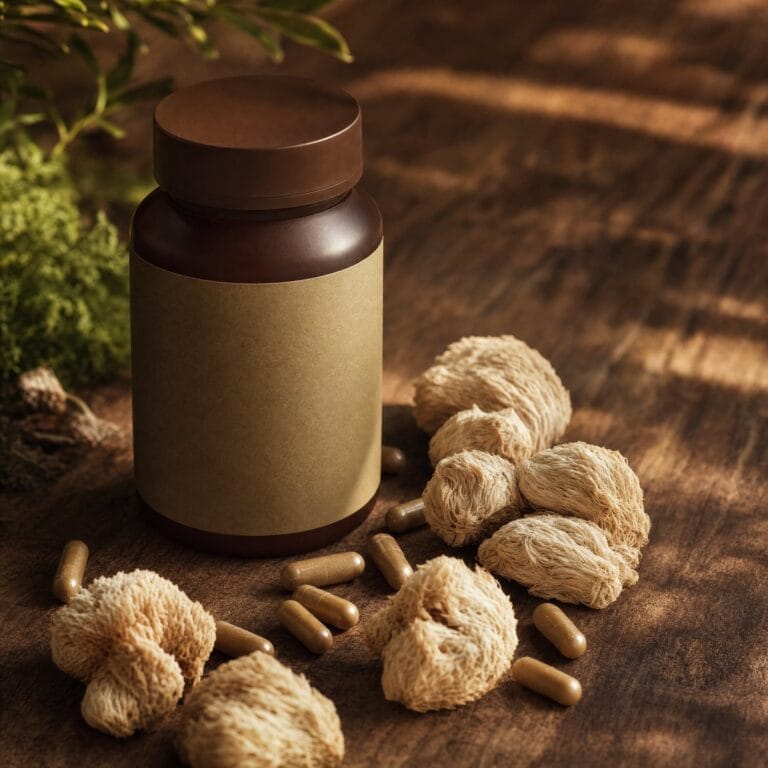 #1 · Fruiting-body extract
Gaia Herbs Lion’s Mane
450 mg organic fruiting-body extract per capsule, with 83 mg of beta-glucans listed
Made from the fruiting body, USDA Organic, and the label lists the beta-glucans in each capsule.
- Per capsule450 mg extract
- Part usedFruiting body
- OrganicYes
Also on iHerb
NOW Lion’s Mane 500 mg
1,000 mg of organic mushroom powder per 2 capsules
Made from the fruiting bodies; two capsules give 1 g, a third of the daily amount used in the trial.
- Per 2 capsules1,000 mg
- Part usedFruiting body
- Take it2 capsules a day
BulkSupplements Organic Lion’s Mane Extract
About 1 g of fruiting-body extract per half teaspoon
An unflavored powder, so you can set your own amount and stir it into coffee or a smoothie.
- Per servingAbout 1 g
- Part usedFruiting body
- Also containsMaltodextrin
Compare our picks
- We read the research and link the studies, so you can check them yourself.
- Every pick must name the part of the mushroom it uses and the amount per serving before it goes live.
- We do not lab-test products. We earn a commission if you buy through our links; it never changes the order.


In This Article
- Table of Contents
- Other Lion’s Mane Products People Compare (2026)
- Host Defense Lion’s Mane: What the Label Says
- More About These Products
- How We Compared These Products
- What to Look For in a Lion’s Mane Supplement
- Lion’s Mane Dosage: How Much Per Day?
- Side Effects & Who Shouldn’t Take Lion’s Mane
- Frequently Asked Questions
- Continue Reading
Table of Contents
- Other Lion’s Mane Products People Compare
- Host Defense: What the Label Says
- More About These Products
- How We Compared
- What to Look For
- Lion’s Mane Dosage
- Side Effects & Who Shouldn’t Take It
- FAQs
Other Lion’s Mane Products People Compare (2026)
Other lion’s mane products people often compare, with the dose and type each brand describes. For our picks, checked against the label in the NIH database, see the guide at the top of this page.
Host Defense Lion’s Mane: What the Label Says
What the label says: 1 g of certified organic lion’s mane per 2 capsules, made with organic mushroom mycelium (label in the NIH database, 2024). It does not list beta-glucan or erinacine content, so you cannot compare its strength with extracts that do.
Mycelium, not fruiting body: Host Defense’s 2021 label listed myceliated brown rice, and the 2024 label says it is made with organic mushroom mycelium. Neither lists beta-glucan or erinacine content, so you cannot compare its strength with fruiting-body extracts that do.
Per serving: 1 g of organic lion’s mane mycelium in 2 capsules (500 mg per capsule).
Pros: Certified organic, widely available, simple 2-capsule serving.
Cons: Made from mycelium, with no beta-glucan content on the label.
More About These Products
Real Mushrooms Lion’s Mane
What the label says: 1,000 mg of organic lion’s mane extract per 2 capsules (500 mg per capsule), hot-water extracted, with 300 mg of beta-glucans per serving on the 2024 label (the 2022 labels say more than 25%). The label states there is no added starch, grain or mycelium. Suggested use: 2 capsules a day.
Get our free supplement cheat sheet.
One page: typical doses, timing and upper limits for ten well-studied supplements. No upsell.
🔒 No spam. Unsubscribe anytime. We send 1-2 emails/month max.
Genius Mushrooms
What the label says: a blend of three organic mushrooms, 500 mg each per 3-capsule serving: lion’s mane (mycelium and fruiting body), reishi (mycelium and fruit body) and cordyceps (mycelium). Only a third of each serving is lion’s mane, and the labels give no amount of beta-glucans. The same brand also sells Genius Lion’s Mane, a single-mushroom product with 1,200 mg per 2 capsules; its 2024 label lists the lion’s mane as grown on oats.
Om Lion’s Mane
What the label says: 2,000 mg of organic lion’s mane mushroom powder per serving (3 capsules, or about 1 teaspoon of the powder), described as whole-food mushroom powder. The 2024 labels list myceliated oats among the ingredients, and a 2020 label described the lion’s mane as mycelial biomass and fruit body grown on organic whole oats. The labels mention beta-glucans but give no amount. The powder label suggests stirring it into coffee or smoothies.
Four Sigmatic Lion’s Mane
We could not find the label of Four Sigmatic’s Lion’s Mane Elixir in the NIH Dietary Supplement Label Database, so we cannot confirm its dose, the part of the mushroom used or how it is made. Check the label before you buy.
California Gold Nutrition (Fungiology) Lion’s Mane
What the label says: 600 mg of organic lion’s mane per capsule, one capsule a day, made with “full-spectrum” mushrooms: mycelium, primordia and fruiting bodies. The other ingredients include white milo, a sorghum grain. The label does not list beta-glucans.
Toniiq Lion’s Mane
We could not find a Toniiq lion’s mane label in the NIH Dietary Supplement Label Database, so we cannot confirm its extract ratio, its dose or the part of the mushroom used. Check the label before you buy.
How We Compared These Products
For each product we looked up its label in the NIH Dietary Supplement Label Database and noted three things: the part of the mushroom used (fruiting body or mycelium), the amount per serving, and whether beta-glucans are listed. We did not lab-test any product, score brands or review certificates of analysis. Where we could not find a label, we say so.
What to Look For in a Lion’s Mane Supplement
1. Extraction method
Some labels say how an extract was made; the Real Mushrooms label, for example, says “hot water extracted”. We do not rank products by extraction method. Look for a label that names the method, the part of the mushroom used and the amount per serving.
2. Fruiting Body vs Mycelium
The fruiting body is the mushroom you see (the white “lion’s mane” cluster). The mycelium is the root-like network it grows from. The human trial our guide cites used dried mushroom powder (Phytotherapy Research, 2009). When mycelium is grown on grain, the grain can end up in the capsule, and some labels list it: Host Defense labels list brown rice (“myceliated brown rice” up to 2022, “fermented brown rice biomass” on a 2024 label), and Om’s 2024 labels list myceliated oats. Labels that state beta-glucan content are easier to compare.
3. Beta-glucans on the label
Some labels state how many milligrams of beta-glucans a serving contains; others do not. A stated amount lets you compare products side by side: the Gaia Herbs label lists 83 mg per capsule and the 2024 Real Mushrooms capsule label lists 300 mg per 2 capsules, while the Host Defense, Genius Mushrooms and Fungiology labels give no beta-glucan amount. Total polysaccharides are not the same thing: Host Defense’s 2021 label lists 550 mg of polysaccharides per serving, and starch is a polysaccharide too.
4. Heavy metal testing
Mushrooms can absorb heavy metals from the material they are grown on (review in the Journal of Fungi, 2021). If this matters to you, ask the brand for a certificate of analysis with heavy metal results for your batch. We have not reviewed these certificates for the products on this page.
Lion’s Mane Dosage: How Much Per Day?
What the trials used: human studies of lion’s mane are small. In the trial our guide cites, 30 adults aged 50–80 with mild cognitive impairment were split into two groups: one took tablets with about 3 g of dried lion’s mane powder a day, in three doses, for 16 weeks, and the other took a placebo. Scores on a cognitive test rose in the lion’s mane group compared with placebo and fell again 4 weeks after they stopped (Phytotherapy Research, 2009). A 28-day trial in 41 healthy adults aged 18–45 used 1.8 g a day: the lion’s mane group was faster on one test (the Stroop task) an hour after the first dose, and the authors also reported null and some negative findings (Nutrients, 2023).
- Follow your product’s label. Products differ in what a serving contains (fruiting body or mycelium, powder or extract), so a dose from one product does not carry over to another. Some labels convert the extract into dried mushroom (Gaia Herbs says each 450 mg capsule equals 2.5 g of dry mushroom), which helps you compare it with the amount used in the trial.
- Do not take more than the label says unless your doctor tells you to.
The Lion’s Mane Complete Guide covers the human research in more detail.
Side Effects & Who Shouldn’t Take Lion’s Mane
Human safety data come from small trials. In the 16-week trial our guide cites, the 15 adults who took about 3 g a day showed no adverse effects in laboratory tests (Phytotherapy Research, 2009).
Reported side effects: in a 49-week placebo-controlled trial of a lion’s mane mycelium product, four participants dropped out because of stomach discomfort, nausea or skin rash, and no other adverse events were reported (Frontiers in Aging Neuroscience, 2020).
Who should NOT take Lion’s Mane:
- Pregnant or breastfeeding: insufficient safety data.
- Mushroom allergies: Lion’s Mane is in the Hericiaceae family. If you’re allergic to any mushroom, avoid it.
- Bleeding disorders, blood thinners or planned surgery: a compound isolated from lion’s mane (hericenone B) reduced platelet clumping in lab tests (Phytomedicine, 2010). That was not a human study, so ask your doctor first.
- On immunosuppressant medications: ask your doctor before taking it.
Frequently Asked Questions
What is the best brand of Lion’s Mane supplement in 2026?
Our top picks for 2026 are listed at the start of this page: fruiting-body products whose labels state what they contain. Host Defense is a popular organic option made from mycelium, and Real Mushrooms is an extract with 300 mg of beta-glucans per 2 capsules on its label.
How long does it take Lion’s Mane to work?
There is little data on how quickly it works. In the trial our guide cites, adults with mild cognitive impairment who took about 3 g a day scored higher than the placebo group on a cognitive test at weeks 8, 12 and 16, and the gains faded 4 weeks after they stopped (Phytotherapy Research, 2009). A small trial in healthy young adults found faster performance on one test an hour after a single dose (Nutrients, 2023).
Should I take Lion’s Mane every day or cycle it?
The human trials we found gave lion’s mane every day, for periods from 28 days to 49 weeks. None of them tested taking breaks, so there is no evidence either way on cycling.
Can I take Lion’s Mane with coffee?
No human trial we found tested lion’s mane together with coffee, so there is no evidence that the two work better together, and no data on whether they interact.
Is grain-grown mycelium worse than fruiting body?
They are different materials rather than better or worse versions of the same thing. When mycelium is grown on grain, the grain can end up in the capsule, and some labels list it (Host Defense lists brown rice; Om lists myceliated oats). The human trial our guide cites used dried mushroom powder. Choose a label that says which part of the mushroom is used and how much is in each serving.
How does Lion’s Mane compare to Bacopa or Ashwagandha?
They are different products with different research. For lion’s mane, the human trials are small (see the dosage section above). We compare them in more detail here: Lion’s Mane vs Bacopa and Lion’s Mane vs Ashwagandha.
Continue Reading
Lion's mane has a handful of small human trials, mostly in older adults with mild cognitive impairment, using 1-3 g a day for 3 months or more; in one, the benefit faded within 4 weeks of stopping. Evidence in healthy young adults is very limited. Both fruiting-body and mycelium products have small positive trials, so choose one that states its dose on the label.
- Lion’s Mane Complete Guide: our full guide to lion’s mane
- Lion’s Mane for ADHD
- Rhodiola vs Lion’s Mane
- Lion’s Mane vs Reishi
- Does Lion’s Mane Get You High?
Editorial note: This guide was researched, written, and reviewed by the NordVital editorial team. We do not lab-test products; we compare what their labels say. Affiliate links may earn us a commission at no extra cost to you. Educational content only — not medical advice. Consult your healthcare provider before starting any supplement.



Level up your recovery
Supplements work best alongside the right recovery tools. Explore our gear guides:
- 1Mori K, et al. (2009). Improving effects of the mushroom Yamabushitake on mild cognitive impairment: a double-blind placebo-controlled clinical trial. Phytother Res. PMID 18844328
- 2Nagano M, et al. (2010). Reduction of depression and anxiety by 4 weeks Hericium erinaceus intake. Biomed Res. PMID 20834180
- 3Mori K, et al. (2011). Effects of Hericium erinaceus on amyloid beta(25-35) peptide-induced learning and memory deficits. Biomed Res. PMID 21383512
- 4Lai PL, et al. (2013). Neurotrophic properties of the Lion's mane medicinal mushroom, Hericium erinaceus. Int J Med Mushrooms. PMID 24266378
All studies are peer-reviewed and sourced from PubMed/NCBI. This article is for informational purposes only and does not constitute medical advice. Consult a qualified healthcare provider before starting any supplement regimen.
Related supplement guides
Evidence-ranked picks for the supplements that actually matter.