Affiliate links: as an Amazon Associate and through other programs, we earn from qualifying purchases, at no extra cost to you. Learn more.
Quick answer: a red light mask is the convenient, hands-free choice for facial skin (tone, fine lines, a daily routine), while a red light panel delivers far more power for the money and covers the whole body for muscle recovery, joints and pain. If your goal is your face, get a mask. If it is recovery or whole-body use, a panel gives you more for your money. And if you just want to treat one joint or spot on a budget, a handheld does the job for the least money.
In This Article
Red light panel vs mask: the quick comparison
| Red light mask | Red light panel | Handheld device | |
|---|---|---|---|
| Coverage | Face only | Whole body, targeted areas | Small targeted spot |
| Wavelengths | Usually 630-660nm (red) | 660nm + 850nm (red + near-infrared) | Often 660nm + 850nm |
| Power (irradiance) | Lower (on-skin) | Higher, adjustable by distance | Moderate, held 1-4 in away |
| Cost per watt | Higher ($16-200/W) | Lower ($4-10/W) | Mid |
| Convenience | Hands-free, wearable | Stand in front of it | Must hold it per spot |
| Best for | Skin, fine lines, daily face routine | Recovery, muscle, joints, pain, full body | Joints, small areas, travel |
| Price | $100-600 | $150-1,500 | $40-300 |
💡 Prices are approximate and were last reviewed in October 2026. Retailer prices change often: tap a button for the current price on Amazon.
What a red light mask does well
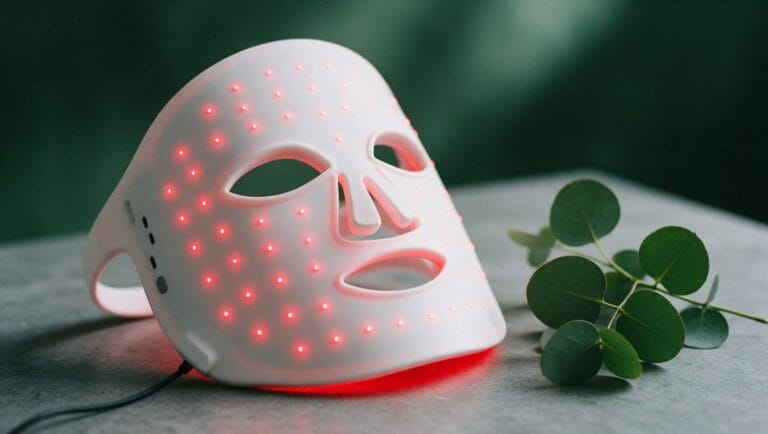
A mask sits on your face and treats the skin hands-free while you do something else, which makes it easy to stick to a daily routine, the single biggest factor in seeing skin results. Most masks use red light around 630-660nm, the range best studied for skin tone, fine lines and a healthy glow. The trade-offs: masks cover only the face, deliver lower power, and cost more per watt than panels. Look for even LED coverage across the whole mask, a clear treatment timer, and FDA-cleared models if that reassures you. Our LED face mask guide checks what 7 popular masks are actually cleared for.
Get our free supplement cheat sheet.
One page: typical doses, timing and upper limits for ten well-studied supplements. No upsell.
🔒 No spam. Unsubscribe anytime. We send 1-2 emails/month max.
What a red light panel does better
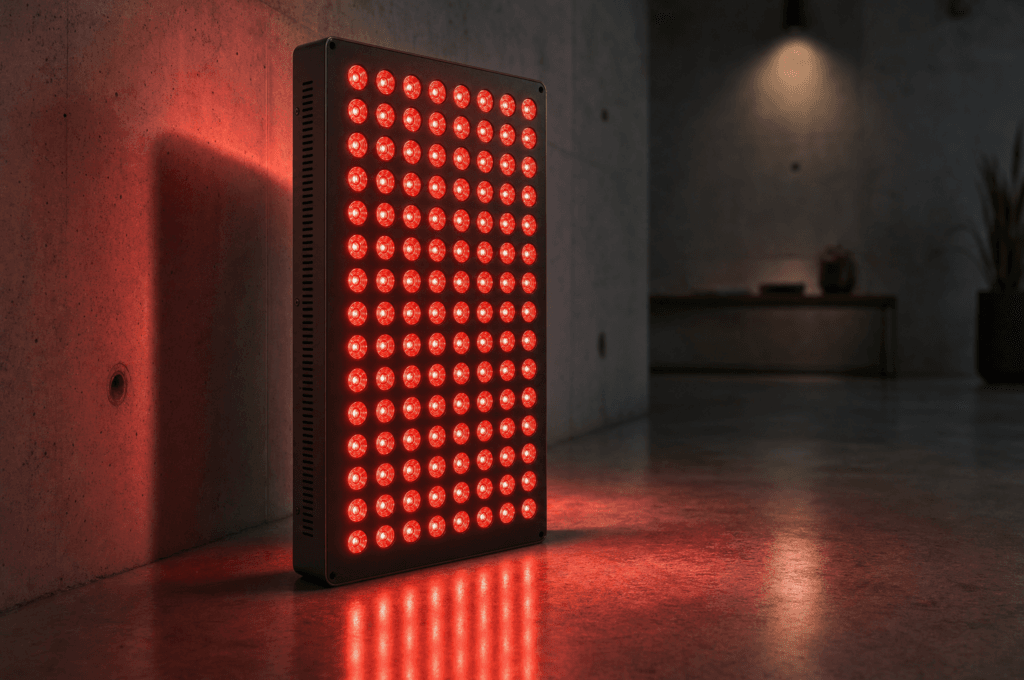
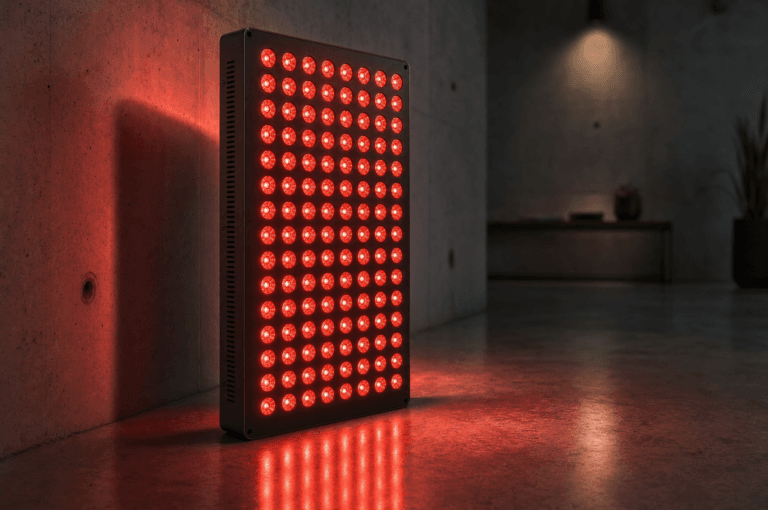
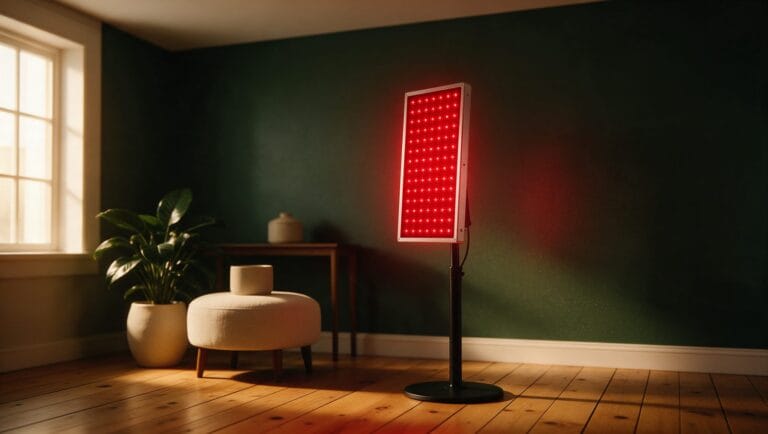
A panel is the workhorse. It combines 660nm (red, for skin and surface tissue) with 850nm (near-infrared, which penetrates deeper into muscle and joints), so it covers far more uses, recovery, soreness, joints and pain, as well as skin. Panels deliver much higher irradiance and far more coverage per dollar, and you control the dose by adjusting your distance (6-12 inches for most). The trade-offs: you have to stand or sit in front of it, and large panels need space. Look for published irradiance (mW/cm² at a stated distance), both 660nm and 850nm, and a low-EMF rating.
What a handheld device does well
A handheld is the budget and travel option: small, cheap and easy to aim at one knee, shoulder or jaw at a time. Most decent handhelds combine 660nm red and 850nm near-infrared, so they punch above their size for targeted joint or tendon work held 1-4 inches from the skin for 10-15 minutes. The trade-off is obvious: you have to hold it, and covering more than a spot or two per session gets tedious. If you want to treat your whole body or use light therapy daily without effort, a panel or mask fits better.
Which should you buy?
Buy a mask if your goal is facial skin (tone, fine lines, anti-aging), you want a hands-free routine you will actually keep up, and you do not need whole-body coverage. Buy a panel if you want muscle and joint recovery, pain relief, or whole-body treatment, you want the most power and coverage for your money, and you have a little space. Many people who start with a mask for their face later add a panel for recovery, the two complement each other.
Our top picks
Also from Vellgus: Max 300 (from $1,100) · Mini ($339, pre-order)Affiliate link: we may earn a commission at no extra cost to you. Prices change; the retailer page shows the current price.
We do not lab-test these; the picks reflect the specs and owner-review patterns that matter (real 660/850nm, measured irradiance, even coverage, low EMF). Prices are approximate, check the live price on Amazon.
Best red light mask: Red Light Therapy Face Mask
A hands-free 630-660nm mask with even LED coverage and an auto-timer is the easiest way to build a daily skin routine. Treat clean, bare skin for the listed time.
Best red light panel: Full-Body Red Light Panel (660 & 850nm)
A panel combining 660nm and 850nm with published irradiance and a low-EMF rating is the best value and the most versatile, face, back, joints and recovery. See our best red light therapy devices guide for the full breakdown.
Frequently asked questions
Is a red light mask or panel better?
For facial skin and convenience, a mask. For whole-body recovery, muscle, joints, pain, and value per dollar, a panel. They serve different goals, so the better one depends on what you want.
What wavelength is best, 660nm or 850nm?
660nm (red) is best for skin and surface tissue; 850nm (near-infrared) penetrates deeper for muscle, joint and pain. Many panels combine both, which is why panels are more versatile than masks.
How far should you sit from a red light panel?
About 6-12 inches for most full-size panels; masks sit on the skin; small handhelds are held 1-4 inches away. Follow your device guidance.
Not sure on time, distance and wavelength for your goal? Use our free red light therapy dosing calculator.
Are handheld red light devices worth it?
For targeted use, yes: a good handheld covers one joint or small area well, costs $40-300 and travels easily. It is not a substitute for a panel if you want full-body coverage, and holding it in place makes longer sessions impractical.
The recovery gear guides
Compare cold plunge, sauna and light therapy gear, reviewed by our team.
- → Best Cold Plunge Tubs 2026
- → Best Cold Plunge Chillers 2026
- → Cold + Sauna Contrast Protocol
- → Best Cold Plunge Cost Guide
- → Best Infrared Saunas 2026
- → Sauna Blanket vs Sauna
- → Best Sauna Blankets 2026
- → Best Red Light Therapy Devices
- → 7 Cold Plunge Benefits (Science)
- → Sauna Benefits for Longevity
- → Red Light Therapy Benefits
- → Cold Plunge Protocol Tool
- → Sauna Routine Calculator
- → Red Light Dosing Calculator
- → Best LED Face Masks 2026
- → Best Light Therapy Lamps 2026