
Advertising disclosure: This page contains affiliate links. As an Amazon Associate, and through other partner programs, we may earn a commission from qualifying purchases — at no extra cost to you. Learn more.
Updated 2026

The protein powder market generates over $20 billion annually and is full of overvalued products, opaque proprietary blends, and gym marketing with no science behind it. This article cuts through the noise: sources, quality criteria, and the best verified options for each real goal in 2026.
In This Article
Get our Supplement Dosing Guide — free.
The exact dosages from published research, compiled into one reference PDF. No fluff, no upsell.
🔒 No spam. Unsubscribe anytime. We send 1-2 emails/month max.
Whether you’re vegan, lactose intolerant, a strength athlete, or simply want to hit your protein targets without complications — here’s what you need.
7 Best Protein Powders (2026): Compared for Every Goal
Whether you’re vegan, lactose intolerant, a strength athlete, or simply want to hit your protein targets without complications — here’s what you need.
- Whey protein remains the gold standard for amino acid profile and absorption — if you have no dietary restrictions.
- Whey protein isolate (WPI) is superior to concentrate if you’re lactose intolerant or seeking minimal fat/carbs.
- For vegans, the pea + rice combination replicates whey’s amino acid profile with solid clinical evidence.
- Protein powder is a supplement, not a food. It fills gaps; it doesn’t replace whole-food protein sources.
What Is Protein Powder?
Protein powder is protein concentrated or isolated from a food source (milk, egg, plants) through filtration, drying, and in some cases enzymatic hydrolysis processes. Its biological function as a supplement is direct: provide essential amino acids (EAAs), especially leucine, which act as anabolic signals activating mTOR (mechanistic Target of Rapamycin) and stimulating muscle protein synthesis (MPS).
The leucine threshold for maximal MPS activation is approximately 2-3 g per serving (Churchward-Venne et al., 2012, American Journal of Clinical Nutrition). A standard 25 g whey serving provides ~2.5 g of leucine — exactly in that range. That’s why whey is so effective for hypertrophy.
Muscle protein synthesis remains elevated 3-5 hours after a high-quality protein serving. For optimization, distribution across 3-5 servings of 25-40 g throughout the day outperforms concentrating intake in few large servings (Moore et al., 2009, American Journal of Clinical Nutrition).
Key Benefits
Hypertrophy and Strength
A massive meta-analysis (Morton et al., 2018, British Journal of Sports Medicine) of 49 studies with 1,863 participants confirmed that protein supplementation increases lean mass (+1.1 kg average) and bench press strength (+13.5 kg) in resistance training programs. The effect is greater in people with lower baseline protein intake.
Muscle Recovery
Post-workout protein (especially hydrolyzed whey) reduces markers of muscle damage (CK, LDH) and delayed onset muscle soreness (DOMS) perception by up to 20% (Buckley et al., 2010, Journal of Science and Medicine in Sport). This matters for athletes with high training frequency.
Weight Management and Satiety
Protein has the highest thermic effect of macronutrients (20-30% of ingested calories spent metabolizing it) and the greatest impact on satiety per caloric unit. A study in Obesity (2015) showed that increasing protein to 30% of calories reduced spontaneous intake by ~450 kcal/day without counting calories.
Healthy Aging
Sarcopenia (age-related muscle loss) can be significantly slowed with protein intake ≥1.2 g/kg/day in older adults. Protein powder is a practical solution for people with reduced appetite who don’t meet this target through whole foods alone.
How to Choose
Criterion 1: Source and Amino Acid Profile
PDCAAS (Protein Digestibility-Corrected Amino Acid Score) or DIAAS are the most valid protein quality indices. Whey, casein, egg, and soy score 1.0 (maximum). Pea and rice proteins individually are incomplete, but mixed in a 70:30 ratio achieve a DIAAS comparable to whey (van Vliet et al., 2015, Journal of Nutrition).
Criterion 2: Label Transparency
Avoid “proprietary blends” — opaque mixtures where you can’t know if there are 2 g or 20 g of each ingredient. Demand labels specifying exact grams per ingredient. Also look for third-party certification (Informed Sport, NSF Certified for Sport) guaranteeing absence of banned substances. Critical if you compete in tested sports.
Criterion 3: Real Protein Density
Divide protein grams by total serving size (in grams). A good whey isolate should deliver >80% (25 g protein in a 30 g serving). Lower percentages indicate filler with carbohydrates, fats, or other ingredients. Many well-known brand concentrates land at 60-70%.
Our Top Picks
We’ve analyzed over 30 products considering protein density, third-party certification, verified amino acid profile, absence of contaminants (heavy metals, BPA), and taste/mixability. Our recommendations include options for every dietary restriction and budget. See comparison table below.
Dosage & Timing
| Goal | Daily Total | Per Serving | Key Timing |
|---|---|---|---|
| Active hypertrophy | 1.6-2.2 g/kg bodyweight | 25-40 g | Post-workout (0-2h) + before bed (casein) |
| Maintenance / health | 1.2-1.6 g/kg bodyweight | 20-30 g | Distributed across 3-4 servings |
| Fat loss | 1.8-2.4 g/kg bodyweight | 25-35 g | Breakfast + post-workout (priority) |
| Older adults (>65) | 1.2-1.5 g/kg bodyweight | 30-40 g | Distributed, larger dose per serving to overcome “anabolic resistance” |
💡 Prices are approximate and were last reviewed in May 2026. Retailer prices change often — tap a button for the current price on Amazon or iHerb.
Protein works synergistically with creatine — combined, effects on strength and lean mass are additive. Check our guide to the best creatine supplements. Also consider that magnesium glycinate improves muscle recovery and sleep, optimizing the hormonal environment for nocturnal protein synthesis.
Side Effects & Safety
- Kidneys: The myth that high protein damages kidneys in healthy people has been repeatedly refuted. A 2018 meta-analysis in Journal of Nutrition and Metabolism found no association between high protein intake and kidney function in individuals without pre-existing pathology. With pre-existing kidney disease, restriction is warranted.
- Lactose intolerance: Isolates (WPI) have <0.1 g lactose per serving, tolerated by most. Concentrates (WPC) have 0.5-1 g per serving.
- Digestion: Some users report gas with whey concentrate or pea protein. Digestive enzymes (bromelain, papain) added to the product or taken separately may help.
- Heavy metals: A Consumer Reports investigation (2018) detected elevated levels of cadmium, lead, and arsenic in some plant proteins. Critically important to choose brands with heavy metal COAs.
FAQ
How many times a day should I take protein powder?
It depends on how much total protein you need and how much you cover with food. If you have a 50 g/day deficit relative to your target, 1-2 shakes of 25 g are sufficient. There’s no benefit to exceeding 4-5 daily protein servings for most people. More important than frequency is hitting total daily intake.
Is it better to take whey before or after training?
The 30-minute post-workout “anabolic window” is largely a myth for people who already have good daily protein intake. A meta-analysis by Schoenfeld & Aragon (2013, JISSN) showed that temporal proximity to training matters less than total daily intake. That said, if you’ve gone many hours without eating, the immediate post-workout period is indeed an optimal time.
Is vegan protein as effective as whey?
For hypertrophy, recent evidence says yes — if the dose is equivalent. A 2019 trial in Sports (Hevia-Larraín et al.) compared whey vs. pea protein in strength training for 12 weeks: identical muscle gains. The key is ensuring the leucine threshold (>2.5 g per serving), which may require slightly higher doses with plant protein.
Does protein powder cause weight gain?
Protein powder, like any food, only causes weight gain if it creates a caloric surplus. In fact, replacing carbohydrate or fat calories with protein tends to facilitate fat loss due to its higher thermic and satiating effect. The problem arises when a 200 kcal shake is added to an already balanced diet without reducing other caloric intake.
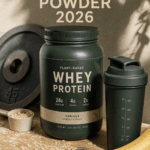

![Whey Vs Plant Protein: Which Builds More Muscle? [ Rct Data]](https://nordvitalwellness.com/wp-content/uploads/2026/05/nv-hero-auto-whey-protein-vs-plant-protein-150x150.png "Whey vs Plant Protein: Which Builds More Muscle? [2026 RCT Data]")
Level up your recovery
Supplements work best alongside the right recovery tools. Explore our gear guides: