Affiliate links: as an Amazon Associate and through other programs, we earn from qualifying purchases, at no extra cost to you. Learn more.

Quick answer: Maca is a root vegetable from the Peruvian Andes. Small trials found modest gains in sexual desire and in some menopause symptoms, but reviews call the evidence limited, and maca did not change testosterone or other reproductive hormones. There is no good evidence that it improves fertility or energy, and its safety in pregnancy has not been established.
In This Article
Maca at a Glance
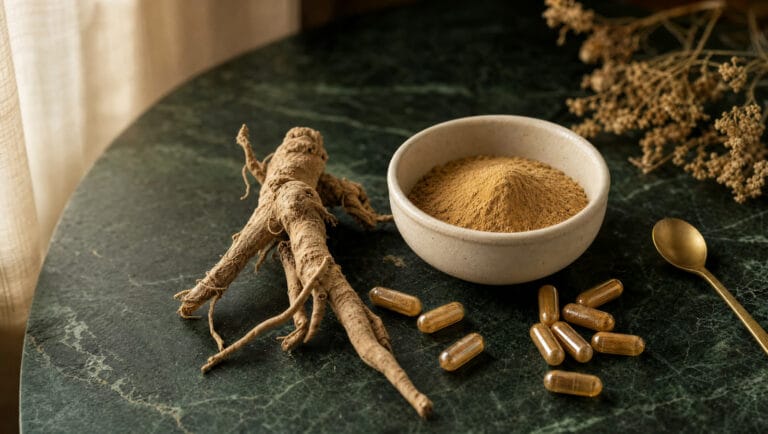
Maca (Lepidium meyenii) is a plant in the cabbage family (MSK) that grows between 4,000 and 4,500 meters in the central Andes of Peru (Gonzales et al., 2003). Its root is eaten as a vegetable and used in traditional medicine to improve wellness, sexual function and fertility (LiverTox). Supplements come as powder, capsules and gelatinized maca, a processed powder used in several trials (Gonzales et al., 2002; Shin et al., 2023).
| Use | What trials found | Size of the evidence |
|---|---|---|
| Sexual desire | Better desire than placebo in some trials; a review called the evidence limited (Shin et al., 2010) | 4 small randomized trials in the review |
| Mild erectile problems | Scores rose slightly more than with placebo (Zenico et al., 2009) | 1 trial, 50 men, 12 weeks |
| Sexual side effects of antidepressants | Some benefit at 3 g a day, mainly in postmenopausal women (Dording et al., 2008; Dording et al., 2015) | 2 trials, 20 and 45 people |
| Menopause symptoms | All 4 trials found benefits, but the review called the evidence limited (Lee et al., 2011) | 4 small trials |
| Testosterone and other hormones | No change in men (Gonzales et al., 2003) or in postmenopausal women (Brooks et al., 2008) | Several small trials |
| Sperm and fertility | No clear effect on sperm concentration (Lee et al., 2022) | 5 small trials |
| Energy and exercise | Cycling time did not improve compared with placebo (Stone et al., 2009) | 1 trial, 8 cyclists, 14 days |
Libido and Sexual Function
A 2010 systematic review found 4 randomized trials of maca for sexual function. Two found better sexual desire or less sexual dysfunction, one in healthy cyclists found no effect, and one in men with erectile dysfunction found a benefit. The authors said the trials were too few, too small and of too low quality for firm conclusions (Shin et al., 2010).
Get our free supplement cheat sheet.
One page: typical doses, timing and upper limits for ten well-studied supplements. No upsell.
🔒 No spam. Unsubscribe anytime. We send 1-2 emails/month max.
- Healthy men: in a 12-week trial, men aged 21 to 56 took 1.5 g or 3 g of gelatinized maca a day or a placebo. Sexual desire improved from week 8, and the change was not explained by mood or by testosterone, which did not change (Gonzales et al., 2002).
- Mild erectile dysfunction: in 50 men, 2,400 mg a day of a dry extract for 12 weeks raised the erectile function score by 1.6 points, versus 0.5 with placebo. The authors described it as a small effect on how men rated their sexual well-being (Zenico et al., 2009).
- Symptoms of low testosterone with normal levels: in 80 Korean men, six capsules a day of gelatinized maca (833 mg of maca powder each) for 12 weeks improved symptom, erectile and urinary questionnaire scores more than placebo, while testosterone did not differ between the groups. A government grant funded the trial, and some authors listed affiliations with health-products companies (Shin et al., 2023).
- Sexual side effects of antidepressants: in a pilot study of 20 people, 3 g a day helped and 1.5 g did not (Dording et al., 2008). In a 12-week trial in 45 women, remission rates were higher with maca than with placebo, mainly in postmenopausal women; an NIH grant funded it (Dording et al., 2015). If you take an antidepressant, talk to your prescriber before adding anything.
Menopause Symptoms
A 2011 systematic review found 4 randomized trials in perimenopausal, early postmenopausal and late postmenopausal women. All 4 found favorable effects on menopause symptom scores, but the review said the trials were few, small and of limited quality, and that maca’s safety had not yet been shown (Lee et al., 2011).
- Australia: 14 postmenopausal women took 3.5 g of maca powder a day for 6 weeks and a placebo for 6 weeks. Scores for anxiety, depression and sexual dysfunction fell with maca, while estradiol, FSH, LH and SHBG did not change (Brooks et al., 2008).
- Hong Kong: 29 postmenopausal women took 3.3 g a day for 6 weeks and a placebo for 6 weeks. Diastolic blood pressure and depression scores fell with maca, with no change in hormones, blood sugar, cholesterol or immune markers (Stojanovska et al., 2015).
In both trials the benefits came without hormone changes, and lab tests found no meaningful estrogen-like or androgen-like activity in maca extracts (Brooks et al., 2008). If menopause symptoms affect your daily life, talk to your doctor about your options.
Hormones, Fertility and Energy: What the Evidence Does Not Support
Hormones
In healthy men, 1.5 or 3 g of maca a day for 12 weeks did not change LH, FSH, prolactin, testosterone or estradiol compared with placebo (Gonzales et al., 2003). Hormones did not change in the postmenopausal trials either (Brooks et al., 2008; Stojanovska et al., 2015). A 2024 review of 52 studies on 27 products sold as testosterone boosters included maca and found that most products did not raise total testosterone; maca was not among the few it rated as possibly effective (Morgado et al., 2024).
Fertility
A 2022 meta-analysis of 5 small trials found unclear effects on semen quality, and pooled sperm concentration did not differ from placebo (Lee et al., 2022). In a 16-week trial in 50 infertile men, sperm concentration rose 40% with maca and 76% with placebo, and the difference was not statistically significant (Melnikovova et al., 2021). A 2018 review concluded that the reproductive health claims made for maca cannot be fully supported, and that weak rules for its production and marketing put consumers at risk (Beharry and Heinrich, 2018).
Energy and exercise
The exercise trial we found was a 14-day crossover study in 8 trained male cyclists. Time-trial performance improved compared with the start of the study, but not compared with placebo (Stone et al., 2009). That is not evidence that maca raises energy.
Maca Safety and Who Should Avoid It
Maca is eaten as food in Peru (Beharry and Heinrich, 2018). In two 12-week trials it was described as well tolerated (Dording et al., 2008; Dording et al., 2015). Memorial Sloan Kettering’s herb database lists subjective reports of altered menstrual cycles, moodiness, cramps, stomach irritation and trouble sleeping, plus flu-like symptoms and vomiting in one study where it was unclear whether maca was the cause (MSK). LiverTox says maca has not been linked to liver injury (LiverTox). A 2011 review said its safety had not yet been shown and should be tested in larger studies (Lee et al., 2011).
- Pregnancy and breastfeeding: we found no human safety studies, and Memorial Sloan Kettering advises talking to your doctor first because maca may not be safe for you (MSK).
- Hormone-sensitive cancers, such as breast or uterine cancer: talk to your doctor before taking maca (MSK).
- Lab tests: in one case report, a woman taking maca had a very high result on a standard testosterone test, and a more specific test gave a much lower result; her doctors suspected maca had interfered with the first test (Srikugan et al., 2011). Tell your doctor you take it before any hormone test.
- Lead: a woman’s blood lead reached 44 µg/dL and fell after she stopped drinking from a leaded mug. It rose again when she started maca root powder and fell again when she stopped it (Johnson-Arbor et al., 2018). Choose a product tested by a third party for heavy metals.
Common Questions About Maca
Does maca raise testosterone?
No. In healthy men, 1.5 or 3 g a day for 12 weeks did not change testosterone or other reproductive hormones (Gonzales et al., 2003), and testosterone did not differ from placebo in men with symptoms of low testosterone (Shin et al., 2023).
Does maca help libido?
Possibly, a little. Small trials found better sexual desire with 1.5 to 3 g a day, but a systematic review called the evidence limited (Shin et al., 2010).
How much maca was used in studies?
Most of the trials above used 1.5 to 3.5 g of maca powder a day (Gonzales et al., 2002; Brooks et al., 2008), and they lasted 6 to 16 weeks (Brooks et al., 2008; Melnikovova et al., 2021). One trial used six capsules a day with 833 mg of gelatinized maca powder each (Shin et al., 2023).
Can maca help me get pregnant?
There is no good evidence that it does. A 2022 meta-analysis found unclear effects on semen quality (Lee et al., 2022), and Memorial Sloan Kettering advises talking to your doctor first if you are pregnant (MSK).
Is maca safe to take every day?
In a 12-week trial, people took it daily and it was described as well tolerated (Dording et al., 2015), but a 2011 review said its safety still needs testing in larger studies (Lee et al., 2011). Choose a product tested for heavy metals, because maca powder has been linked to lead exposure (Johnson-Arbor et al., 2018).
The Bottom Line
Maca is a food with a small, mixed evidence base. It may give a modest lift to sexual desire (Shin et al., 2010), and it may ease some menopause and mood symptoms (Lee et al., 2011), but the trials are small and short.
In trials it did not raise testosterone (Gonzales et al., 2003), and there is no good evidence for fertility (Lee et al., 2022) or energy (Stone et al., 2009). If you try it, stay close to the amounts used in trials, about 1.5 to 3.5 g a day, and pick a product tested for heavy metals (Johnson-Arbor et al., 2018).
Scientific References
- Gonzales et al., 2003. Effect of Lepidium meyenii (Maca), a root with aphrodisiac and fertility-enhancing properties, on serum reproductive hormone levels in adult healthy men. J Endocrinol.
- Gonzales et al., 2002. Effect of Lepidium meyenii (MACA) on sexual desire and its absent relationship with serum testosterone levels in adult healthy men. Andrologia.
- Shin et al., 2023. Efficacy and Safety of Maca (Lepidium meyenii) in Patients with Symptoms of Late-Onset Hypogonadism: A Randomized, Double-Blind, Placebo-Controlled Clinical Trial. World J Mens Health.
- Shin et al., 2010. Maca (L. meyenii) for improving sexual function: a systematic review. BMC Complement Altern Med.
- Zenico et al., 2009. Subjective effects of Lepidium meyenii (Maca) extract on well-being and sexual performances in patients with mild erectile dysfunction: a randomised, double-blind clinical trial. Andrologia.
- Dording et al., 2008. A double-blind, randomized, pilot dose-finding study of maca root (L. meyenii) for the management of SSRI-induced sexual dysfunction. CNS Neurosci Ther.
- Dording et al., 2015. A double-blind placebo-controlled trial of maca root as treatment for antidepressant-induced sexual dysfunction in women. Evid Based Complement Alternat Med.
- Lee et al., 2011. Maca (Lepidium meyenii) for treatment of menopausal symptoms: A systematic review. Maturitas.
- Brooks et al., 2008. Beneficial effects of Lepidium meyenii (Maca) on psychological symptoms and measures of sexual dysfunction in postmenopausal women are not related to estrogen or androgen content. Menopause.
- Lee et al., 2022. Maca (Lepidium meyenii Walp.) on semen quality parameters: A systematic review and meta-analysis. Front Pharmacol.
- Stone et al., 2009. A pilot investigation into the effect of maca supplementation on physical activity and sexual desire in sportsmen. J Ethnopharmacol.
- Stojanovska et al., 2015. Maca reduces blood pressure and depression, in a pilot study in postmenopausal women. Climacteric.
- Morgado et al., 2024. Do “testosterone boosters” really increase serum total testosterone? A systematic review. Int J Impot Res.
- Melnikovova et al., 2021. Evaluation of the effect of Lepidium meyenii Walpers in infertile patients: A randomized, double-blind, placebo-controlled trial. Phytother Res.
- Beharry and Heinrich, 2018. Is the hype around the reproductive health claims of maca (Lepidium meyenii Walp.) justified? J Ethnopharmacol.
- Srikugan et al., 2011. First case report of testosterone assay-interference in a female taking maca (Lepidium meyenii). BMJ Case Rep.
- Johnson-Arbor et al., 2018. Unintentional and Sequential Lead Exposure from a Ceramic Mug and Maca (Lepidium meyenii). J Med Toxicol.
- Memorial Sloan Kettering Cancer Center: Maca (About Herbs) (updated June 7, 2023).
- LiverTox (NIDDK): Maca (updated April 10, 2019).