Affiliate links: as an Amazon Associate and through other programs, we earn from qualifying purchases, at no extra cost to you. Learn more.
Adults get about 3 to 6 g of glutamine a day from food, according to the NIH, and 14 g a day of supplements is the observed safe level for healthy adults (Shao and Hathcock, 2008). If you try it, 5 g servings of plain powder are the simplest option, and two servings a day stay under that level. Do not take it on your own if you are critically ill, have cirrhosis or are having cancer treatment (Heyland et al., 2013; Oppong et al., 1997; Holecek, 2013).
In This Article
How Much L-Glutamine to Take
There is no official upper limit for glutamine. The NIH Office of Dietary Supplements says adults eat about 3 to 6 g a day in protein foods. It also says that oral doses of 0.21 to 0.42 g per kg of body weight a day showed no signs of toxicity, which is 15 to 30 g a day for a person who weighs 154 pounds (70 kg).
A 2008 safety review named 14 g a day as the observed safe level for healthy adults, meaning the highest intake with strong evidence of no harm. Higher doses have been tested without problems, but the authors judged the data too limited for a confident conclusion about long-term safety (Shao and Hathcock, 2008). The lead author worked for a trade group for the supplement industry.
Get our free supplement cheat sheet.
One page: typical doses, timing and upper limits for ten well-studied supplements. No upsell.
🔒 No spam. Unsubscribe anytime. We send 1-2 emails/month max.
In healthy adults, single doses of about 20 to 30 g seemed to cause no ill effects, and one study reported no harm when athletes took 28 g a day for 14 days (Gleeson, 2008).
Doses used in the trials
- IBS that started after a gut infection: 5 g three times a day (15 g a day) for 8 weeks (Zhou et al., 2019).
- IBS with a low-FODMAP diet: 15 g a day for 6 weeks (Rastgoo et al., 2021).
- Soreness after hard exercise: 0.3 g per kg a day for 3 days, about 21 g a day for a person who weighs 70 kg (Legault et al., 2015).
- Strength training: 0.9 g per kg of lean mass a day, almost 45 g, for 6 weeks, with no benefit over placebo (Candow et al., 2001).
- Sickle cell disease: a prescription powder at 0.3 g per kg twice a day, set by the doctor (Niihara et al., 2018).
A sensible way to use it
Start with one 5 g serving a day. Two servings (10 g) a day still stay under the 14 g level. The IBS trials used 15 g a day, so if you want to match them, discuss it with your doctor first. Give it the 6 to 8 weeks the IBS trials used, and stop if nothing has changed by then.
Trial Doses Compared With the 14 g Safety Level
Grams a day are worked out for an adult who weighs 70 kg (154 pounds) when the dose depends on body weight.
| Use studied | Dose in the trial | Grams a day | Compared with 14 g |
|---|---|---|---|
| IBS after a gut infection | 5 g three times a day, 8 weeks | 15 g | Slightly above |
| IBS with a low-FODMAP diet | 15 g a day, 6 weeks | 15 g | Slightly above |
| Soreness after hard exercise | 0.3 g per kg a day, 3 days | About 21 g | Above, for 3 days only |
| Strength training | 0.9 g per kg of lean mass a day, 6 weeks | Almost 45 g | Far above, and no benefit |
| Severe burns (hospital care) | 0.5 g per kg a day | About 35 g | Hospital use only, no benefit |
| Sickle cell disease | 0.3 g per kg twice a day, 48 weeks | Set by the doctor | Prescription medicine |
The burns trial found that this dose did not shorten the hospital stay (Heyland et al., 2022).
Forms, Timing and Food Sources
Powder or capsules
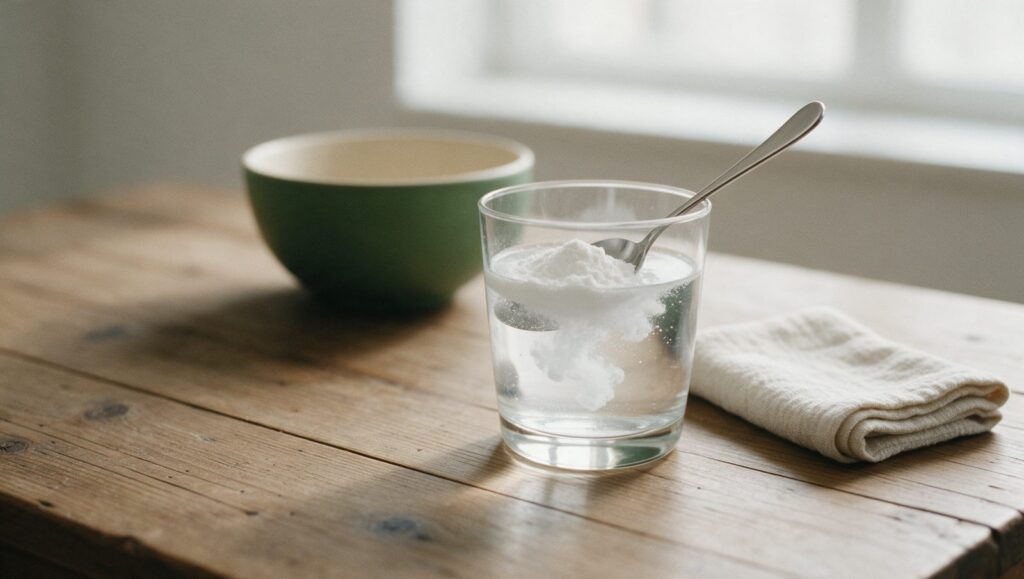
Powder is the practical choice at the doses used in trials. A typical capsule label in the NIH Dietary Supplement Label Database lists 500 mg of L-glutamine per capsule, so a single 5 g serving would take 10 capsules.
For comparison, the directions for the prescription glutamine powder say to mix each dose into 8 ounces (240 ml) of a cold or room-temperature drink, or 4 to 6 ounces of a soft food such as yogurt. The powder does not need to dissolve fully (MedlinePlus). Check your own product label for its directions.
With or without food
In a small dosing study of 8 people with sickle cell disease and 4 healthy adults, food did not change how fast the body cleared glutamine, and the authors concluded it can be taken with or without food. The same study found that higher doses raised peak blood levels less than in proportion to the dose (Sadaf et al., 2024). The IBS trial split its 15 g into three 5 g servings.
Food sources
Glutamine is part of almost every protein you eat. Using protein sequence data, one study estimated that glutamine makes up 1% to 33% of the protein in common foods and about 4.8% of the protein in meat. Average intake among about 70,000 US nurses was 6.84 g a day (Lenders et al., 2009). A meal with 30 g of meat protein therefore supplies roughly 1.4 g.
Choosing a Glutamine Product
- Single ingredient: pick a product that lists L-glutamine alone, with the grams per serving on the Supplement Facts panel, so you know your dose.
- Capsule math: at 500 mg per capsule, 5 g is 10 capsules, so check how many capsules a serving needs before you buy.
- Quality seal: the NIH Office of Dietary Supplements notes that ConsumerLab.com, NSF International and U.S. Pharmacopeia test supplements. A seal shows that a product contains what the label says without harmful levels of contaminants, but it does not guarantee that the product is safe or effective.
- Prescription is different: the L-glutamine powder for sickle cell disease is a medicine prescribed and dosed by a doctor, and a supplement powder is not a substitute for it.
Side Effects and Who Should Avoid L-Glutamine
At 15 g a day in the IBS trial, side effects and dropouts were low and similar to placebo (Zhou et al., 2019). The prescription powder lists constipation, nausea, headache, abdominal pain, cough, and pain in the back, arms, hands, legs or feet as possible side effects (MedlinePlus).
Who should not take it on their own
- People who are critically ill. In the largest trial in intensive care, glutamine was linked to more deaths (Heyland et al., 2013). Our review of the L-glutamine evidence explains that trial and the other results.
- People with cirrhosis. In 17 people with cirrhosis, an oral glutamine dose raised blood ammonia from about 58 to 120 µmol/L and slowed reaction times, with no change in 4 healthy volunteers (Oppong et al., 1997). In 238 people with cirrhosis, a large rise in ammonia after a glutamine test dose predicted later episodes of hepatic encephalopathy, the confusion that liver disease can cause (Ampuero et al., 2020).
- People having cancer treatment. A review of long-term glutamine use lists its effect on tumor growth as an open question (Holecek, 2013), so ask your oncologist first.
- Pregnancy, breastfeeding and children. The 14 g safety level was set for healthy adults, and the prescription powder is used in children only under a doctor’s care. Ask your doctor first.
- Long-term high doses. Daily intakes of around 40 g have not been studied well over the long term, and the same review lists possible effects on amino acid absorption and on how the body handles ammonia.
Frequently Asked Questions
How much L-glutamine should I take a day?
There is no official limit. A safety review named 14 g a day as the observed safe level for healthy adults, and the IBS trials used 15 g a day, so two 5 g servings is a reasonable ceiling unless your doctor advises otherwise.
Should I take glutamine on an empty stomach?
It does not seem to matter. In a small dosing study, food did not change how the body cleared glutamine, and the authors concluded it can be taken with or without food (Sadaf et al., 2024).
Can I get enough glutamine from food?
Most adults get about 3 to 6 g a day from protein foods, and the body also makes its own. The NIH says it becomes essential only in critical illness, when the body needs more than it can make.
How many capsules make a 5 g serving?
At a typical 500 mg per capsule, 5 g is 10 capsules, which is why powder is more practical at the doses used in trials.
Who should not take L-glutamine?
Do not take it on your own if you are critically ill, have cirrhosis or are having cancer treatment. Ask your doctor first if you are pregnant, breastfeeding or thinking of giving it to a child.
The Bottom Line on Taking L-Glutamine
If you choose to try L-glutamine, keep it simple: a plain powder in 5 g servings, with two servings (10 g) a day staying under the 14 g safety level. The use with the most support is IBS with diarrhea that began after a gut infection, where the trials ran 6 to 8 weeks, so stop if nothing changes by then. Without medical advice, skip it completely if you are critically ill, have cirrhosis or are having cancer treatment.
Scientific References
- Risk assessment for the amino acids taurine, L-glutamine and L-arginine. Regul Toxicol Pharmacol. Shao and Hathcock, 2008
- A randomized trial of glutamine and antioxidants in critically ill patients. N Engl J Med. Heyland et al., 2013
- Oral glutamine challenge in cirrhotics pre- and post-liver transplantation: a psychometric and analyzed EEG study. Hepatology. Oppong et al., 1997
- Side effects of long-term glutamine supplementation. JPEN J Parenter Enteral Nutr. Holecek, 2013
- Dosing and efficacy of glutamine supplementation in human exercise and sport training. J Nutr. Gleeson, 2008
- Randomised placebo-controlled trial of dietary glutamine supplements for postinfectious irritable bowel syndrome. Gut. Zhou et al., 2019
- Glutamine Supplementation Enhances the Effects of a Low FODMAP Diet in Irritable Bowel Syndrome Management. Front Nutr. Rastgoo et al., 2021
- The Influence of Oral L-Glutamine Supplementation on Muscle Strength Recovery and Soreness Following Unilateral Knee Extension Eccentric Exercise. Int J Sport Nutr Exerc Metab. Legault et al., 2015
- Effect of glutamine supplementation combined with resistance training in young adults. Eur J Appl Physiol. Candow et al., 2001
- A Phase 3 Trial of l-Glutamine in Sickle Cell Disease. N Engl J Med. Niihara et al., 2018
- A Randomized Trial of Enteral Glutamine for Treatment of Burn Injuries. N Engl J Med. Heyland et al., 2022
- A Population Pharmacokinetic Analysis of L-Glutamine Exposure in Patients with Sickle Cell Disease: Evaluation of Dose and Food Effects. Clin Pharmacokinet. Sadaf et al., 2024
- Evaluation of a novel food composition database that includes glutamine and other amino acids derived from gene sequencing data. Eur J Clin Nutr. Lenders et al., 2009
- Oral glutamine challenge is a marker of altered ammonia metabolism and predicts the risk of hepatic encephalopathy. Liver Int. Ampuero et al., 2020
- NIH Office of Dietary Supplements. Dietary Supplements for Exercise and Athletic Performance: Fact Sheet for Health Professionals (glutamine section). Updated April 1, 2024. Read the page
- NIH Dietary Supplement Label Database. Label 176436: L-Glutamine 500 mg capsules (1 capsule = 500 mg). Read the page
- MedlinePlus (National Library of Medicine). L-glutamine (prescription oral powder). Last revised September 15, 2017. Read the page
- NIH Office of Dietary Supplements. Dietary Supplements: What You Need to Know. Updated January 4, 2023. Read the page
Level up your recovery
Cold plunges, saunas and red light are popular recovery tools. Our buying guides compare the options: