Affiliate links: as an Amazon Associate and through other programs, we earn from qualifying purchases, at no extra cost to you. Learn more.
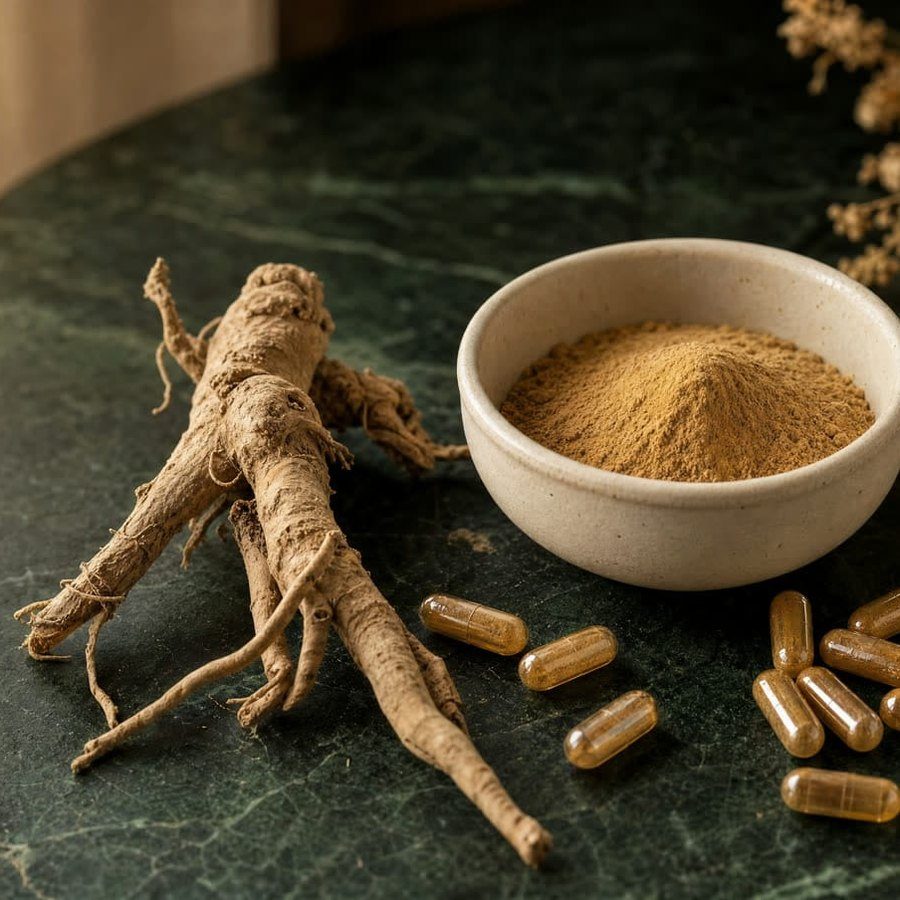
Quick answer: Both herbs raised testosterone a little in small, short trials, and several of those trials were funded by the extract makers. Tongkat ali has more data in men with low testosterone, while ashwagandha has more data on stress and sleep. Neither is a substitute for a doctor’s workup, and both have safety questions, including rare liver injury.
In This Article
Tongkat Ali vs Ashwagandha at a Glance
Tongkat ali (Eurycoma longifolia) is a slow-growing tree native to Southeast Asia, and its root extract is promoted for testosterone and athletic performance (LiverTox). Ashwagandha (Withania somnifera) is a shrub used in Ayurvedic medicine and sold mainly for stress and sleep (NCCIH). This is how the human evidence compares.
Ashwagandha supplements compared: extract and dose (2026)
| Product | On the label | Good to know | Buy |
|---|---|---|---|
| Our pick Nutricost KSM-66 Ashwagandha | 600 mg KSM-66 root extract (min. 5% withanolides) + 5 mg BioPerine per capsule | The extract and the 600 mg daily dose used in several clinical trials. | See it on Amazon ↗ |
| NOW KSM-66 Ashwagandha | 600 mg KSM-66 root extract per capsule | The same extract and dose, without black pepper extract. | See it on Amazon ↗ |
| Life Extension Optimized Ashwagandha | 125 mg Sensoril extract per capsule | A different extract (root and leaf) that is dosed lower, usually 125 to 250 mg a day. | See it on Amazon ↗ |
| Organic India Ashwagandha | 800 mg organic ashwagandha per 2 capsules | No withanolide percentage on the label, so it is not a standardized extract. | See it on Amazon ↗ |
Not for use in pregnancy, and rare cases of liver injury have been reported (NCCIH).
Label figures: NIH Dietary Supplement Label Database and the brand listing, checked October 2026. Formulas change, so check the label before you buy. We earn a commission on Amazon purchases at no extra cost to you, and we do not lab-test products.
| Question | Tongkat ali | Ashwagandha |
|---|---|---|
| Testosterone | Total testosterone rose in a 2022 meta-analysis of 5 small trials, mostly in men with low levels (Leisegang et al., 2022) | Testosterone rose about 57 ng/dL in men in a 2026 meta-analysis of varied trials (Fornalik et al., 2026) |
| Other uses studied | Stress hormones and mood in one 4-week trial (Talbott et al., 2013) | Cortisol fell in a 2025 meta-analysis, but perceived stress did not change (Albalawi, 2025) |
| Doses used in trials | 100 to 400 mg a day of a water extract; one 2-week study used 600 mg | Trials in men often used 300 mg of root extract twice a day (Wankhede et al., 2015) |
| Who paid for key trials | The extract maker funded the largest placebo trial (Chinnappan et al., 2021) | Extract makers funded or supplied the product in several trials |
| Main safety concerns | Mercury in many products in two surveys (Ang et al., 2004), EFSA could not confirm safety (Turck et al., 2021), liver injury reports (LiverTox) | Rare liver injury (NCCIH; Björnsson et al., 2020), changes in thyroid hormones (Sharma et al., 2018), not for pregnancy |
What the Tongkat Ali Trials Found
The best summary is a 2022 review that found 9 studies and pooled 5 randomized trials. Total testosterone rose with tongkat ali, and the result held in men with low testosterone. The authors said more research is needed before it is used in clinical practice (Leisegang et al., 2022).
Get our free supplement cheat sheet.
One page: typical doses, timing and upper limits for ten well-studied supplements. No upsell.
🔒 No spam. Unsubscribe anytime. We send 1-2 emails/month max.
- Older men with low testosterone: 105 men aged 50 to 70 with testosterone below 300 ng/dL took 100 mg, 200 mg or a placebo for 12 weeks. Total testosterone rose more than with placebo, but free testosterone did not differ between groups. The extract maker funded the study, and two authors worked for it (Chinnappan et al., 2021).
- Studies without a placebo group: in 76 men with late-onset hypogonadism, 200 mg a day for a month brought testosterone into the normal range in 90.8% of them, up from 35.5% (Tambi et al., 2012). In 25 active adults aged 57 to 72, 400 mg a day for 5 weeks raised testosterone and grip strength (Henkel et al., 2014). Without a placebo group, these results are weak evidence.
- Stress: in 63 moderately stressed adults, 200 mg a day for 4 weeks lowered salivary cortisol by 16% and raised salivary testosterone by 37% compared with placebo. The extract maker funded the trial, and one author worked for it (Talbott et al., 2013).
- Young healthy men: 600 mg a day for 2 weeks raised testosterone, free testosterone and estradiol compared with placebo in 32 men aged about 24 (Chan et al., 2021).
A 2024 review of 52 studies on 27 products sold as testosterone boosters found that most did not raise total testosterone. It rated tongkat ali as possibly effective for men with late-onset hypogonadism and for healthy men (Morgado et al., 2024). For doses and more detail, see our tongkat ali review.
What the Ashwagandha Trials in Men Found
NCCIH, part of the NIH, says there is some limited evidence that taking ashwagandha for 2 to 4 months may increase testosterone and sperm quality, and that some preparations may help with insomnia and stress (NCCIH).
- Overweight men aged 40 to 70: in a 16-week crossover trial, 57 men enrolled and 43 finished. After 8 weeks on the extract, salivary testosterone had risen 14.7% more than with placebo, but fatigue, vigor and sexual well-being did not improve more than with placebo. The extract maker funded the study and supplied the extract (Lopresti et al., 2019).
- Young men starting weight training: 57 men took 300 mg of root extract twice a day or a placebo for 8 weeks. Testosterone rose by 96.2 ng/dL versus 18.0 ng/dL, and bench-press strength rose by 46.0 kg versus 26.4 kg. The extract maker supplied the product (Wankhede et al., 2015).
- All trials pooled: a 2026 meta-analysis of 23 randomized trials with 1,706 people found that testosterone rose by about 57 ng/dL in men but not in women, with large differences between studies (Fornalik et al., 2026).
- Stress hormone: a 2025 meta-analysis found that cortisol fell by 1.16 µg/dL across 7 trials, but perceived stress did not change significantly across 6 trials (Albalawi, 2025).
For extracts, doses and how long people took it, see our ashwagandha guide.
Taking Them Together: What Is Known
No trial has tested tongkat ali and ashwagandha together. A PubMed search on October 23, 2026 found only review articles, so the effect of the combination, good or bad, is unknown.
Stacking two herbs also stacks the unknowns. Both have only short trials, both have been linked to liver injury reports, and tongkat ali raised estradiol as well as testosterone in young men (Chan et al., 2021). If you still want to try one, try one at a time so you can tell what it does.
Which one fits which goal
- Symptoms of low testosterone: see a doctor first. The Endocrine Society recommends diagnosing low testosterone only with symptoms plus consistently low morning testosterone, confirmed with a repeat test (Bhasin et al., 2018). Tongkat ali has the more relevant trials, but they are small, and the largest placebo-controlled one was funded by the extract maker (Chinnappan et al., 2021).
- Stress or poor sleep: ashwagandha has more trials, but in the 2025 meta-analysis it did not change how stressed people felt (Albalawi, 2025).
- Strength: one 8-week ashwagandha trial in young men found larger strength gains with training (Wankhede et al., 2015). It is a single trial.
- Fertility: if you and your partner are trying to conceive, see a doctor for a semen analysis first. Our guide to ashwagandha for men covers the small fertility trials.
How to read the labels
- The tongkat ali trials used standardized water extracts of the root at 100 to 400 mg a day (Chinnappan et al., 2021; Tambi et al., 2012; Henkel et al., 2014). Check that the label names the plant part and the extract, and skip blends that hide the dose of each herb.
- Two surveys of 100 tongkat ali products sold in Malaysia found mercury above the legal limit in 36% (Ang et al., 2004) and 26% (Ang and Lee, 2006) of them. Choose a product tested by a third party for heavy metals.
Safety: Liver, Thyroid, Hormones and Contamination
Ashwagandha
- NCCIH says it may be safe for up to 3 months, and long-term safety is unknown. It can cause drowsiness, stomach upset, diarrhea and vomiting (NCCIH).
- NCCIH says liver injury is rare, but a number of cases have been reported (NCCIH). In a series of 5 cases, jaundice appeared 2 to 12 weeks after starting ashwagandha, and liver tests returned to normal within 1 to 5 months in the 4 people who were followed (Björnsson et al., 2020). LiverTox, the NIH liver injury database, says ashwagandha has been implicated in cases of clinically apparent liver injury (LiverTox).
- Thyroid: in 50 adults with subclinical hypothyroidism, 600 mg a day for 8 weeks changed TSH, T3 and T4 compared with placebo (Sharma et al., 2018). NCCIH does not recommend it for people with thyroid or autoimmune disorders or before surgery (NCCIH).
- Avoid it in pregnancy and while breastfeeding. It may interact with medicines for diabetes, high blood pressure, seizures and the thyroid, and with immunosuppressants and sedatives. People with hormone-sensitive prostate cancer should avoid it (NCCIH).
Tongkat ali
- In 2021, the European Food Safety Authority (EFSA) reviewed a standardized tongkat ali root extract proposed at up to 200 mg a day. Lab and animal tests suggested it can damage DNA, mainly in the stomach and the first part of the small intestine, and EFSA concluded that its safety had not been established under any condition of use (Turck et al., 2021).
- LiverTox notes recent reports of clinically apparent liver injury attributed to tongkat ali in bodybuilders (LiverTox).
- Mercury above the legal limit turned up in about a quarter to a third of products in two Malaysian surveys (Ang et al., 2004; Ang and Lee, 2006).
- It can raise estradiol as well as testosterone (Chan et al., 2021), so ask your doctor first if you have a hormone-sensitive cancer or take prescription medicines. The EFSA application excluded pregnant and breastfeeding women (Turck et al., 2021), and we found no human safety data in pregnancy, so do not use it then.
The Bottom Line
Tongkat ali and ashwagandha each raised testosterone a little in small trials, many of them funded by the companies that sell the extracts. Neither has long-term safety data, and the two have never been tested together.
If you have symptoms of low testosterone, start with a doctor and two morning blood tests (Bhasin et al., 2018). If stress or sleep is the main issue, ashwagandha has more trials, but NCCIH says it may be safe for up to 3 months, with no data on longer use, and does not recommend it for people with thyroid or autoimmune disorders (NCCIH). Tongkat ali carries open questions about DNA damage and contamination.
Ashwagandha is one of the better-studied adaptogens. Several trials found a modest drop in cortisol; results for perceived stress are mixed and the testosterone evidence is limited (NIH). Choose an extract tested in trials (KSM-66, Sensoril or Shoden), use it for up to 3 months, and skip it if you have a thyroid or autoimmune condition, liver problems, or are pregnant.
Scientific References
- Leisegang et al., 2022. Eurycoma longifolia (Jack) Improves Serum Total Testosterone in Men: A Systematic Review and Meta-Analysis of Clinical Trials. Medicina (Kaunas).
- Fornalik et al., 2026. Hormonal Modulation with Withania somnifera: Systematic Review and Meta-Analysis of Randomized-controlled Trials. Planta Med.
- Talbott et al., 2013. Effect of Tongkat Ali on stress hormones and psychological mood state in moderately stressed subjects. J Int Soc Sports Nutr.
- Albalawi, 2025. Dual impact of Ashwagandha: Significant cortisol reduction but no effects on perceived stress – A systematic review and meta-analysis. Nutr Health.
- Wankhede et al., 2015. Examining the effect of Withania somnifera supplementation on muscle strength and recovery: a randomized controlled trial. J Int Soc Sports Nutr.
- Chinnappan et al., 2021. Effect of Eurycoma longifolia standardised aqueous root extract-Physta(®) on testosterone levels and quality of life in ageing male subjects: a randomised, double-blind, placebo-controlled multicentre study. Food Nutr Res.
- Ang et al., 2004. Determination of mercury by cold vapor atomic absorption spectrophotometer in Tongkat Ali preparations obtained in Malaysia. Int J Toxicol.
- Turck et al., 2021. Safety of Eurycoma longifolia (Tongkat Ali) root extract as a novel food pursuant to Regulation (EU) 2015/2283. EFSA J.
- Björnsson et al., 2020. Ashwagandha-induced liver injury: A case series from Iceland and the US Drug-Induced Liver Injury Network. Liver Int.
- Sharma et al., 2018. Efficacy and Safety of Ashwagandha Root Extract in Subclinical Hypothyroid Patients: A Double-Blind, Randomized Placebo-Controlled Trial. J Altern Complement Med.
- Tambi et al., 2012. Standardised water-soluble extract of Eurycoma longifolia, Tongkat ali, as testosterone booster for managing men with late-onset hypogonadism? Andrologia.
- Henkel et al., 2014. Tongkat Ali as a potential herbal supplement for physically active male and female seniors: a pilot study. Phytother Res.
- Chan et al., 2021. The effect of Eurycoma Longifolia on the regulation of reproductive hormones in young males. Andrologia.
- Morgado et al., 2024. Do “testosterone boosters” really increase serum total testosterone? A systematic review. Int J Impot Res.
- Lopresti et al., 2019. A Randomized, Double-Blind, Placebo-Controlled, Crossover Study Examining the Hormonal and Vitality Effects of Ashwagandha ( Withania somnifera) in Aging, Overweight Males. Am J Mens Health.
- Bhasin et al., 2018. Testosterone Therapy in Men With Hypogonadism: An Endocrine Society Clinical Practice Guideline. J Clin Endocrinol Metab.
- Ang and Lee, 2006. Contamination of mercury in tongkat Ali hitam herbal preparations. Food Chem Toxicol.
- LiverTox (NIDDK): Tongkat Ali (updated October 18, 2024).
- National Center for Complementary and Integrative Health (NCCIH): Ashwagandha (updated March 2023).
- LiverTox (NIDDK): Ashwagandha (updated December 3, 2024).