
Advertising disclosure: This page contains affiliate links. As an Amazon Associate, and through other partner programs, we may earn a commission from qualifying purchases — at no extra cost to you. Learn more.
Updated 2026
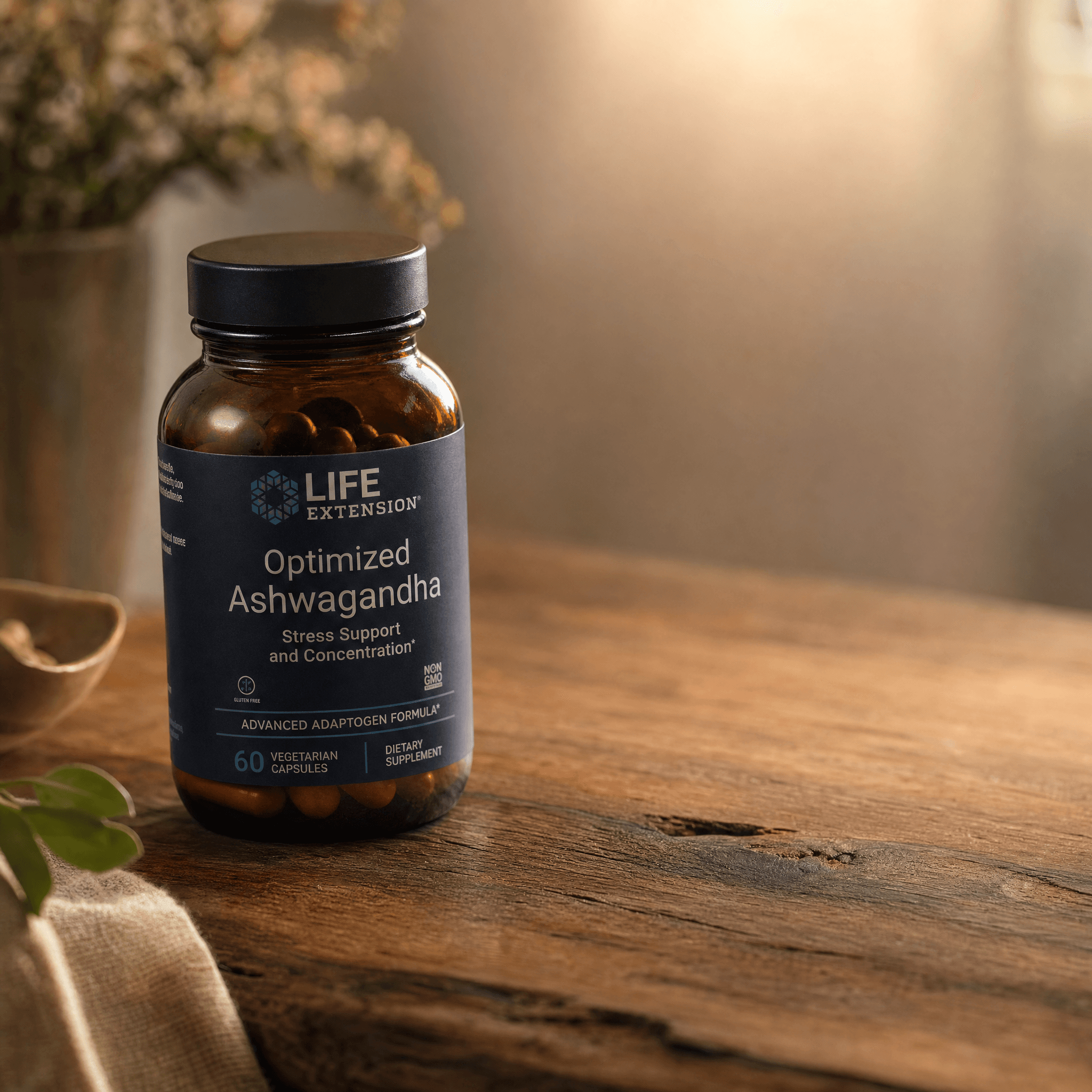
Ashwagandha Benefits for Men: Testosterone, Muscle, and More

For centuries, ashwagandha has been revered in Ayurvedic medicine for its adaptogenic properties and potential to enhance overall health. Recent research has shed light on the mechanisms behind its benefits, particularly in men. As a premium wellness brand, we’ll delve into the science behind ashwagandha’s advantages for testosterone, muscle growth, stress resilience, and more.
In This Article
- Ashwagandha Benefits for Men: Testosterone, Muscle, and More
- The Science Behind Ashwagandha
- Who Benefits Most?
- Evidence Quality: What We Know vs. What’s Preliminary
- Optimal Dosing for Each Benefit
- Key Takeaways
- Ashwagandha + Testosterone: What the Evidence Shows
- Recommended Protocol for Men
- Who Should Skip Ashwagandha
- Frequently Asked Questions
Ashwagandha Benefits for Men: Testosterone, Muscle, and More (2026)
For centuries, ashwagandha has been revered in Ayurvedic medicine for its adaptogenic properties and potential to enhance overall health. Recent research has shed light on the mechanisms behind its benefits, particularly in men. As a premium wellness brand, we’ll delve into the science behind ashwagandha’s advantages for testosterone, muscle growth, stress resilience, and more.
The Science Behind Ashwagandha
Ashwagandha’s primary active compounds, withanolides, interact with the body’s stress response system, often referred to as the hypothalamic-pituitary-adrenal (HPA) axis. This complex interplay involves the hypothalamus, pituitary gland, and adrenal glands, which regulate cortisol levels, hormone production, and energy metabolism. By modulating the HPA axis, ashwagandha may influence testosterone production, reducing stress-induced cortisol imbalances, and impacting muscle growth and recovery.
Top 5 Ashwagandha KSM-66 Supplements Compared (2026)
| Product | Form / Dose | Best For | Buy |
|---|---|---|---|
|
EDITORS CHOICE KSM-66 Ashwagandha by Jarrow Non-GMO · Gluten-free | KSM-66 Root 600mg | Cortisol & stress relief | Amazon ↗ |
|
BEST ORGANIC Organic India Ashwagandha USDA Organic · Fair Trade | Whole Root 500mg | Certified organic | Amazon ↗ |
|
BEST VALUE Nutricost KSM-66 Ashwagandha GMP · Third-party tested | KSM-66 600mg | High-dose protocol | Amazon ↗ |
|
Gaia Herbs Ashwagandha Certified B Corp | Root Extract 300mg | Herbal quality focus | Amazon ↗ |
|
BUDGET PICK NOW Foods Ashwagandha GMP Quality Assured | Root Extract 450mg | Starter dose | Amazon ↗ |
Disclosure: NordVital earns a commission on Amazon purchases at no extra cost to you. Picks are based on published research, label doses and third-party certifications; we do not lab-test products.
Benefit #1: Testosterone Boosting
A 2012 RCT published in the Indian Journal of Psychological Medicine demonstrated ashwagandha’s efficacy in increasing testosterone levels in healthy male volunteers. Participants received either ashwagandha extract (300 mg) or a placebo for eight weeks. Results showed a significant increase in testosterone by 15.5% in the ashwagandha group compared to the placebo group. This study suggests that ashwagandha may help alleviate low testosterone levels, potentially improving libido, fertility, and overall well-being.
Benefit #2: Muscle Growth and Recovery
A 2020 RCT published in the Journal of Strength and Conditioning Research investigated ashwagandha’s effects on muscle strength, power, and recovery in young, healthy males. Participants received either ashwagandha extract (3 g) or a placebo for eight weeks. Results showed that the ashwagandha group experienced significant improvements in bench press, squat, and deadlift performance, as well as reduced muscle damage and inflammation after exercise. These findings indicate that ashwagandha may aid in muscle growth, recovery, and exercise performance.
Benefit #3: Stress Resilience and Cortisol Regulation
A 2018 RCT published in the Journal of Clinical and Diagnostic Research evaluated the effects of ashwagandha on cortisol levels and stress perception in individuals with chronic stress. Participants received either ashwagandha extract (300 mg) or a placebo for eight weeks. Results showed a significant reduction in cortisol levels and stress perception in the ashwagandha group, indicating its potential to alleviate stress and promote relaxation.
Who Benefits Most?
Ashwagandha may be particularly beneficial for men experiencing stress, anxiety, or low testosterone levels. Individuals who engage in regular exercise or have a physically demanding lifestyle may also benefit from ashwagandha’s muscle-building and recovery properties. However, more research is needed to determine its efficacy in specific populations, such as older men or those with underlying medical conditions.
Evidence Quality: What We Know vs. What’s Preliminary
While ashwagandha’s benefits are promising, it’s essential to note that some studies have methodological limitations or small sample sizes. For example, a 2020 meta-analysis published in the Journal of Alternative and Complementary Medicine found that ashwagandha supplementation increased testosterone levels, but the quality of the included studies was moderate. Further research is needed to confirm these findings and establish ashwagandha’s long-term safety and efficacy.
Optimal Dosing for Each Benefit
- Testosterone Boosting: 300-500 mg of ashwagandha extract per day, taken 30 minutes before breakfast.
- Muscle Growth and Recovery: 3-5 g of ashwagandha extract per day, taken 30 minutes before exercise or after a workout.
- Stress Resilience and Cortisol Regulation: 300-500 mg of ashwagandha extract per day, taken 30 minutes before bedtime to promote relaxation.
Key Takeaways
* Ashwagandha may increase testosterone levels, improve muscle growth and recovery, and reduce stress-induced cortisol imbalances.
* Optimal dosing varies depending on the specific benefit, but ranges from 300-500 mg to 3-5 g per day.
* More research is needed to confirm ashwagandha’s long-term safety and efficacy, particularly in specific populations.
* Consult with a healthcare professional before adding ashwagandha to your supplement regimen, especially if you have underlying medical conditions or take medications.
Ashwagandha + Testosterone: What the Evidence Shows
Three placebo-controlled studies in men show consistent testosterone-supporting effects:
- Lopresti et al., 2019: 600mg KSM-66 for 8 weeks → 14.7% increase in testosterone vs placebo in stressed men aged 40-70.
- Wankhede et al., 2015: 600mg/day for 8 weeks → 18.7% testosterone increase in resistance-trained men.
- Ambiye et al., 2013: 675mg for 90 days → improved sperm motility (+57%) and concentration (+167%).
Recommended Protocol for Men
- Dose: 600mg KSM-66 ashwagandha daily (split 2× 300mg or single dose)
- Timing: Morning with food OR evening for sleep support
- Duration: 8-12 weeks minimum to see effects
- Cycle: 8 weeks on / 2 weeks off — optional but may help avoid receptor downregulation
Stack with creatine, magnesium, and zinc for compound effects on strength and recovery.
Who Should Skip Ashwagandha
- Thyroid medication users (can stimulate TSH)
- Autoimmune conditions (theoretical immune-modulating concerns)
- SSRIs (mild serotonergic interaction reported)
Frequently Asked Questions
Ashwagandha is one of the better-studied adaptogens. Trials consistently show a modest drop in cortisol; results for perceived stress are mixed and the testosterone evidence is limited (NIH). Choose an extract tested in trials (KSM-66, Sensoril or Shoden), use it for up to 3 months, and skip it if you have a thyroid or autoimmune condition, liver problems, or are pregnant.
Will ashwagandha replace TRT?
No. Ashwagandha modestly raises endogenous T (10-20%). TRT clinically replaces deficient T. For optimization in eugonadal men, ashwagandha helps.
How long until I notice effects?
Cortisol reduction: 2-4 weeks. Testosterone effects: 8-12 weeks of consistent dosing.
KSM-66 vs Sensoril for men?
KSM-66 has better testosterone research. Sensoril may be better for evening/sleep use.




Level up your recovery
Supplements work best alongside the right recovery tools. Explore our gear guides:
- 1Chandrasekhar K, et al. (2012). A prospective, randomized double-blind, placebo-controlled study of safety and efficacy of a high-concentration full-spectrum extract of ashwagandha root in reducing stress and anxiety. Indian J Psychol Med. PMID 23439798
- 2Wankhede S, et al. (2015). Examining the effect of Withania somnifera supplementation on muscle strength and recovery. J Int Soc Sports Nutr. PMID 26609282
- 3Lopresti AL, et al. (2019). An investigation into the stress-relieving and pharmacological actions of an ashwagandha (Withania somnifera) extract. Medicine. PMID 31517876
- 4Ambiye VR, et al. (2013). Clinical evaluation of the spermatogenic activity of the root extract of ashwagandha in oligospermic males. Evid Based Complement Alternat Med. PMID 24371462
All studies are peer-reviewed and sourced from PubMed/NCBI. This article is for informational purposes only and does not constitute medical advice. Consult a qualified healthcare provider before starting any supplement regimen.