
Advertising disclosure: This page contains affiliate links. As an Amazon Associate, and through other partner programs, we may earn a commission from qualifying purchases — at no extra cost to you. Learn more.
Updated 2026
Why Timing Matters (and Why It Doesn’t)

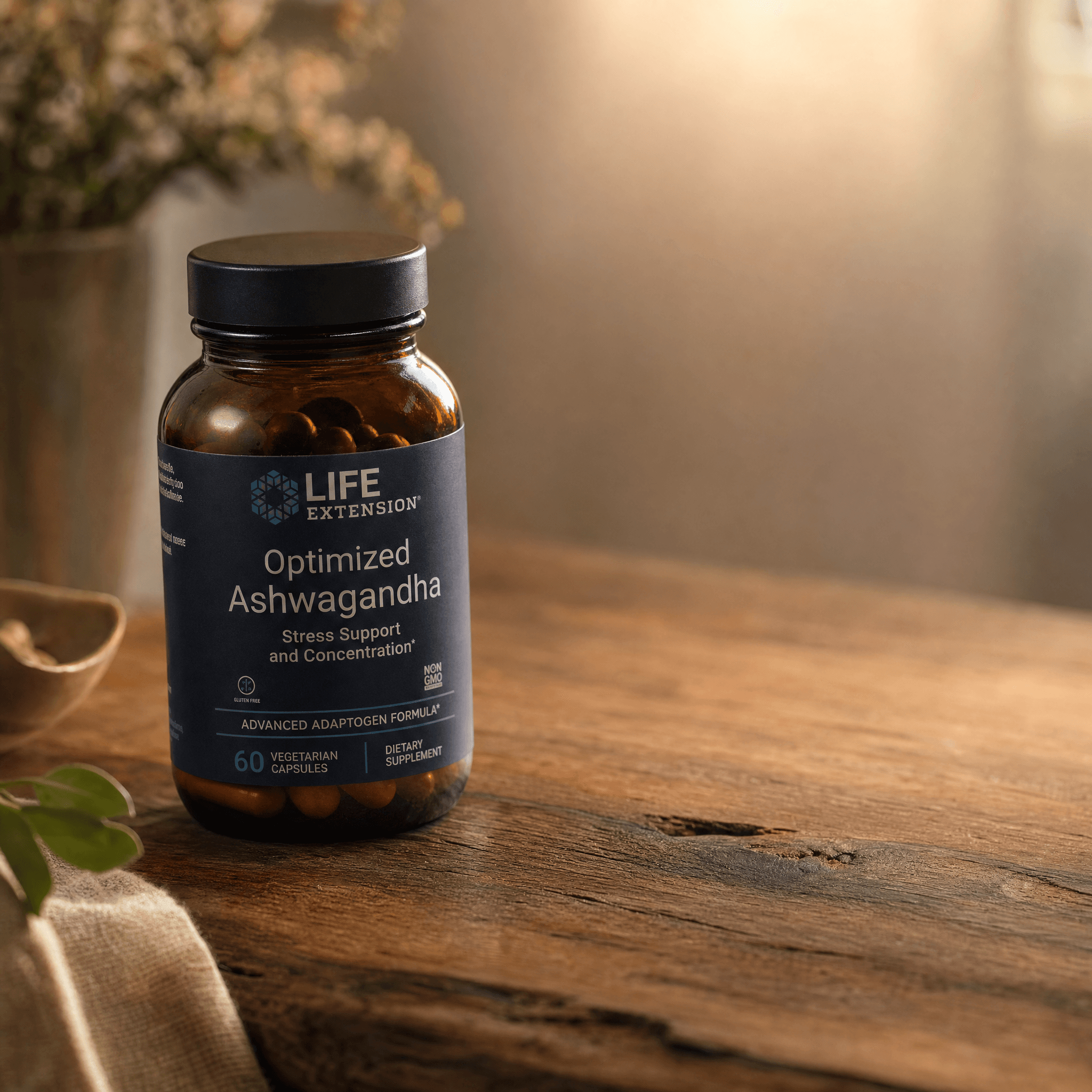
Ashwagandha’s active compounds (withanolides) have a relatively long half-life and accumulate in the body over weeks. This means the day-to-day effect is not acutely time-dependent — unlike caffeine (30-60 min peak) or melatonin (works at a specific biological clock point). The cumulative effect after 4-8 weeks of consistent daily use is what drives results, regardless of exact timing.
In This Article
- Why Timing Matters (and Why It Doesn’t)
- Take With Food — Always
- Best Timing by Goal
- KSM-66 vs Sensoril: Does Form Affect Timing?
- Standard Dosage Protocol
- Ashwagandha Cycling: Should You Take Breaks?
- Signs Ashwagandha Is Working for You
- Forms: Root Extract vs Root Powder
- Does Timing Matter for Ashwagandha?
- Cycling Ashwagandha
- Forms and Bioavailability
That said, timing relative to your goals and meals does make a meaningful difference for tolerability and optimization.
Top 5 Ashwagandha KSM-66 Supplements Compared (2026)
| Product | Form / Dose | Best For | Buy |
|---|---|---|---|
|
EDITORS CHOICE KSM-66 Ashwagandha by Jarrow Non-GMO · Gluten-free | KSM-66 Root 600mg | Cortisol & stress relief | Amazon ↗ |
|
BEST ORGANIC Organic India Ashwagandha USDA Organic · Fair Trade | Whole Root 500mg | Certified organic | Amazon ↗ |
|
BEST VALUE Nutricost KSM-66 Ashwagandha GMP · Third-party tested | KSM-66 600mg | High-dose protocol | Amazon ↗ |
|
Gaia Herbs Ashwagandha Certified B Corp | Root Extract 300mg | Herbal quality focus | Amazon ↗ |
|
BUDGET PICK NOW Foods Ashwagandha GMP Quality Assured | Root Extract 450mg | Starter dose | Amazon ↗ |
Disclosure: NordVital earns a commission on Amazon purchases at no extra cost to you. Picks are based on published research, label doses and third-party certifications; we do not lab-test products.
Take With Food — Always
The most important timing rule: always take ashwagandha with food or a meal. Taking it on an empty stomach commonly causes nausea, stomach upset, or diarrhea, particularly during the first 1-2 weeks. A meal doesn’t significantly reduce bioavailability but dramatically improves tolerability.
Best Timing by Goal
For Stress and Cortisol Control
Recommendation: Morning with breakfast
Cortisol follows a diurnal rhythm — highest in the morning (cortisol awakening response), declining through the day. Taking ashwagandha in the morning means withanolides are present during the peak cortisol window, modulating the HPA axis during the period when cortisol dysregulation is most pronounced.
For Sleep Improvement
Recommendation: Evening with dinner
The 2019 KSM-66 sleep study found improvements in sleep onset, sleep quality, and sleep efficiency with a single 600mg evening dose. Taking ashwagandha with your evening meal means peak blood levels coincide with bedtime, when the GABAergic and anxiolytic effects are most useful.
For Testosterone (Men’s Health)
Recommendation: Morning with breakfast
Testosterone follows the same diurnal pattern as cortisol — highest in the early morning. Since ashwagandha’s testosterone-supporting effect works partly through cortisol reduction (high cortisol suppresses testosterone), morning timing makes physiological sense for testosterone optimization.
For Anxiety
Recommendation: Split dose — morning + evening
If your ashwagandha dosage is 600mg/day, consider splitting it: 300mg with breakfast + 300mg with dinner. This maintains more consistent blood levels throughout the day, which may be more effective for anxiety where symptoms can occur at any hour.
KSM-66 vs Sensoril: Does Form Affect Timing?
KSM-66 (full-spectrum root extract, standardized to 5% withanolides) and Sensoril (root + leaf extract, higher withanolide concentration but smaller dose) are both effective. KSM-66 is better for energy/performance goals (morning use); Sensoril is slightly more sedating (better for evening sleep use). Both are superior to non-standardized ashwagandha root powder.
Standard Dosage Protocol
Clinical trials use 300-600mg/day of standardized extract. The most common effective protocol: 600mg KSM-66 once daily with the largest meal. Full effects take 4-8 weeks to manifest — if you notice nothing in the first 1-2 weeks, this is expected. Judge results at 8 weeks minimum.
Ashwagandha Cycling: Should You Take Breaks?
Unlike most herbs, ashwagandha does not appear to develop tolerance in the traditional sense — the cortisol and anxiety benefits persist at 6 months in trials that have measured long-term use. However, some practitioners recommend occasional cycling (8 weeks on, 2 weeks off) for two reasons:
- Theoretical concern about thyroid modulation with indefinite use (ashwagandha raises T3/T4 in some studies)
- To identify whether the supplement is still providing benefit versus placebo-driven continuation
For most healthy adults, continuous daily use for 12+ months appears safe based on available trial data. If you have thyroid conditions, cycling or monitoring thyroid panels is advisable.
Signs Ashwagandha Is Working for You
Because effects are gradual, many people underestimate whether the supplement is working. Reliable indicators:
- Reduced physiological stress response to the same life situations (lower heart rate in stressful meetings, faster cortisol recovery)
- Improved sleep onset or sleep quality scores
- Reduced mid-afternoon energy crashes (cortisol rhythm normalization)
- Improved exercise recovery — less post-workout soreness, ready to train again sooner
- Subtle mood elevation, particularly reduced background anxiety
If you notice no change after 10-12 weeks of consistent daily use, ashwagandha may not be a significant contributor for your particular biology. Some people are slow responders; others are non-responders. This does not indicate product quality — individual variation in withanolide metabolism is real.
Forms: Root Extract vs Root Powder
Standardized root extract (KSM-66, Sensoril) is significantly superior to plain root powder. The standardization ensures consistent withanolide content (5%+ for KSM-66). Non-standardized root powder varies enormously in potency — you might be getting 0.5% withanolides or 3% depending on the batch. Always choose standardized extract for predictable results.
Does Timing Matter for Ashwagandha?
Ashwagandha’s effects build over time through cortisol regulation and adaptogen accumulation — which means consistent daily use matters far more than precise timing. That said, aligning timing with your specific goals does optimize outcomes.
Morning: For Stress and Focus
Taking ashwagandha in the morning supports the natural cortisol arc — cortisol is highest at waking and declines through the day. Taking it with breakfast positions the withanolides to begin modulating the HPA axis response during peak cortisol hours, which may result in more stable energy and less afternoon stress reactivity.
Evening: For Sleep and Recovery
Ashwagandha’s most consistent effects in clinical trials are on stress, anxiety, and sleep quality. If sleep is your primary goal, evening dosing (1-2 hours before bed with food) is often recommended. The cortisol-lowering effect supports the natural nighttime cortisol decline needed for quality sleep onset.
Split Dosing
At doses of 600mg/day (the standard clinical dose with KSM-66), splitting into 300mg morning + 300mg evening is an option that provides coverage through both cortisol peaks. This approach is supported by several studies that split the daily dose rather than taking it all at once.
Cycling Ashwagandha
Unlike some adaptogens, ashwagandha doesn’t require strict cycling — its effects accumulate over 4-8 weeks and persist during continuous use. However, many practitioners recommend cycling for psychological benefit: 8-12 weeks on, 2-4 weeks off. This prevents tolerance (though clinical evidence for tolerance is limited) and allows you to assess whether the supplement is still producing benefit in your absence.
Forms and Bioavailability
Ashwagandha is one of the better-studied adaptogens. Trials consistently show a modest drop in cortisol; results for perceived stress are mixed and the testosterone evidence is limited (NIH). Choose an extract tested in trials (KSM-66, Sensoril or Shoden), use it for up to 3 months, and skip it if you have a thyroid or autoimmune condition, liver problems, or are pregnant.
Root extract capsules (KSM-66 or Sensoril) consistently outperform loose root powder in clinical trials because the extraction process concentrates the active withanolides to a standardized level. Look for supplements specifying withanolide content (KSM-66 ≥5% withanolides; Sensoril ≥10%). “Organic ashwagandha root powder” capsules with no standardization claim are likely far less potent per milligram.



Level up your recovery
Supplements work best alongside the right recovery tools. Explore our gear guides:
- 1Chandrasekhar K, et al. (2012). A prospective, randomized double-blind, placebo-controlled study of safety and efficacy of a high-concentration full-spectrum extract of ashwagandha root in reducing stress and anxiety. Indian J Psychol Med. PMID 23439798
- 2Wankhede S, et al. (2015). Examining the effect of Withania somnifera supplementation on muscle strength and recovery. J Int Soc Sports Nutr. PMID 26609282
- 3Lopresti AL, et al. (2019). An investigation into the stress-relieving and pharmacological actions of an ashwagandha (Withania somnifera) extract. Medicine. PMID 31517876
- 4Ambiye VR, et al. (2013). Clinical evaluation of the spermatogenic activity of the root extract of ashwagandha in oligospermic males. Evid Based Complement Alternat Med. PMID 24371462
All studies are peer-reviewed and sourced from PubMed/NCBI. This article is for informational purposes only and does not constitute medical advice. Consult a qualified healthcare provider before starting any supplement regimen.